Acute abdomen
Large bowel obstruction is an emergency, not something to wait out.
Without treatment, large bowel obstruction can result in serious complications, including bowel perforation and peritonitis. Symptoms typically develop gradually over several days.
FRCSEd (General Surgery)Five clinics in Singapore
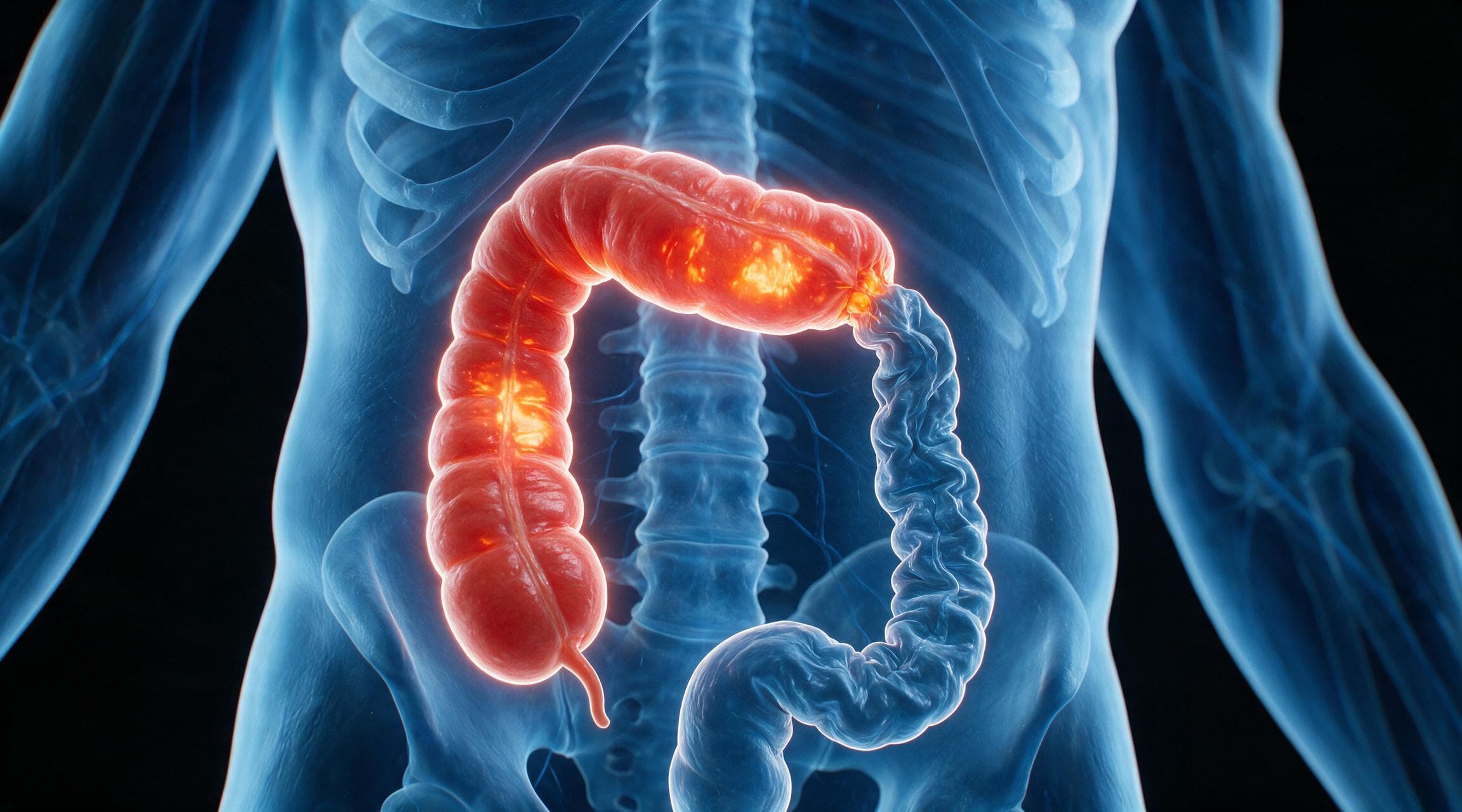
In short
Blocked
What is happening
Part of the colon becomes blocked, preventing the normal passage of stool and gas.
Days
How it comes on
Symptoms typically develop gradually over several days, reflecting the progressive nature of the condition.
Perforation
Why it is not watched
Without treatment, large bowel obstruction can result in serious complications, including bowel perforation and peritonitis.
Not always surgery
How it is treated
A mechanical blockage typically requires surgery. A functional or partial obstruction may sometimes be managed while the underlying cause is treated.
What every patient should know
Large bowel obstruction, what every patient should know
Days
How the symptoms build
Large bowel obstruction typically presents with symptoms that develop gradually over several days, reflecting the progressive nature of the condition. The blockage leads to a build-up of intestinal contents, causing the bowel to dilate and potentially compromising blood flow to the intestinal wall.
Source: Dr Sulaiman Bin Yusof, clinical practice
Part of the colon is blocked
Stool and gas can no longer pass normally
Contents build up
Collecting above the point of the blockage
The bowel dilates
Which is the swelling you can see and feel
Blood flow may be affected
To the wall of the intestine itself
Without treatment, large bowel obstruction can result in serious complications, including bowel perforation and peritonitis.
CT scan
What establishes the cause
A CT scan offers detailed cross-sectional images of the bowel wall and surrounding structures. It is necessary for determining the cause of the obstruction, such as tumours, volvulus, or strictures, as well as highlighting complications such as perforation or ischaemia.
Source: Dr Sulaiman Bin Yusof, clinical practice
Not always surgery
What the treatment depends on
A mechanical obstruction, where something physically blocks the bowel lumen, typically requires surgical intervention. A functional obstruction resolves when the underlying cause is treated. A partial obstruction still allows some passage of intestinal contents, and may sometimes be managed conservatively while that cause is addressed.
Source: Dr Sulaiman Bin Yusof, clinical practice
His story
Dr Sulaiman Bin Yusof
Senior Consultant Colorectal and General Surgeon, seeing patients at five clinics in Singapore.
- MBChB (Sheffield), M.Med (Surgery), FRCSEd (General Surgery)
- Consults in English and Malay
- MOH Fellowship, Peter MacCallum Cancer Centre, Melbourne
- Singapore Health Quality Service Star Award 2023
- Dean's Honour Roll for Teaching
Five clinics across Singapore
ORCHARD / NAPIER
Gleneagles Medical Centre
6 Napier Road #06-08, Singapore 258499
NOVENA
Mount Elizabeth Novena
38 Irrawaddy Road, #10-48/49, Singapore 329563
JOO CHIAT / EAST COAST
Parkway East Hospital
#05-08, 319 Joo Chiat Place, Singapore 427989
THOMSON
Mount Alvernia Hospital
#08-62, Medical Centre D, 820 Thomson Road, Singapore 574623
FARRER PARK
Farrer Park Medical Centre
#14-12, 1 Farrer Park Station Road, Singapore 217562
What it is
A large bowel obstruction is a blockage in the colon, and the pressure that builds behind it.
Large bowel obstruction occurs when part of the colon becomes blocked, preventing the normal passage of stool and gas.
This blockage can lead to the build-up of intestinal contents, causing the bowel to dilate and potentially compromising blood flow to the intestinal wall. Without treatment, large bowel obstruction can result in serious complications, including bowel perforation and peritonitis.
Peritonitis, which a perforation can lead to, is covered on the peritonitis page. A blockage in the small intestine rather than the colon behaves differently and is covered on the small bowel obstruction page.
This is why a large bowel obstruction is assessed rather than watched. The pressure does not stay where it started. It builds behind the blockage, and what is eventually at risk is the wall of the bowel itself.
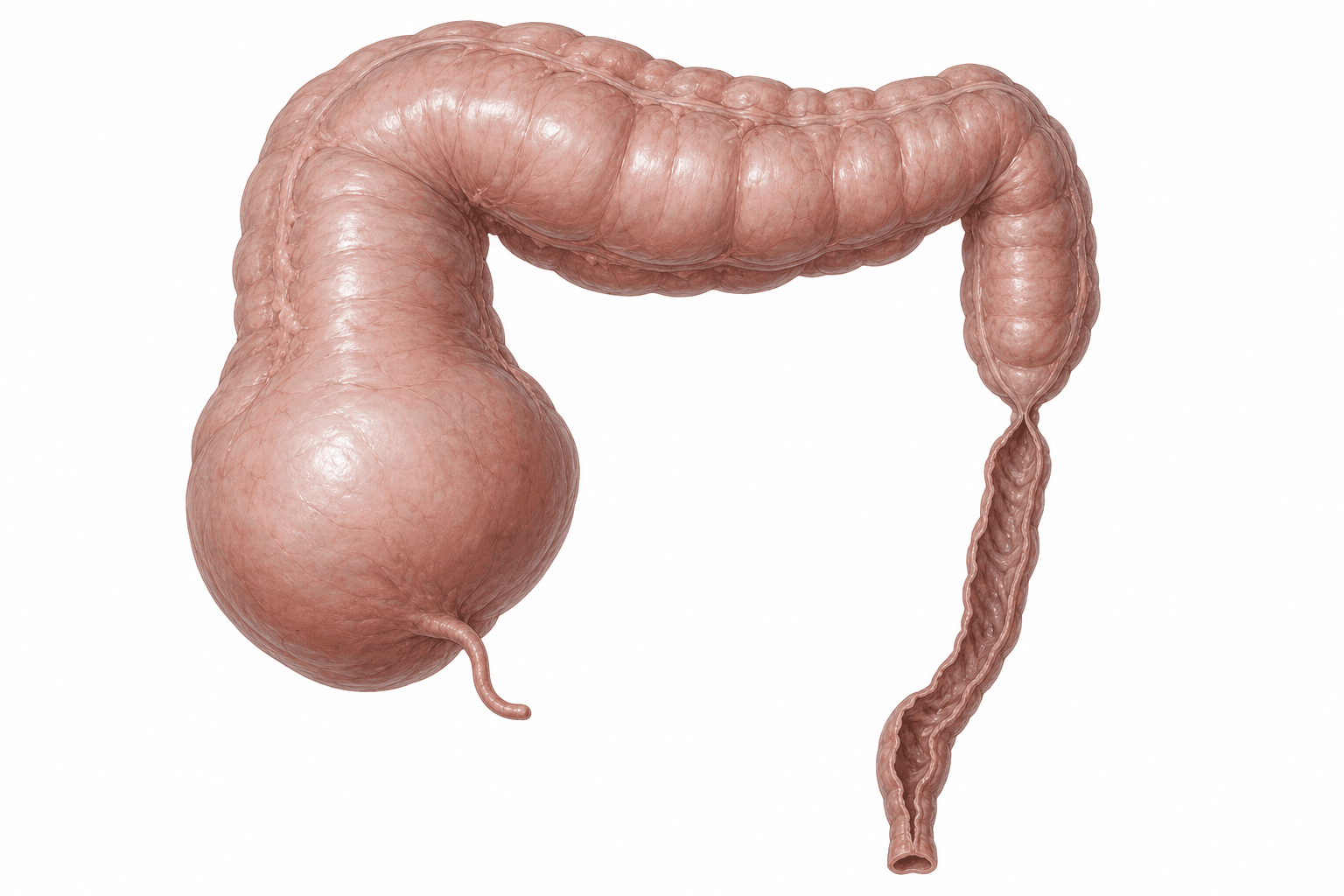
Everything upstream of the blockage fills and stretches; everything downstream empties. The caecum widens most, which is why it is the part most at risk of giving way. Illustration, not a photograph, and not yet certified by Dr Sulaiman.
Symptoms
It builds over days, and it builds in a fairly consistent order.
Large bowel obstruction typically presents with symptoms that develop gradually over several days, reflecting the progressive nature of the condition.
Cramping pain with a swollen abdomen and bowel movements that have stopped should be assessed rather than waited out, because an untreated obstruction can lead to perforation and peritonitis.
Cramping pain
It comes and goes, usually low in the abdomen
The abdomen swells
Gas and stool accumulate above the blockage
Bowel movements reduce or stop
And gas becomes harder to pass
Nausea and vomiting
Typically in the later stages
Abdominal pain
Patients experience cramping pain that comes and goes, usually centred in the lower abdomen.
Abdominal distension
The abdomen becomes visibly swollen as gas and stool accumulate above the blockage, creating noticeable discomfort.
Changed bowel habits
Patients often notice a marked reduction or complete cessation of bowel movements and may find it increasingly difficult to pass gas.
Nausea and vomiting
These symptoms, which typically occur in the later stages, result from a backup of intestinal contents behind the obstruction.
Causes and risk factors
Several conditions cause a large bowel obstruction by narrowing the colon.
Large bowel obstruction can develop from various conditions that narrow or block the colon.
Diverticular disease
Recurrent inflammation from diverticulitis can cause scarring and narrowing of the colon, creating a potential site for obstruction.
Colorectal cancer
Tumours growing within the colon wall gradually narrow the intestinal passage, eventually leading to obstruction.
Volvulus
A segment of the colon twists on itself, cutting off both the passage of contents and the blood supply, which can result in severe complications.
Inflammatory bowel disease
Prolonged inflammation, as seen in conditions like Crohn's disease, can lead to the development of strictures that narrow the colon and obstruct bowel movements.
Colorectal cancer as a share of all new cancer diagnoses in Singapore, 2019 to 2023
- Men
- 15.8%
- Women
- 12.6%
Source: Singapore Cancer Registry Annual Report 2023
Colorectal cancer is the second most commonly diagnosed cancer in Singapore in both men and women, behind prostate and breast. That is part of why a tumour is one of the first things a scan looks for when the colon is obstructed. What it is, how it is staged and how it is treated is on the colorectal cancer page.
Two of his other three causes have their own pages as well: diverticulitis and, among the inflammatory bowel diseases, Crohn’s disease.
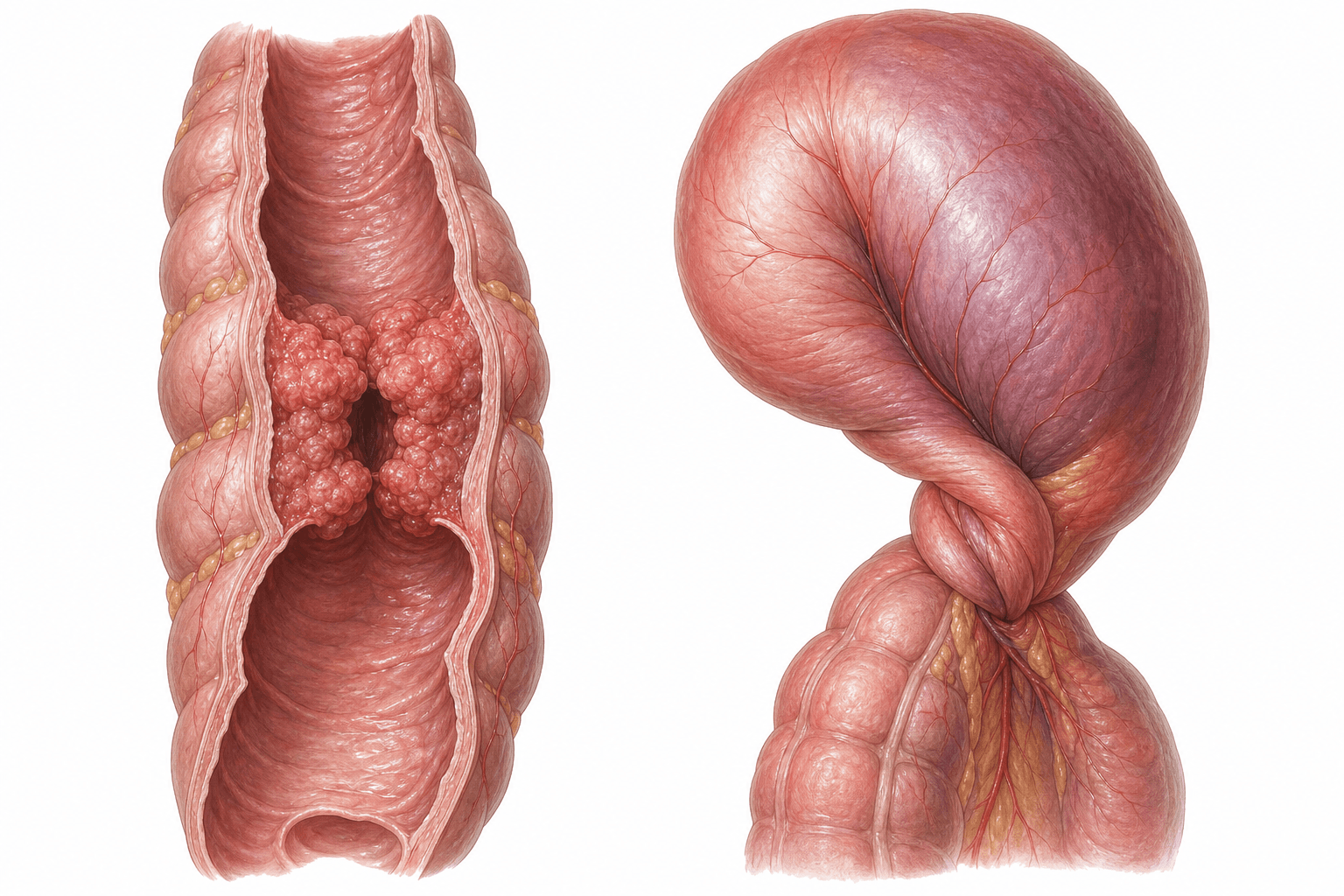
A growth narrows the channel from the wall inward. A twist closes it from the outside. Illustration, not a photograph, and not yet certified by Dr Sulaiman.
Types
Which type of large bowel obstruction it is decides what the treatment can be.
Large bowel obstruction presents in different forms based on the nature and extent of the blockage.
Mechanical obstruction
Results from physical blockage of the bowel lumen. The obstruction may be caused by masses within the bowel wall, external compression, or twisting of the bowel. This type typically requires surgical intervention.
Functional obstruction
Occurs when the bowel loses its normal coordinated muscle contractions. This condition, also called colonic pseudo-obstruction, can result from nerve dysfunction, metabolic disorders, or certain medications.
Partial obstruction
Allows some passage of intestinal contents past the point of obstruction. Patients may still pass small amounts of stool or gas. This condition may sometimes be managed conservatively while addressing the underlying cause.
Still passing a small amount of stool or gas does not rule an obstruction out, because a partial obstruction lets some contents through.
Diagnosis
An X-ray first, then the scan that establishes the cause.
Three investigations establish that the bowel is obstructed, where the blockage sits, and what has caused it.
Abdominal X-ray
An abdominal X-ray detects dilated bowel loops and air-fluid levels, common signs of an obstruction. It provides an initial assessment of bowel dilation and can sometimes identify the location and nature of the blockage.
CT scan
A CT scan offers detailed cross-sectional images of the bowel wall and surrounding structures. It is necessary for determining the cause of the obstruction, such as tumours, volvulus, or strictures, as well as highlighting complications such as perforation or ischaemia.
Blood tests
Blood tests measure electrolyte levels, kidney function, and markers of infection or inflammation. These results help assess the condition's severity, guide fluid replacement therapy, and identify potential systemic complications.
The X-ray establishes that the bowel is obstructed. The CT scan establishes why, and whether anything has already gone wrong behind the blockage.
Treatment options
From resting the bowel to removing the blocked segment.
What is done depends on the type of obstruction, what has caused it, and whether the affected segment of bowel can be saved.
Bowel rest
Halting oral intake temporarily allows the bowel to decompress and reduces strain on the affected area. During this period, patients receive intravenous fluids to maintain hydration and electrolyte replacement to correct imbalances caused by vomiting or reduced absorption.
Nasogastric decompression
A flexible tube is inserted through the nose and advanced into the stomach to drain accumulated gas, fluid, and digestive contents. This reduces pressure within the bowel, alleviating discomfort and preventing further distension.
Medical management
In cases of functional obstruction, where no physical blockage is present, treating the underlying cause can lead to resolution. For example, managing inflammation with medications or addressing an infection with antibiotics may restore normal bowel function.
Resection and anastomosis
This procedure involves removing the obstructed segment of the bowel and reconnecting the healthy ends to restore continuity. It is commonly performed for obstructions caused by colorectal cancer or other irreversible structural blockages.
Colostomy
In cases where direct reconnection of the bowel is not feasible, a colostomy is performed. This involves creating an opening, a stoma, in the abdominal wall through which the colon is diverted to allow waste to exit the body. Depending on the underlying condition, the colostomy may be temporary, allowing the bowel to heal, or permanent if the affected segment cannot be restored.
Temporary or permanent
What a colostomy may be
A colostomy is not always for life. Depending on the underlying condition, it may be temporary, allowing the bowel to heal, or permanent if the affected segment cannot be restored. Which one applies is decided from what is found, and Dr Sulaiman will go through it with you rather than leave you guessing.
Source: Dr Sulaiman Bin Yusof, clinical practice
Removing a segment of the colon through keyhole surgery, and rejoining the healthy ends, is covered on the laparoscopic hemicolectomy page.
Whether you are Singaporean, a Permanent Resident or a foreigner, the clinic team can advise on using an Integrated Shield Plan or corporate insurance.
Prevention and management
Most of prevention here is treating what would have caused it.
Regular screening colonoscopies are required to detect and prevent diseases that can cause bowel obstruction, such as colorectal cancer.
Patients with a history of diverticulitis or inflammatory bowel disease should maintain routine medical follow-ups and adhere to prescribed treatment plans to minimise risks. Individuals with prior abdominal surgeries should promptly seek medical attention if they experience symptoms suggestive of bowel obstruction.
What a colonoscopy involves, and what the day itself looks like, is on the colonoscopy page. Scar tissue inside the abdomen after previous surgery is covered on the intra-abdominal adhesions page.
Three different groups of people, one instruction each. Be screened. Keep the follow-ups you already have. And if you have had abdominal surgery before, do not sit on symptoms that suggest an obstruction.
Common questions
Questions about large bowel obstruction.
Can a large bowel obstruction resolve on its own?
In rare cases, a functional obstruction, or pseudo-obstruction, may resolve without invasive treatment if the underlying cause, such as a medication or metabolic imbalance, is addressed. However, mechanical obstructions typically require medical or surgical intervention.
Are there long-term effects after treatment?
The long-term effects depend on the cause and treatment. Surgical treatments like resection and colostomy may result in lifestyle adjustments, including dietary modifications or stoma care.
Can a large bowel obstruction come back?
Recurrence depends on the underlying cause. For instance, obstructions caused by adhesions from previous surgery may recur. Regular monitoring and preventive measures tailored to the specific cause can help reduce recurrence risk.
What is the difference between a mechanical and a functional obstruction?
A mechanical obstruction results from physical blockage of the bowel lumen. It may be caused by masses within the bowel wall, external compression, or twisting of the bowel, and this type typically requires surgical intervention. A functional obstruction occurs when the bowel loses its normal coordinated muscle contractions. This condition, also called colonic pseudo-obstruction, can result from nerve dysfunction, metabolic disorders, or certain medications, and treating that underlying cause can lead to resolution. For example, managing inflammation with medications or addressing an infection with antibiotics may restore normal bowel function.
Will I need a colostomy?
Not necessarily. Where the obstructed segment of bowel can be removed and the healthy ends reconnected, a resection and anastomosis restores continuity and no stoma is involved. This is commonly performed for obstructions caused by colorectal cancer or other irreversible structural blockages. In cases where direct reconnection of the bowel is not feasible, a colostomy is performed instead, creating an opening, a stoma, in the abdominal wall through which the colon is diverted to allow waste to exit the body. Depending on the underlying condition, the colostomy may be temporary, allowing the bowel to heal, or permanent if the affected segment cannot be restored.
Get it looked at
Cramping pain, a swollen abdomen, and nothing passing? Do not wait it out.
Consult Dr Sulaiman for an assessment and a personalised treatment plan today. Appointments are available across five clinic locations in Singapore, and self-referrals are welcome.