Pelvic floor
Rectal prolapse does not get better on its own.
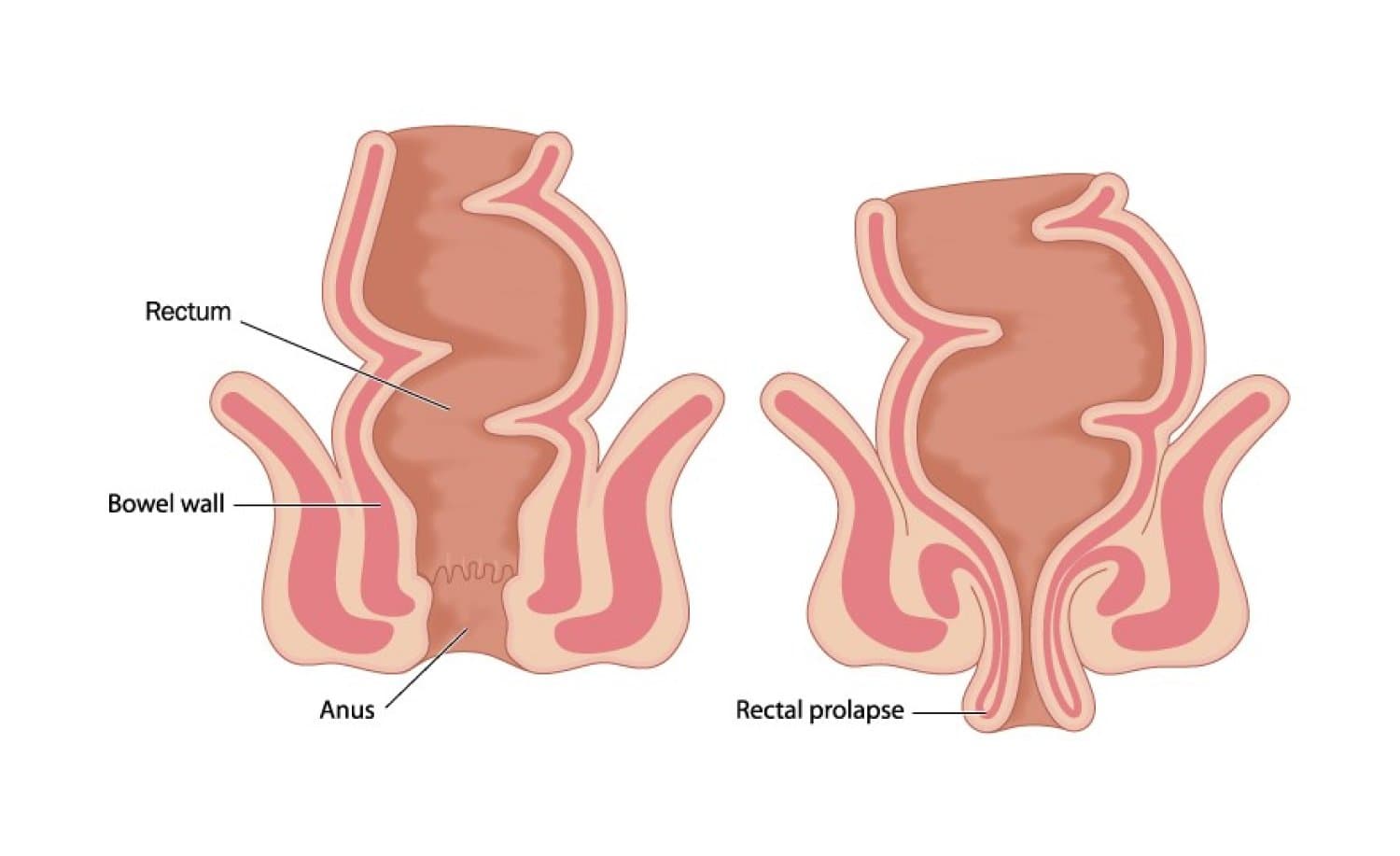
It happens when the rectum, the last part of the large intestine, slips out of its normal position and protrudes through the anus. This occurs due to the weakening of the muscles and connective tissues that support the rectum, leading to various symptoms and complications if left untreated. It typically does not resolve on its own, and mild cases are managed without surgery.
FRCSEd (General Surgery)Five clinics in Singapore
In short
A bulge
What people notice first
The rectum slips out of place, causing a visible bulge outside the anus. It may retract on its own or require manual pushback.
Weakened
Why it happens
It occurs due to the weakening of the muscles and connective tissues that support the rectum.
Not piles
The common confusion
Both involve tissue protruding from the anus and they are distinct. Haemorrhoids are swollen blood vessels; a prolapse is the rectum itself.
Rarely settles
If it is left alone
Rectal prolapse typically does not resolve on its own. Mild cases may be managed with lifestyle changes; severe or persistent ones usually need treatment.
What every patient should know
What every patient should know
Weakened
Muscles and connective tissue
Source: Dr Sulaiman Bin Yusof, clinical practice
Not piles
The distinction that matters
Source: Dr Sulaiman Bin Yusof, clinical practice
Two
Operations used to repair it
Source: Dr Sulaiman Bin Yusof, clinical practice
His story
Dr Sulaiman Bin Yusof
Senior Consultant Colorectal and General Surgeon, seeing patients at five clinics in Singapore.
- MBChB (Sheffield), M.Med (Surgery), FRCSEd (General Surgery)
- Consults in English and Malay
- MOH Fellowship, Peter MacCallum Cancer Centre, Melbourne
- Singapore Health Quality Service Star Award 2023
- Dean's Honour Roll for Teaching
Symptoms
What a prolapse actually feels like, and what it looks like.
Prolapse causes the rectum to protrude through the anus, which can result in a variety of symptoms. Key symptoms include the following.
Visible protrusion
Because of weakened muscles and connective tissues, the rectum slips out of place, causing a visible bulge outside the anus. The protruding tissue may be visible when standing, walking, or straining, and it may retract on its own or require manual pushback.
Discomfort and pain
The prolapsed rectum puts pressure on surrounding tissues, causing pain or discomfort, which can worsen with activities like sitting or bowel movements.
Bleeding or mucus discharge
When the inner lining of the rectum is exposed, it becomes irritated, leading to bleeding or mucus secretion. This may lead to itching, soreness, or skin irritation around the anus.
Incontinence or constipation
Prolapse-related nerve and muscle dysfunction can cause difficulty controlling bowel movements (incontinence) or passing stools (constipation) because the rectum is not functioning properly. Some individuals may have difficulty passing stools without manually supporting the prolapsed tissue.
Although both conditions involve tissue protruding from the anus, they are distinct. Rectal prolapse occurs when the rectum slips out of place, while haemorrhoids are swollen blood vessels in the anal region. What piles are, and how they are treated, is on the haemorrhoids page.
Causes and risk factors
The support gives way slowly, and usually for more than one reason.
Rectal prolapse is often the result of weakened pelvic floor muscles and connective tissues. Several factors can contribute to this condition.
Four
What weakens the support
Source: Dr Sulaiman Bin Yusof, clinical practice
Straining during bowel movements
Regular straining during bowel movements puts pressure on the rectal muscles, causing gradual weakening that can eventually lead to prolapse.
Ageing, pregnancy and childbirth
Factors such as ageing, pregnancy, and childbirth can stretch or damage pelvic floor muscles, increasing the risk, especially in older adults and women with multiple pregnancies.
Nerve damage
Damage to the nerves controlling the rectum can prevent proper muscle function. This may be due to spinal injuries, neurological disorders, or long-term conditions like diabetes.
Anything that raises pressure in the abdomen
Activities that lead to frequent straining, such as chronic coughing, heavy lifting, or even childbirth, can increase the risk of rectal prolapse by putting excessive pressure on the abdominal area.
More than one of these is usually present at the same time. Childbirth appears twice on this page, once as stretching of the pelvic floor and once as straining, which is why the assessment looks at the whole picture rather than settling on the first plausible explanation.
How it is diagnosed
Confirming it, and establishing how far it has come out.
Diagnosing rectal prolapse involves a comprehensive evaluation to confirm the condition and plan appropriate treatment.
Physical examination
You are asked to strain, so the prolapse can be seen
Imaging, if it is not visible
Defecography, or an MRI scan of the soft tissues
Colonoscopy
Ruling out other conditions inside the bowel
Physical examination
A doctor will conduct a physical exam by asking the patient to strain as if having a bowel movement. This allows the physician to observe if the rectum protrudes from the anus and to evaluate the extent and whether it is partial or complete.
Defecography or MRI
If the prolapse is not easily visible, imaging tests like defecography or MRI scans may be used. Defecography captures X-ray images during bowel movements to show muscle function, while MRI provides detailed images of soft tissues, highlighting any structural weaknesses or misalignments.
Colonoscopy
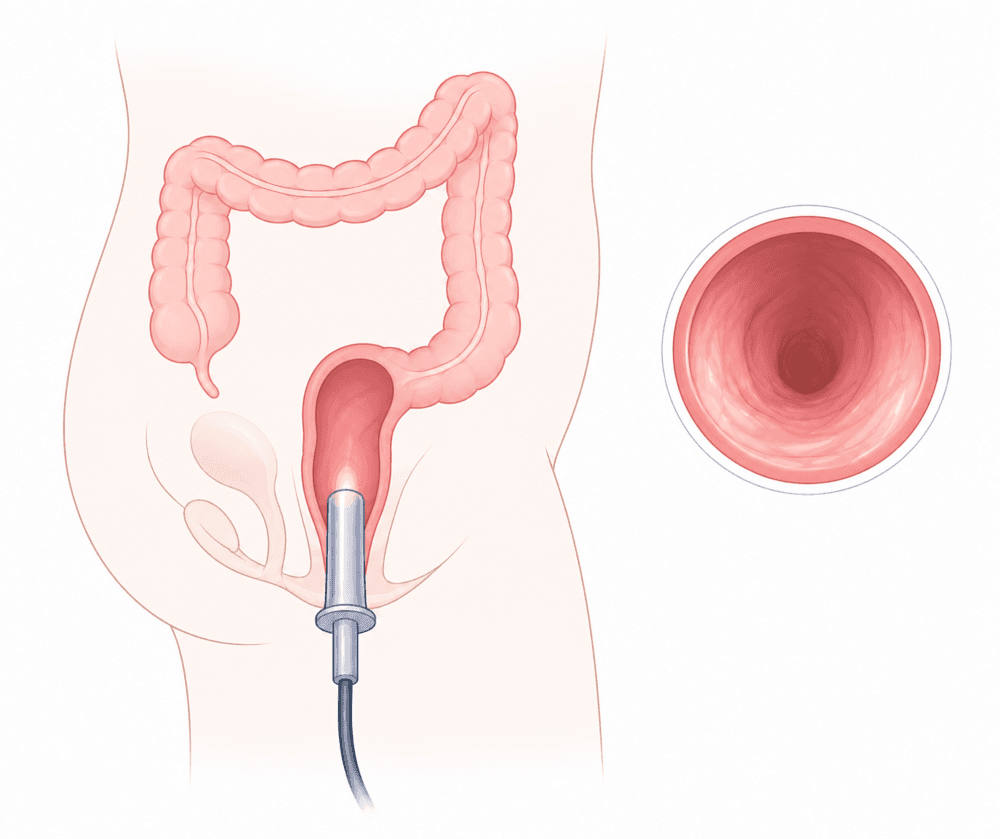
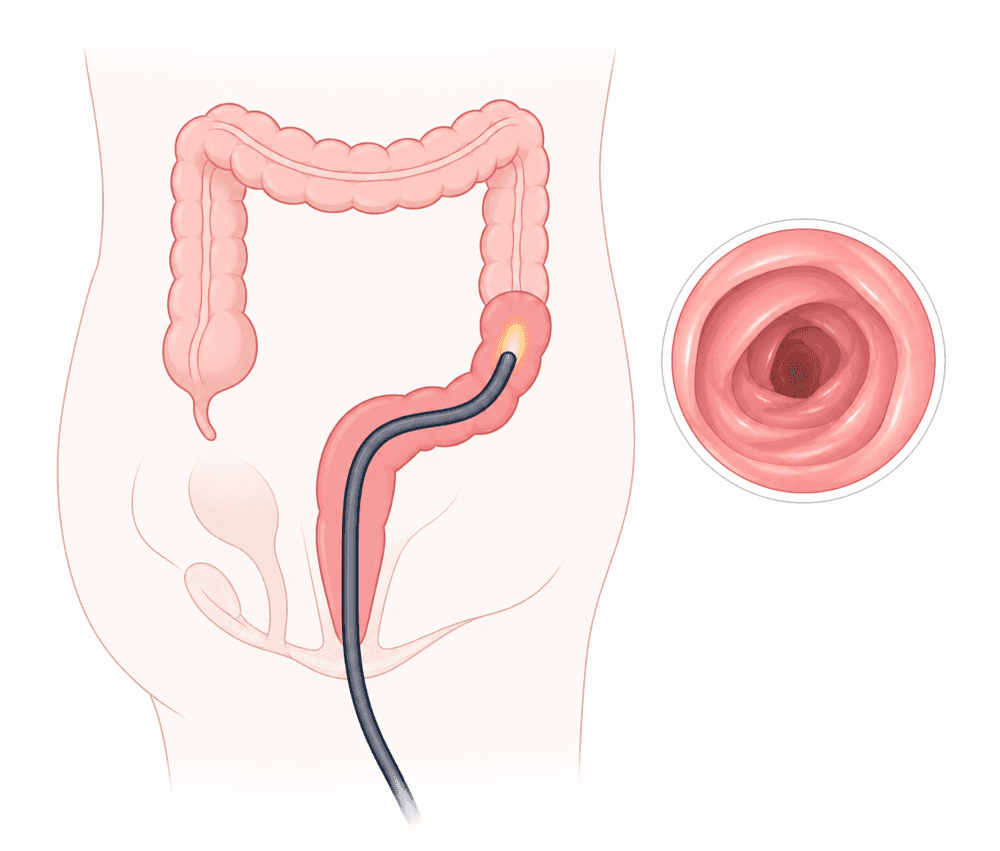
A colonoscopy involves inserting a thin, flexible tube with a camera into the rectum to inspect the inner lining of the rectum and colon. This procedure helps identify or rule out other conditions, such as tumours, polyps, or inflammatory diseases, to ensure an accurate diagnosis and guide appropriate treatment.
Why it is worth doing properly
Are your symptoms affecting your quality of life? Consult a specialist for an assessment and a personalised treatment plan.
Not every test above is needed in every case. Which of them apply follows from the examination, and that is the reason for doing it first. What a colonoscopy involves, and what the day looks like, is on the colonoscopy page.
Treatment options
It does not start with an operation, and often does not end with one.
Treatment varies based on the severity of the prolapse and the patient’s overall health and aims to relieve symptoms, restore normal rectal function, and prevent recurrence.
Pelvic floor exercises
Suitable for mild cases, and used after surgery
Rectopexy
Lifting the rectum and securing it to the sacrum
Resection
Where a large portion of the colon is involved
Pelvic floor exercises
Non-surgical approaches are suitable for mild cases of rectal prolapse. Pelvic floor exercises help strengthen the muscles surrounding the rectum, enhancing support and reducing the risk of further prolapse. These exercises are often recommended for those with mild symptoms or as part of post-surgical recovery to maintain muscle tone. Improved muscle strength provides better rectal support, potentially preventing future prolapse.
Rectopexy, or rectum repair surgery
Surgery is considered for severe or persistent cases where non-surgical methods are ineffective. This procedure involves lifting the rectum and securing it to the sacrum (lower spine) using sutures or mesh. Rectopexy helps restore the rectum's normal position, reducing the risk of further prolapse and improving bowel function. It is commonly performed for cases of external prolapse, where the rectum visibly protrudes through the anus.
Resection, or colon removal surgery
For severe cases involving a large portion of the colon, resection may be necessary. This surgery removes part of the colon and is often combined with rectopexy to alleviate symptoms such as chronic constipation, which can worsen prolapse. By shortening the bowel, the procedure improves bowel movements and decreases the risk of recurrence.
Prevention and management
Everything here works by taking strain off the pelvic floor.
Preventing rectal prolapse focuses on reducing strain on the pelvic area through healthy lifestyle practices.
A fibre-rich diet
Eating a fibre-rich diet, including fruits, vegetables, and whole grains, helps prevent constipation and minimises straining during bowel movements.
Regular pelvic floor exercises
Regular pelvic floor exercises strengthen muscles around the rectum, providing better support.
Staying physically active
Staying physically active promotes overall bowel health.
Avoiding heavy lifting
Avoiding heavy lifting or activities that increase abdominal pressure reduces the risk of prolapse or worsening an existing condition.
None of this replaces an assessment once something is already protruding. Rectal prolapse typically does not resolve on its own, and leaving it untreated can result in chronic discomfort, incontinence, and potential damage to the rectal tissue from prolonged exposure.
Common questions
The questions that come up in consultation.
Is this the same as haemorrhoids?
Although both conditions involve tissue protruding from the anus, they are distinct. Rectal prolapse occurs when the rectum slips out of place, while haemorrhoids are swollen blood vessels in the anal region. Because they have different causes, the treatments and management strategies vary.
Can children get rectal prolapse?
Rectal prolapse is relatively uncommon in children but can occur, often due to chronic strain from constipation. The condition is far more prevalent in adults, particularly in older individuals and women who have had multiple pregnancies, due to age-related muscle weakening and physical strain.
Will it go away on its own?
No, rectal prolapse typically does not resolve on its own. Mild cases may be managed with lifestyle changes, but severe or persistent cases usually require medical intervention to prevent further complications.
What happens if it is left untreated?
Leaving rectal prolapse untreated can result in chronic discomfort, incontinence, and potential damage to the rectal tissue from prolonged exposure. Over time, the condition may deteriorate, often requiring more extensive and invasive treatment.
Will I need surgery?
Not necessarily. Non-surgical approaches are suitable for mild cases of rectal prolapse, and pelvic floor exercises are often recommended for those with mild symptoms or as part of post-surgical recovery to maintain muscle tone. Surgery is considered for severe or persistent cases where non-surgical methods are ineffective. Rectopexy is commonly performed for cases of external prolapse, where the rectum visibly protrudes through the anus, and for severe cases involving a large portion of the colon, resection may be necessary. Which of those applies to you follows from the examination, and from imaging where the prolapse is not easily visible.
What happens at the first appointment?
A physical examination, in which you are asked to strain as if having a bowel movement. That allows the physician to observe if the rectum protrudes from the anus and to evaluate the extent and whether it is partial or complete. If the prolapse is not easily visible, imaging tests like defecography or MRI scans may be used: defecography captures X-ray images during bowel movements to show muscle function, while MRI provides detailed images of soft tissues. A colonoscopy may also be arranged, to identify or rule out other conditions such as tumours, polyps, or inflammatory diseases.
Book a consultation
A prolapse rarely settles by itself. It is not something you have to keep pushing back.
If something is protruding from the anus, or bowel control has changed, book a consultation for an assessment and a personalised treatment plan. Same-day and same-week appointments are available across five clinic locations, and self-referrals are welcome.