Crohn's disease
Crohn's disease is lifelong, and treatment aims to keep it quiet.
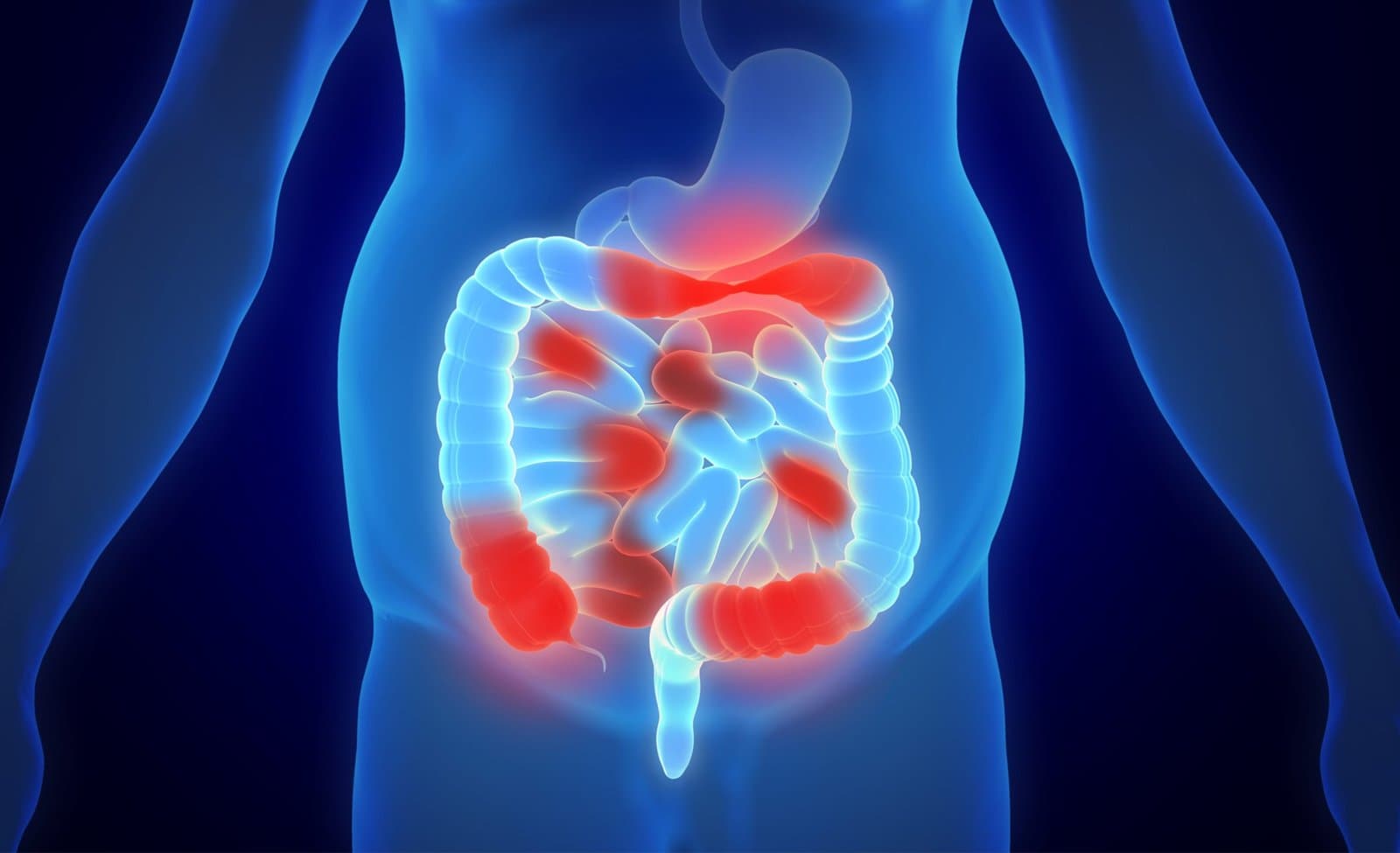
It is a type of inflammatory bowel disease, and it particularly affects the small intestine and the colon. Symptoms vary in severity and may include abdominal pain, diarrhoea, fatigue, weight loss and malnutrition. Because it can affect different segments of the digestive tract, it can also lead to complications such as blockages, abscesses or fistulas. A Crohn's disease diagnosis rests on four steps, examination, blood and stool tests, imaging and endoscopy, and Dr Sulaiman, a colorectal specialist, sees patients through that work-up and for surgery when medication is not enough.
FRCSEd (General Surgery)Five clinics in Singapore
In short
IBD
What kind of condition it is
Crohn's disease is a type of inflammatory bowel disease. It is chronic, and it inflames the lining of the digestive tract.
Small bowel
The most common site
Crohn's disease particularly affects the small intestine and the colon, though it can affect different segments of the digestive tract.
Gradual
How it usually starts
Symptoms range from mild to severe and often develop slowly rather than arriving all at once.
No cure
But it is treatable
Treatment aims to manage symptoms and prevent complications, starting with medication and moving to surgery when medication is not enough.
What every patient should know
What every patient should know
No cure
But it can be controlled
Source: Dr Sulaiman Bin Yusof, clinical practice
Corticosteroids
Short courses, to settle an active flare-up
Immunosuppressants and biologics
Moderate to severe, or when the rest is not working
Surgery
When medication is ineffective
Lower right
Where the pain is often felt
Source: Dr Sulaiman Bin Yusof, clinical practice
His story
Dr Sulaiman Bin Yusof
Senior Consultant Colorectal and General Surgeon, seeing patients at five clinics in Singapore.
- MBChB (Sheffield), M.Med (Surgery), FRCSEd (General Surgery)
- Consults in English and Malay
- MOH Fellowship, Peter MacCallum Cancer Centre, Melbourne
- Singapore Health Quality Service Star Award 2023
- Dean's Honour Roll for Teaching
Symptoms
Symptoms range from mild to severe, and they often develop gradually.
Crohn’s disease rarely announces itself in a single moment. These are the symptoms that most often bring people in, and they warrant assessment when they are new, persistent, or getting worse.
Crohn's disease that was already complicated at diagnosis, meaning narrowing, a fistula or perianal disease
- Asia
- 52%
- Australia
- 24%
Source: Asia-Pacific Crohn's and Colitis Epidemiology Study, Gastroenterology, 2013
In the same study the median time from a person’s first symptom to their diagnosis was five and a half months. Those two findings belong together: this is a condition that is routinely found late in this part of the world, and by the time it is found half of it has already done structural damage. Neither number is Singapore alone, and Singapore was one of the contributing centres.
Abdominal pain and cramping
Severe pain is often localised in the lower right abdomen and is caused by chronic inflammation.
Diarrhoea
Frequent, loose or urgent bowel movements, which typically result from inflammation affecting the absorption of nutrients and water.
Fatigue and weight loss
Ongoing inflammation can impair nutrient absorption, leading to fatigue and unintended weight loss.
Blood in the stool
Ulceration and inflammation may cause bleeding, so blood appears in the stool.
Fistulas and abscesses
More advanced disease can lead to complications such as fistulas, which are abnormal connections between organs, and abscesses, which are infected pockets. These are common enough to plan for rather than rare: in a community study following people from diagnosis, a third had developed a fistula by 10 years and half by 20 years, with perianal fistulas accounting for about 21% at 10 years. Source: Gastroenterology, 2002.
These symptoms overlap with several other bowel conditions, so having one of them does not mean you have Crohn’s disease. It means the cause is worth establishing properly rather than guessing at.
Bleeding in particular has more than one possible cause, and what those are is set out in anal bleeding, causes and treatment options.
Causes
The exact cause is unknown. Several factors contribute.
The exact cause of Crohn’s disease is unknown, but several contributing factors have been identified. None of them is a complete explanation on its own.
An immune system that misfires
The immune system may mistakenly attack healthy cells in the digestive tract, leading to chronic inflammation.
Family history and genetics
A family history of Crohn's disease increases risk, with certain genetic markers identified as contributors. It is worth knowing that most people here have no such history: across the Asia-Pacific study of newly diagnosed patients, only 3% of Asian cases had a family history of inflammatory bowel disease, against 17% in Australia. Having nobody in the family with it does not make the diagnosis unlikely. Source: Asia-Pacific Crohn's and Colitis Epidemiology Study, Gastroenterology, 2013.
The balance of gut bacteria
Changes in the composition of gut bacteria might promote inflammation, contributing to flare-ups.
Smoking, diet and environment
Dietary habits and exposure to specific bacteria may exacerbate symptoms in susceptible individuals. Smoking sits differently from the rest of this list, because it is linked to developing the disease and not only to worsening it: pooled across studies, current smokers have roughly 1.8 times the odds of Crohn's disease. It is the one factor on this page you can change, and stopping is worth more than any dietary adjustment. Source: meta-analysis, Mayo Clinic Proceedings, 2006.
How it is diagnosed
Confirming it, and ruling out what it resembles.
Several tests are used to assess inflammation and to rule out other conditions when diagnosing Crohn’s disease. No single one of them settles it alone.
Examination and history
The abdomen, the symptoms, the family history
Blood and stool tests
Inflammation, anaemia, infection
Imaging
CT, MRI or ultrasound
Endoscopy and biopsy
A direct look, and tissue to confirm it
Physical examination and medical history
The abdomen is palpated to check for swelling, tenderness or masses, which may indicate inflammation or bowel obstruction. A review of your medical history helps identify risk factors such as family history and symptom patterns.
Blood tests
Blood tests assess for elevated inflammatory markers and check for anaemia caused by chronic inflammation or blood loss. Elevated white blood cell counts may also indicate active inflammation or infection.
Stool tests
Analysing stool samples helps detect infections, blood or inflammatory markers, which is what separates Crohn's disease from other gastrointestinal disorders. These tests also assess faecal calprotectin, an indicator of intestinal inflammation.
Imaging: CT, MRI and ultrasound
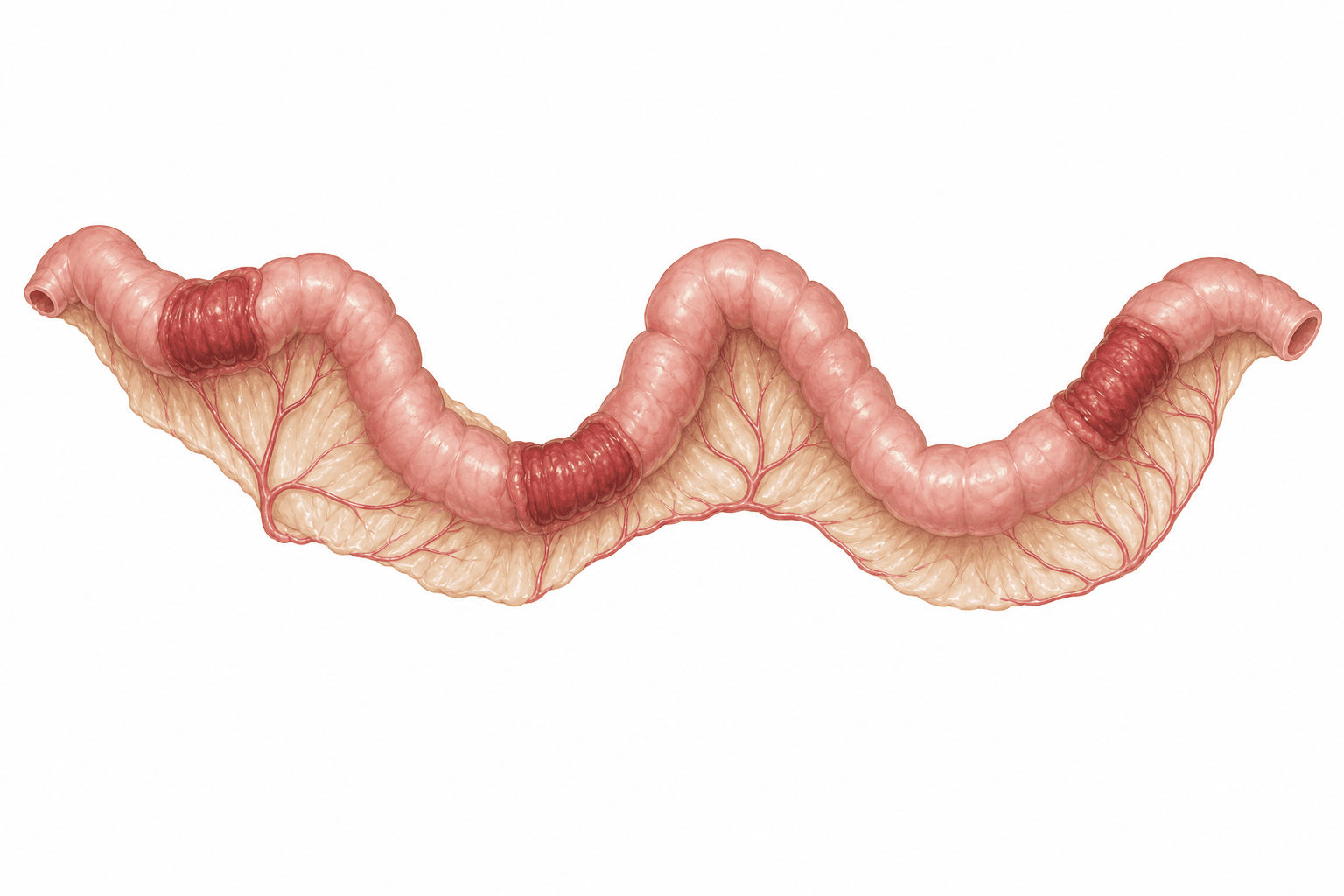
CT scans, MRI and ultrasound are used to visualise the digestive tract, identifying inflammation, strictures, abscesses or fistulas. These imaging methods provide non-invasive insight into the location, severity and potential complications of the disease.
Colonoscopy and endoscopy
These procedures allow a detailed look inside the digestive tract. A colonoscopy examines the colon, with biopsies often taken to confirm inflammation. Endoscopy focuses on the upper digestive tract, the oesophagus, stomach or duodenum, to detect any inflammation or ulcers not visible through other tests.
What a colonoscopy involves, what the preparation is like and what the day itself looks like is on the colonoscopy page.
Medical treatment
There is no cure, so treatment is aimed at control.
While there is no cure for Crohn’s disease, treatments aim to manage symptoms and prevent complications. Medication is where that starts, and for many people it is where it stays.
Anti-inflammatory drugs
Corticosteroids reduce inflammation in the digestive tract and are what settles an active flare-up. They are used short term because of their side effects, and they are not a long-term answer: they do not keep Crohn's disease in remission. Aminosalicylates (5-ASA) are worth a word here because many people arrive already taking them. They are genuinely useful in ulcerative colitis, but the pooled trial evidence in Crohn's disease is weak. Cochrane reviews found mesalamine no better than placebo for bringing on remission, and no better than placebo for maintaining it. Source: Cochrane Database of Systematic Reviews, 2016.
Immunosuppressants
These medications suppress the immune system to prevent it from attacking the digestive tract. They help maintain remission and reduce the frequency of flare-ups, and they let people come off steroids rather than stay on them.
Biologic therapies
Biologic therapies target specific immune proteins to control inflammation. TNF inhibitors such as infliximab and adalimumab have the longest track record, and several newer targeted classes are now used in Singapore as well. They are used for moderate to severe cases, or when other treatments are ineffective.
Antibiotics
Antibiotics treat infections and abscesses related to Crohn's disease. They can also help manage fistulas by reducing bacterial overgrowth and inflammation.
When surgery is needed
Surgery is for what the inflammation has caused.
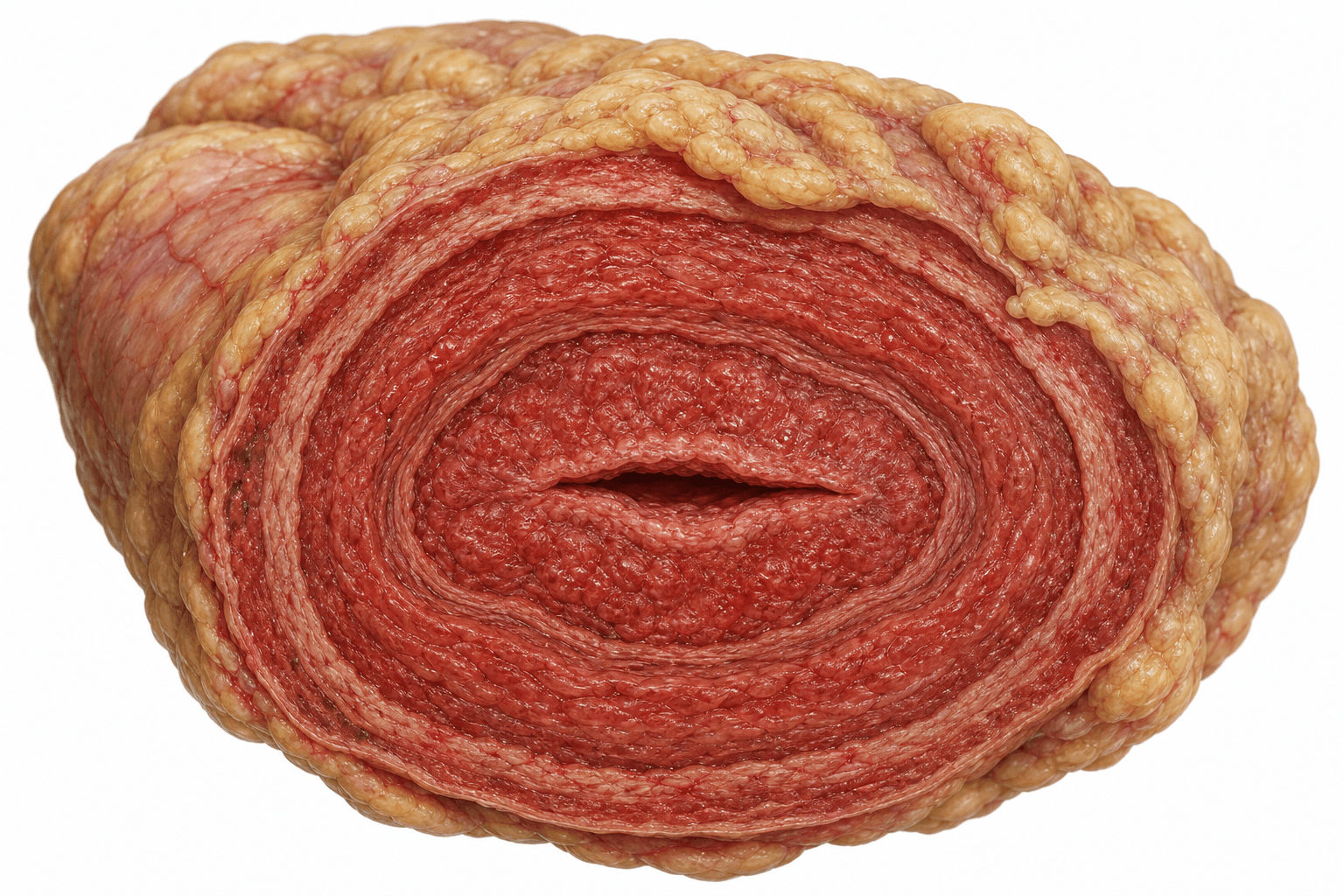
Surgery does not cure Crohn’s disease. It is considered when medication is ineffective, or when the inflammation has produced something medication cannot resolve: a narrowed segment, an abscess, or a fistula.
47%
Have surgery within ten years of diagnosis
Source: Meta-analysis of population-based studies, Gastroenterology, 2013
Bowel resection
When medication is ineffective, a bowel resection may be necessary to remove diseased sections of the intestine. This surgery can alleviate symptoms and prevent complications like strictures or obstructions, though the disease may recur in other areas over time.
Strictureplasty
This procedure widens narrowed areas of the intestine caused by chronic inflammation, improving bowel function without removing any intestinal sections. It is often used to preserve intestinal length, especially when multiple strictures are present along the digestive tract.
Fistula repair
Surgery may be necessary to repair fistulas, the abnormal connections between organs or tissues that Crohn's disease can cause, and to prevent infection and further complications. Depending on the severity, the procedure may involve closing the fistula and draining any associated abscess to promote healing and reduce the chance of recurrence.
What happens after an operation
Surgery removes the diseased segment, it does not remove the disease. In the study that established how this behaves, inflammation had reappeared at the join in 73% of people within a year of an ileal resection and in 85% by three years. What matters is the second half of the same finding: only 20% had symptoms at a year and 34% by three years. Most of that early recurrence is visible down a scope long before it is felt, which is exactly why treatment continues after an operation and why you are scoped again rather than simply discharged. Source: Gastroenterology, 1990.
What a fistula is, how one forms and what a repair involves is set out on the anal fistula page.
Preventing flare-ups
Day to day, the aim is fewer flare-ups and longer remission.
Managing Crohn’s disease involves adopting healthy habits to reduce flare-ups. None of them replaces treatment, and together they change how often it is needed.
Remission
What the daily habits protect
Source: Dr Sulaiman Bin Yusof, clinical practice
Why monitoring continues after remission
Crohn’s disease can increase the likelihood of developing colon cancer over time, which is what makes regular monitoring, treatment adjustments and preventive care necessary rather than optional. Remission is a good place to be and it is not a reason to stop being followed up.
Where that extra risk falls is worth being precise about, because it is not spread evenly. Pooled across studies, the risk of colorectal cancer is around four and a half times the general population’s when Crohn’s disease involves the colon, and around 1.1 times when it is confined to the small bowel, which is close enough to unchanged that an increase has not been demonstrated there. In absolute terms the cumulative risk is about 2.9% in the ten years after diagnosis. So how often you are scoped, and whether you need surveillance at all, depends on where your disease actually sits. Source: Alimentary Pharmacology and Therapeutics, 2006.
What that surveillance is looking for, and how it is done, is on the colorectal cancer page.
Common questions
The questions that come up in consultation.
Can Crohn's disease affect parts of the body outside the gut?
Yes. Crohn's disease can cause inflammation beyond the digestive tract, affecting the eyes, skin and joints. In some cases it can also lead to kidney stones, liver conditions, or other complications involving the bile ducts, particularly during periods of disease activity. This is common rather than unusual. In the Swiss IBD Cohort Study, 43% of people with Crohn's disease had at least one of these, and the joints were much the commonest site at 33%, ahead of mouth ulcers at 10% and eye inflammation at 6%. Source: Swiss IBD Cohort Study, American Journal of Gastroenterology, 2011.
Can Crohn's disease lead to serious complications?
Yes. If it is not managed properly, Crohn's disease can lead to complications such as bowel obstructions, fistulas, abscesses and malnutrition. Fistulas in particular are not rare: in a population study followed over two decades, a third of people with Crohn's disease had developed a fistula by 10 years and half by 20 years. The condition can also raise the likelihood of developing colon cancer over time, though that extra risk sits mainly with people whose Crohn's involves the colon. Pooled across studies the relative risk is about 4.5 when the colon is involved, and about 1.1 when the disease is confined to the small bowel, which is to say not measurably raised. In absolute terms the cumulative risk of colorectal cancer is around 2.9% at 10 years from diagnosis. That is what makes regular monitoring, treatment adjustments and preventive care necessary, and it is also why the monitoring plan depends on where your disease actually sits. Sources: Gastroenterology, 2002; Alimentary Pharmacology and Therapeutics, 2006.
Can diet and lifestyle changes alone control Crohn's disease?
While lifestyle changes and dietary adjustments can help reduce symptoms, most people with Crohn's disease require medications to control inflammation and maintain remission. Some patients may also need occasional antibiotics or biologics for specific complications.
Is there a cure for Crohn's disease?
No. There is no cure for Crohn's disease, and treatment aims to manage symptoms and prevent complications rather than to remove the condition. Corticosteroids settle an active flare-up, and are used in short courses because of their side effects. Immunosuppressants and biologic therapies are what maintain remission and reduce how often flare-ups happen. Antibiotics treat infections and abscesses. Surgery is used when medication is ineffective, and even then the disease may recur in other areas over time.
Will I need surgery, and what would it involve?
Not everyone does, and fewer people do than used to. Pooling population studies, about 16% of people with Crohn's disease have surgery within a year of diagnosis, a third within five years and 47% within ten, and that risk has fallen steadily over the past six decades as medical treatment has improved. Surgery is considered when medication is ineffective, or when the disease has caused a complication that medication cannot resolve. A bowel resection removes the diseased section of intestine. A strictureplasty widens a narrowed segment without removing any intestine, which preserves intestinal length and matters when several strictures are present. A fistula repair closes the abnormal connection and drains any associated abscess. Which of these applies depends on where the disease sits and what it has caused, and Dr Sulaiman will go through that with you rather than leave you guessing. Source: meta-analysis of population-based studies, Gastroenterology, 2013.
Book a consultation
Are your symptoms affecting your quality of life? Find out what is causing them.
If your symptoms are affecting your quality of life, book a consultation for an assessment and a personalised treatment plan built around your own case. Dr Sulaiman sees patients at five clinic locations in Singapore, and self-referrals are welcome.