Diverticular disease
Most attacks of diverticulitis settle without surgery.
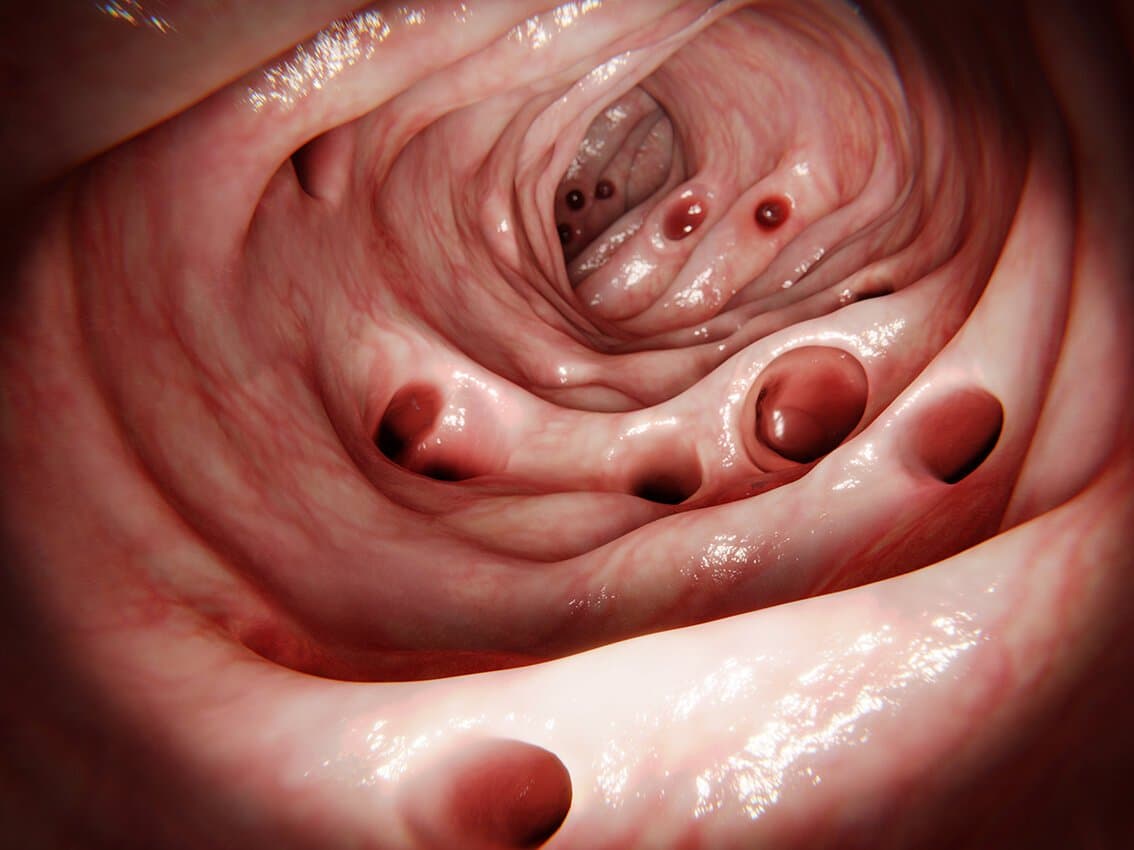
Diverticulitis occurs when small pouches (diverticula) that form in the colon become inflamed or infected. The pain is usually in the lower left abdomen, it builds over several days, and it often comes with a fever.
FRCSEd (General Surgery)Five clinics in Singapore
In short
Pouches
What diverticula are
Small pouches that form where weak spots in the intestinal wall bulge outward. Diverticulitis is what happens when one of them becomes inflamed or infected.
Left or right
Where it hurts, and why that differs here
Pain is classically in the lower left abdomen. In Singapore right-sided pouches are about twice as common as left-sided ones, so lower right pain is not the exception it is in Western textbooks. Source: Soh et al., Journal of Gastroenterology and Hepatology, 2021.
Antibiotics
How most attacks are settled
Most attacks are treated without surgery, using bowel rest and, when they are needed, antibiotics. Current guidance is to use them selectively rather than for every mild uncomplicated episode. Source: American Gastroenterological Association, Gastroenterology, 2021.
10 to 20%
Have a second episode
Pooled recurrence after non-surgical treatment is about 10% for right-sided disease and about 20% for left-sided. Longer hospital follow-up runs higher. Source: Huang et al., World Journal of Emergency Surgery, 2022.
What every patient should know
What every patient should know
Left or right
Where the pain sits, and why Singapore differs
Source: Soh et al., Journal of Gastroenterology and Hepatology, 2021; Wong et al., Diseases of the Colon and Rectum, 1997
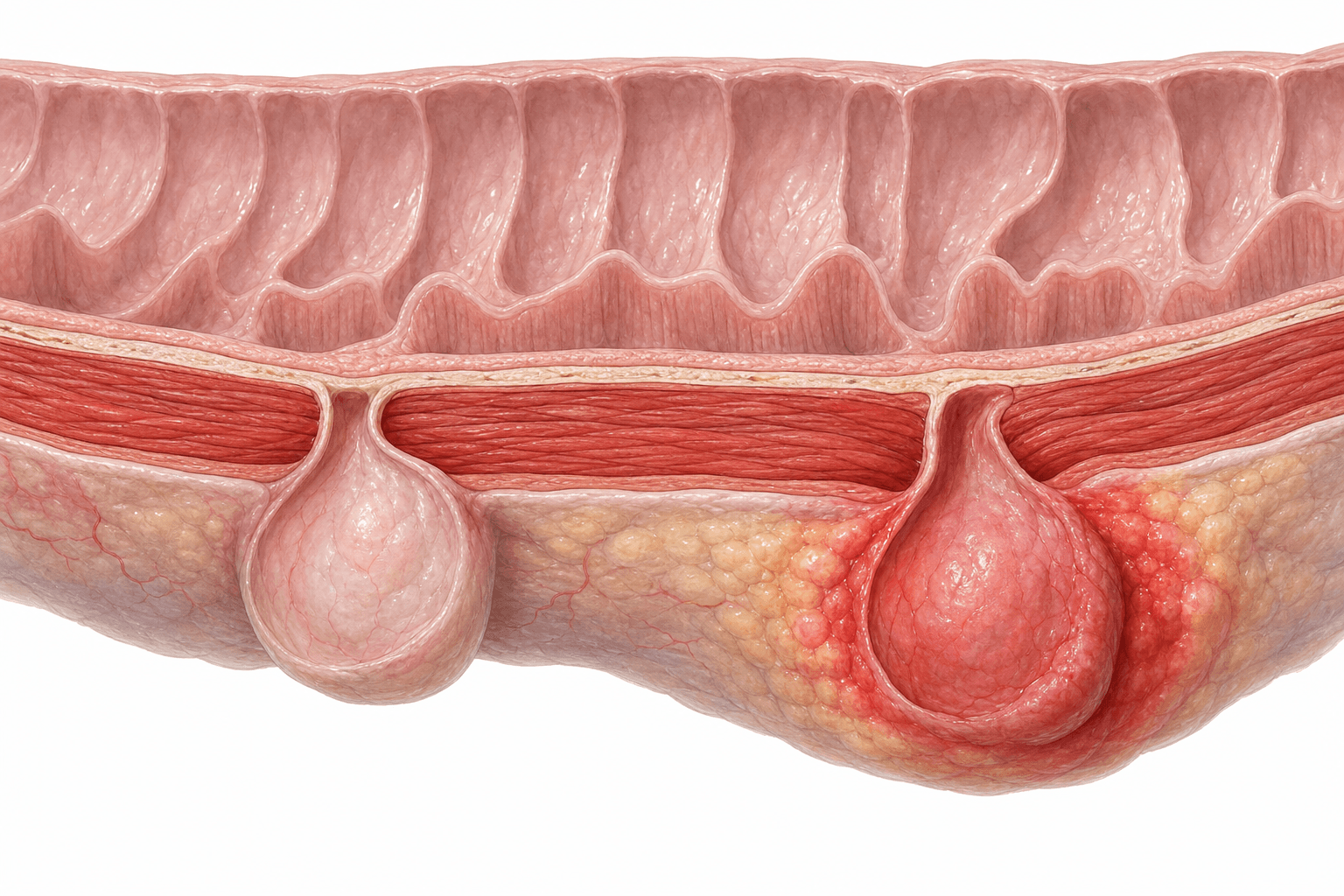
A weak spot bulges
A pouch forms in the intestinal wall
It inflames or infects
This is the point the pain starts
It is treated and settles
Bowel rest, and antibiotics if needed
About 4%
Of people with pouches ever have an attack
Source: Shahedi et al., Clinical Gastroenterology and Hepatology, 2013
7 to 14
Days on antibiotics, when they are needed
Source: Dr Sulaiman Bin Yusof, published clinical guidance; American Gastroenterological Association, Gastroenterology, 2021
10 to 20%
Have a second episode after non-surgical treatment
Source: Huang et al., World Journal of Emergency Surgery, 2022
Out of ten patients treated without surgery
- Right-sided, another episode
- About 10%
- Left-sided, another episode
- About 20%
Source: Huang et al., World Journal of Emergency Surgery, 2022
His story
Dr Sulaiman Bin Yusof
Senior Consultant Colorectal and General Surgeon, seeing patients at five clinics in Singapore.
- MBChB (Sheffield), M.Med (Surgery), FRCSEd (General Surgery)
- Consults in English and Malay
- MOH Fellowship, Peter MacCallum Cancer Centre, Melbourne
- Singapore Health Quality Service Star Award 2023
- Dean's Honour Roll for Teaching
Symptoms to act on
The symptoms that mean this is worth getting looked at.
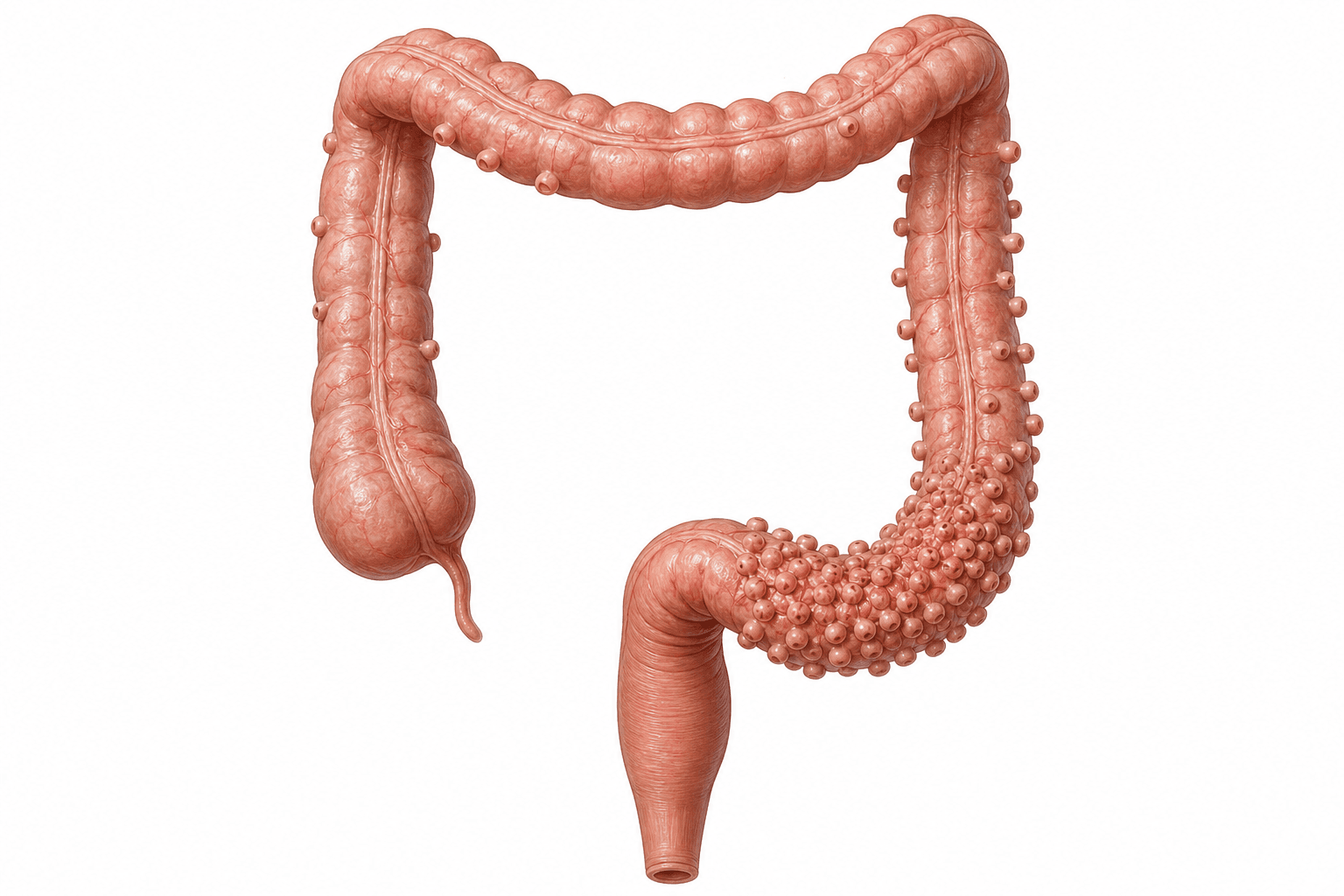
Diverticulitis occurs when small pouches (diverticula) that form in the digestive tract, typically in the colon, become inflamed or infected. When inflammation or infection occurs, patients may experience severe abdominal pain, changes in bowel habits, and other digestive symptoms that can affect daily activities.
Abdominal pain
Persistent pain typically occurs in the lower left abdomen, though some patients experience pain on the right side. The pain often intensifies over several days and may worsen with movement. In Singapore right-sided pouches are the more common kind, so pain low on the right deserves the same attention here as pain low on the left, and should not be dismissed because overseas patient information describes this as a left-sided condition.
Fever
Body temperature may rise above 38°C, indicating the presence of infection. This commonly appears alongside other digestive discomfort.
Nausea and vomiting
These symptoms often accompany severe abdominal pain and may affect eating habits. Some patients experience loss of appetite for several days.
Changes in bowel habits
Patients may experience constipation or, less commonly, diarrhoea. These changes can last several days to weeks.
Bloating
The abdomen may become distended and feel tender to touch. This discomfort often increases after eating.
Blood in the stool
Some patients notice bright red blood in their stool or on toilet paper. Bleeding is more characteristic of the pouches themselves bleeding than of the inflammation, and the two are treated differently, so it is worth reporting as its own problem rather than folding it into an attack. Either way, this symptom requires prompt medical attention to determine its cause.
These symptoms overlap with several other bowel conditions, so having one of them does not mean diverticulitis is the answer. It means the cause is worth establishing properly rather than guessing at.
Bleeding is worth separating from the inflammation, and Singapore data is the reason. In a Singapore General Hospital series of 180 patients with diverticular disease, right-sided pouches presented with significant rectal bleeding in 55% of cases against 23% for left-sided pouches, while inflammation was the more common left-sided presentation. Source: Wong et al., Diseases of the Colon and Rectum, 1997. Bleeding and an attack are not the same event, and the treatment differs.
What bright red blood in the stool can mean, and when it needs seeing quickly, is set out in more detail in what blood in your stool can mean.
Acute, chronic, complicated
Not every attack is the same, and the difference sets the treatment.
Diverticulitis manifests in different forms that require specific treatment approaches.
48 hours
How fast an acute attack builds
Source: Dr Sulaiman Bin Yusof, published clinical guidance
Acute diverticulitis
Sudden onset of inflammation or infection of diverticula. Symptoms develop rapidly and may range from mild to severe, often appearing within 48 hours. Treatment typically involves antibiotics and temporary dietary modifications to allow the bowel to heal. Some patients recover within a week with appropriate treatment.
Chronic diverticulitis
Long-term, recurring inflammation that can lead to persistent symptoms. Patients experience repeated episodes of acute diverticulitis with varying intensity, often several times per year. This form may require long-term management strategies and lifestyle modifications. Regular medical monitoring helps prevent complications.
Complicated diverticulitis
Development of serious complications such as abscess formation, perforation, or fistula. This type requires immediate medical intervention and often surgical treatment. Recovery periods vary depending on the specific complication and treatment approach, typically ranging from several weeks to months.
The three complications named above are the ones that change the plan. An abscess is a walled-off collection of pus, and what one is and how it is drained is set out on the perianal abscess page. A fistula is an abnormal connection between two structures that should not be joined, and anal fistula explains what that means and how one is repaired. A perforation is a hole in the bowel wall, and it is a surgical emergency.
Treatment options
What settles an attack, and when surgery comes into it.
Which of these applies depends on how severe the episode is, whether complications are present, and how often attacks have been coming back.
Antibiotics if needed
Oral or intravenous, typically 7 to 14 days
Bowel rest
A clear liquid diet during the acute episode
Back to solid food
Reintroduced over about 2 to 3 days
Antibiotics
Oral or intravenous antibiotics target bacterial infection. Where they are needed, treatment duration typically ranges from 7 to 14 days, depending on symptom severity, and the medication type and delivery method depend on infection severity and patient factors. Not every attack needs them. Current gastroenterology guidance is to use antibiotics selectively rather than routinely in otherwise healthy patients with mild uncomplicated disease, and to use them without hesitation where a patient is immunocompromised.
Dietary modifications
A clear liquid diet allows bowel rest during acute episodes. Gradual reintroduction of solid foods occurs as symptoms improve, with emphasis on high-fibre foods once inflammation resolves. This process typically takes 2 to 3 days.
Pain management
Over-the-counter or prescription medications help control abdominal pain. These medications are used temporarily until acute symptoms subside, and the choice depends on pain severity and patient tolerance. Anti-inflammatory painkillers are the exception worth knowing about. Current guidance is to avoid non-steroidal anti-inflammatory drugs where possible, aside from aspirin prescribed to protect the heart, so pain relief here is worth choosing with the doctor rather than off a pharmacy shelf.
Bowel resection
This involves removing the affected sections of the colon using either traditional or laparoscopic surgery. It is typically performed for recurring episodes or complications such as fistulas or strictures. The choice of surgical technique depends on the extent of the disease and individual patient factors. Current guidance is that elective surgery should not be advised on the number of past episodes alone, but decided case by case against severity, symptoms and what the patient wants.
Primary bowel anastomosis
After removing the diseased portion of the colon, the healthy sections are reconnected. Recovery usually requires 4 to 6 weeks of limited activity. The success of the procedure depends on the condition of the tissues and the surgical method used.
Temporary colostomy
In severe cases or when complications arise, a temporary opening (stoma) is created in the abdomen to divert waste. This is usually reversible, with closure performed after the affected area has healed. The colostomy is generally in place for three months to a year.
Where an operation is needed, the affected section of colon is removed and the healthy ends are reconnected, either through keyhole incisions or as open surgery. Which technique is used depends on the extent of the disease and on individual patient factors, and Dr Sulaiman will go through which applies to your own case, and why, at consultation rather than leave you guessing.
The guidance on selective antibiotic use, on avoiding anti-inflammatory painkillers, and on not deciding surgery by episode count comes from the American Gastroenterological Association clinical practice update on the medical management of colonic diverticulitis, published in Gastroenterology in 2021.
How it is diagnosed
Confirming it, and ruling out what else it could be.
The diagnosis is usually made from examination, blood tests and imaging during the attack itself, with a colonoscopy following later once the inflammation has settled.
Examination
Abdominal tenderness, vital signs
Blood tests
Results typically within 24 hours
CT scan
Identifies abscess or fistula
Colonoscopy
Later, once symptoms have resolved
Physical examination
The doctor checks for abdominal tenderness and other physical signs. This examination helps determine the location and severity of inflammation while ruling out other conditions. The doctor also assesses vital signs and overall health status.
Blood tests
Laboratory analysis checks for signs of infection and inflammation. These tests measure white blood cell count and other markers that indicate the presence and severity of infection. Results typically return within 24 hours and guide treatment decisions.
CT scan
This imaging test provides detailed views of the intestinal wall and surrounding tissues. CT scans help identify complications such as abscesses or fistulas and guide treatment decisions. The procedure requires oral or intravenous contrast material for optimal imaging.
Colonoscopy
This examination occurs after acute symptoms resolve, typically 6 to 8 weeks later. The procedure allows direct visualisation of the colon to assess the extent of diverticular disease and rule out other conditions. Preparation involves complete bowel cleansing the day before.
The colonoscopy is deliberately delayed until the inflammation has settled, typically 6 to 8 weeks after the attack. It is what establishes how extensive the diverticular disease actually is, and it rules out the other conditions that can look similar on a scan, including colorectal cancer. What the test involves, and what the day looks like, is on the colonoscopy page.
Causes and risk factors
What makes the pouches form, and what makes them inflame.
These pouches develop when weak spots in the intestinal wall bulge outward. Several factors contribute to the development of diverticulitis, and recognising these can aid in prevention.
Over 65
Where prevalence rises sharply
Source: Dr Sulaiman Bin Yusof, published clinical guidance
Age
The risk increases for individuals over 50 years as the intestinal walls naturally weaken with age. The prevalence rises significantly in those over 65 years old.
Low-fibre diet
Regular consumption of low-fibre foods increases pressure within the colon, leading to diverticula formation. This risk factor is particularly common in Western diets.
Obesity
Excess weight places additional strain on the digestive system and increases inflammation risk. A BMI over 30 particularly correlates with higher incidence.
Sedentary lifestyle
Lack of regular physical activity affects bowel motility and overall digestive health. Extended periods of inactivity can worsen symptoms.
Smoking
Regular tobacco use weakens intestinal walls and increases inflammation risk throughout the body. Smokers often experience more severe symptoms during flare-ups.
Having several of these does not mean an attack is coming. What they change is how much attention the modifiable ones are worth, and how quickly new abdominal pain should be assessed rather than waited out.
Prevention and diet
What lowers the chance of the next attack.
Prevention here is unglamorous and it is the part a patient controls, which is why it is worth being specific about.
A diet rich in fruits, vegetables, and whole grains promotes regular bowel movements and reduces pressure within the colon. Patients benefit from establishing regular eating patterns and avoiding prolonged sitting.
Weight management through healthy lifestyle choices reduces the risk of complications.
During an acute attack the advice runs the other way. A clear liquid diet allows the bowel to rest, solid food is reintroduced gradually as symptoms improve, and the emphasis on high-fibre food comes back only once the inflammation has resolved.
None of this makes another episode impossible. What it does is shift the odds, and it is the only part of this that does not need a prescription.
Common questions
The questions that come up in consultation.
Can diverticulitis be treated without surgery?
Often, yes. An acute episode is usually treated with antibiotics and temporary dietary modifications that allow the bowel to heal, and some patients recover within a week with appropriate treatment. Surgery is typically performed for recurring episodes, or for complications such as fistulas or strictures, where the affected section of the colon is removed. Which of those applies depends on how severe the episode is, whether complications are present, and how often attacks have been coming back.
Does diverticulitis require long-term dietary restrictions?
After recovering from acute episodes, most patients resume a normal diet. A high-fibre diet and adequate fluid intake support long-term digestive health. Individual tolerances may vary, and patients should adjust based on their experience.
How often do diverticulitis episodes recur?
Recurrence rates vary among individuals. About 20% of patients experience a second episode within 5 years. Adherence to dietary and lifestyle recommendations influences recurrence frequency, and no figure predicts what will happen to one person. Source: Dr Sulaiman Bin Yusof, published clinical guidance.
What is the recovery time after diverticulitis surgery?
Recovery time depends on the procedure type. Laparoscopic surgery typically requires 2 to 3 weeks for most activities, while traditional surgery may take 4 to 6 weeks. Patients should avoid strenuous physical activity until cleared by their surgeon.
Will I need a colostomy?
Usually not. A temporary colostomy, an opening created in the abdomen to divert waste, is used in severe cases or when complications arise. It is usually reversible, with closure performed after the affected area has healed, and it is generally in place for three months to a year. Whether it applies to you depends on the extent of the disease and on individual patient factors, and it is discussed before any surgery is planned rather than left for you to guess at.
Book a consultation
Are your symptoms affecting your quality of life? Get it assessed first.
If your symptoms are affecting your quality of life, book a consultation for an assessment and a treatment plan built around your own case. Appointments are available across five clinic locations in Singapore, self-referrals are welcome, and the clinic team can advise on using your insurance plan before you come in.