Laparoscopic hemicolectomy
Laparoscopic hemicolectomy is done without opening the abdomen.
A hemicolectomy removes the diseased or damaged portion of the colon and rejoins the healthy ends in the same operation.
FRCSEd (General Surgery)Five clinics in Singapore

In short
- Keyhole
- How the operation is done
- Several small incisions in the abdomen, and a laparoscope, a thin tube with a camera and a light, so the internal organs are viewed magnified on a monitor.
- Part
- How much colon is removed
- A hemicolectomy removes the diseased or damaged portion of the colon, not the whole of it. The remaining healthy ends are reconnected in the same operation.
- Four
- Reasons it is recommended
- Colon cancer, recurrent or complicated diverticulitis, inflammatory bowel disease, and polyps that cannot be removed safely at colonoscopy.
- Covered
- Insurance and corporate plans
- For Singaporeans, Singapore Permanent Residents and foreigners. Clinic staff advise on using your Integrated Shield Plan or corporate insurance.
Cost and insurance
The typical bill, and the Medisave and insurance that offset it.
MOH's transacted bill data puts the median private-hospital bill for a hemicolectomy at $55,865 (source: Ministry of Health, Singapore, fee benchmarks and bill information for SF803C, opens in a new tab), including GST, pooling keyhole and open operations. Hemicolectomy is Medisave-claimable (source: CPF Board, using MediSave for hospitalisation, opens in a new tab), and Integrated Shield Plans and corporate insurance are accepted. Speak to the clinic team about your plan before the operation is scheduled.
What can pay for it
- MediSave
- Integrated Shield Plans
- Corporate insurance
Cash to pay, after MediSave and insurance
$ ___
It depends on your MediSave balance and your policy. The clinic confirms it in writing before the operation.
Integrated Shield Plans






Corporate insurance













MediSave, Integrated Shield Plans, and private or corporate insurance may apply, subject to policy eligibility. The clinic team will check your coverage before any treatment is planned.
His story
Dr Sulaiman Bin Yusof
Colorectal surgeon with over 20 years of surgical experience, seeing patients at five clinics in Singapore.
- MBChB (Sheffield), M.Med (Surgery), FRCSEd (General Surgery)
- Consults in English and Malay
- MOH Fellowship, Peter MacCallum Cancer Centre, Melbourne
- Singapore Health Quality Service Star Award 2023
- Dean's Honour Roll for Teaching
Five clinics across Singapore
ORCHARD / NAPIER
Gleneagles Medical Centre
6 Napier Road #06-08, Singapore 258499
NOVENA
Mount Elizabeth Novena
38 Irrawaddy Road, #10-48/49, Singapore 329563
JOO CHIAT / EAST COAST
Parkway East Hospital
#05-08, 319 Joo Chiat Place, Singapore 427989
THOMSON
Mount Alvernia Hospital
#08-62, Medical Centre D, 820 Thomson Road, Singapore 574623
FARRER PARK
Farrer Park Medical Centre
#14-12, 1 Farrer Park Station Road, Singapore 217562
What to know before the operation
What to know before the operation
0.5 to 1
Centimetres, the length of each incision
The surgeon makes several small incisions in the abdomen, each about 0.5 cm to 1 cm in length. The laparoscope goes through one of them and the specialised surgical instruments through the others. Smaller incisions typically cause less trauma to the body than open surgery does.
Source: Dr Sulaiman Bin Yusof, clinical practice
Anaesthesia
General, so you are unconscious throughout
Incisions and access
The laparoscope and the instruments go in
Removal and rejoining
The diseased segment out, the ends reconnected
Closure
Sutures or staples, then sterile dressings
The diseased section of colon is removed and the healthy ends are rejoined during the same operation.
Magnified
What the surgeon is looking at
The laparoscope is a thin tube carrying a camera and a light, and the internal organs are viewed magnified on a monitor rather than directly. That magnified view is what enhances precision during the surgery.
Source: Dr Sulaiman Bin Yusof, clinical practice
Four
Reasons a hemicolectomy is recommended
Colon cancer, recurrent or complicated diverticulitis, inflammatory bowel disease where medication has stopped controlling symptoms, and polyps that are too large or too numerous to be removed safely during a colonoscopy.
Source: Dr Sulaiman Bin Yusof, clinical practice
When it is recommended
Four reasons part of the colon is taken out rather than treated.
A laparoscopic hemicolectomy is indicated for various medical conditions affecting the colon, where removing a portion of the large intestine can provide therapeutic benefits.
Diverticulitis that keeps returning, or inflammatory bowel disease that medication is no longer controlling, should be assessed rather than waited out.
Colon cancer
Laparoscopic hemicolectomy is often performed to remove cancerous tumours from the colon. By excising the affected section of the colon, the procedure helps remove cancerous cells, limit further spread, and improve the chance of long-term remission.
Recurrent or complicated diverticulitis
For patients with recurrent or complicated diverticulitis, characterised by inflamed or infected pouches, called diverticula, in the colon, a laparoscopic hemicolectomy can remove the diseased segment. This helps prevent further episodes and reduce complications such as abscesses or perforations.
Inflammatory bowel disease
Conditions such as Crohn's disease or ulcerative colitis can cause chronic inflammation and damage to the colon. When medication fails to control the symptoms or there is a risk of severe complications such as bleeding or perforation, removing the affected part of the colon can alleviate symptoms, prevent complications, and improve patient outcomes.
Polyps that cannot be removed at colonoscopy
Some patients develop large or numerous polyps with a high risk of becoming cancerous. In such cases, laparoscopic hemicolectomy may be recommended to remove these polyps, especially when they cannot be safely removed with a colonoscopy.
What each of those conditions is, and what is tried before surgery is considered, is set out on the diverticulitis and Crohn’s disease pages.
Most polyps never reach this point. What a colon polyp is and why most cause no symptoms explains which ones matter, and what a colonoscopy involves covers the removal that avoids an operation altogether in the great majority of cases.
What it is
A minimally invasive operation on one side of the large intestine.
A laparoscopic hemicolectomy is a minimally invasive surgical procedure used to remove a portion of the colon, the large intestine. It is commonly performed to treat conditions such as colon cancer, diverticulitis, or inflammatory bowel disease.
During the procedure, the surgeon makes several small incisions in the abdomen and inserts a laparoscope, a thin tube with a camera and a light, to view the internal organs magnified on a monitor. The primary purpose of this procedure is to eliminate the diseased or damaged part of the colon, reduce symptoms and improve bowel function.
Where the operation is being done for a cancer, the segment of colon is removed together with the surrounding lymph nodes, and how the whole treatment sequence is planned is set out on the colorectal cancer page.
What keyhole changes
Laparoscopic hemicolectomy offers several advantages over traditional open surgery.
Less trauma, and less pain afterwards
The smaller incisions used in laparoscopic hemicolectomy typically cause less trauma to the body, resulting in less postoperative pain and a more comfortable recovery.
Faster healing and a shorter hospital stay
Due to its minimally invasive nature, it often results in faster healing and a shorter hospital stay. Patients can usually return to normal activities more quickly, reducing overall downtime.
A lower risk of infection
Smaller incisions reduce the exposure of internal organs to external contaminants, potentially lowering the risk of postoperative infections and other complications.
A magnified view of the operating field
The laparoscope provides a magnified view of the internal organs, which enhances precision during surgery.
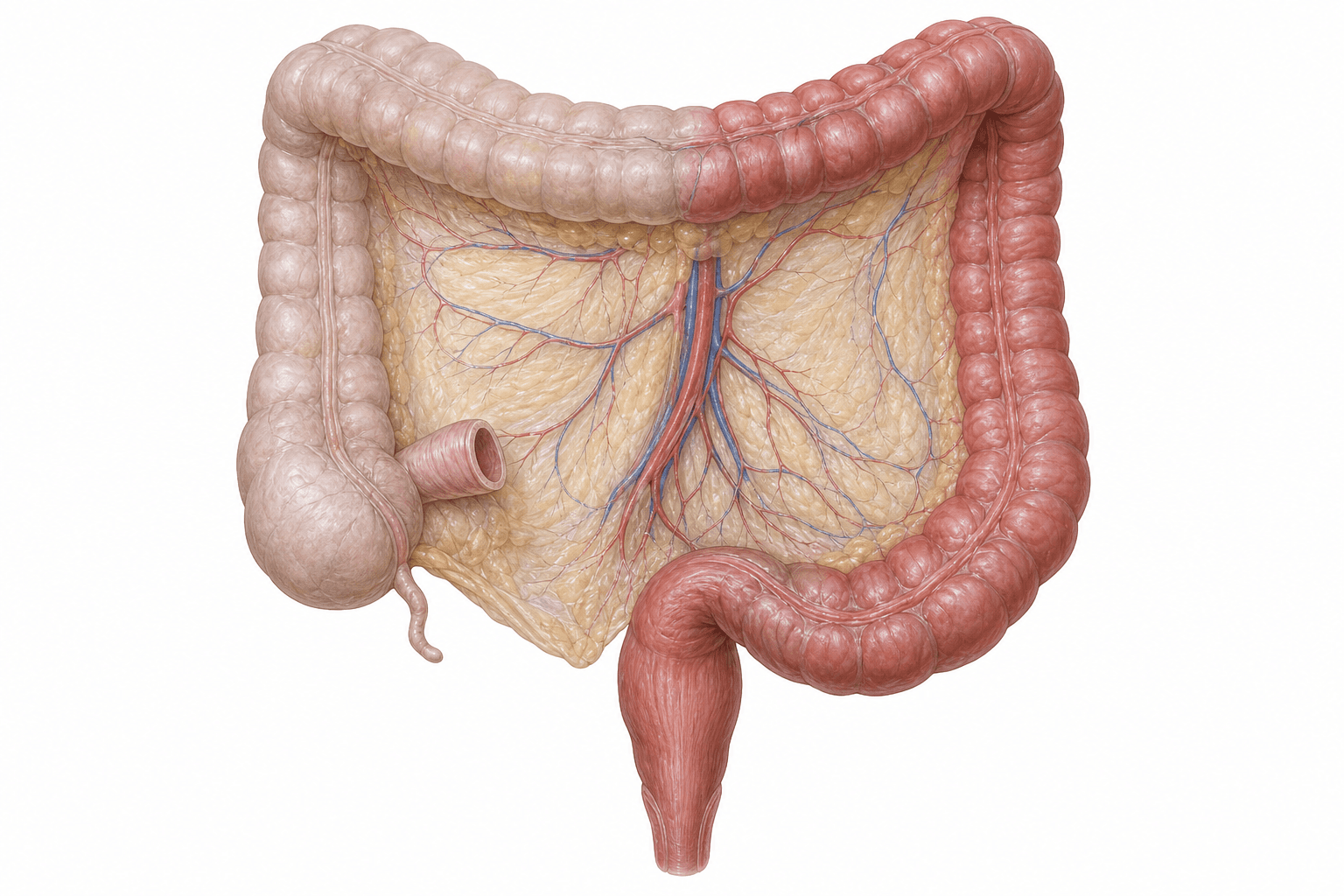
Hemi means half. The pale side is what comes out in a right hemicolectomy, which is the more common of the two; a left hemicolectomy is the mirror image. Illustration, not a photograph, and not yet certified by Dr Sulaiman.
Preparing
Most of the preparation happens before you get to the hospital.
Several preparations are necessary before a laparoscopic hemicolectomy to ensure the procedure goes smoothly and minimise the risk of complications.
Tell Dr Sulaiman about every medication you take, particularly blood thinners and aspirin, well before the day of surgery.
Medical evaluation
Patients will undergo a medical evaluation, including blood tests, imaging studies, and a physical examination. This helps the surgical team assess the patient's health and identify any conditions that may need to be addressed prior to the procedure.
Bowel preparation
For surgeries involving the colon, a bowel preparation process is often required. This involves taking a prescribed laxative solution to clean out the intestines. This ensures a clear view for the surgeon and reduces the risk of infection.
Fasting
Patients are usually required to fast from the night before the surgery, avoiding all food and drinks, including water. This helps keep the stomach empty and reduces the risk of inhaling stomach contents into the lungs during anaesthesia.
Medication adjustments
Patients may need to adjust their medications, particularly blood thinners, aspirin, or other medications that affect blood clotting. The surgeon will provide specific instructions on which medications to discontinue and when, which helps minimise the risk of bleeding during surgery.
Step by step
What actually happens once you are in theatre.
A laparoscopic hemicolectomy surgery involves several steps, and they run in the same order every time.
01
Anaesthesia
The patient is given general anaesthesia to ensure that they are unconscious and pain-free during the procedure. It is usually delivered through an intravenous line or inhaled gases, and the patient's vital signs are monitored throughout the surgery.
02
Incision and access
The surgeon makes several small incisions in the abdomen, about 0.5 cm to 1 cm in length. A laparoscope is inserted through one of the incisions, allowing the surgeon to view the internal organs on a monitor. Specialised surgical instruments are inserted through the other small incisions.
03
Removal, extraction and reattachment
The surgeon carefully detaches the affected portion of the colon from surrounding tissues and blood vessels, and the diseased section of the colon is removed. The remaining healthy ends of the colon are reconnected, which is called an anastomosis, to restore normal bowel continuity. The abdominal cavity is examined to ensure there is no bleeding and that the anastomosis is secure.
04
Closure of incisions
The surgical instruments and laparoscope are removed and the small incisions are closed using sutures or surgical staples. Adhesive strips or surgical glue may be used to secure the incisions. The incision sites are cleaned and dressed with sterile bandages.
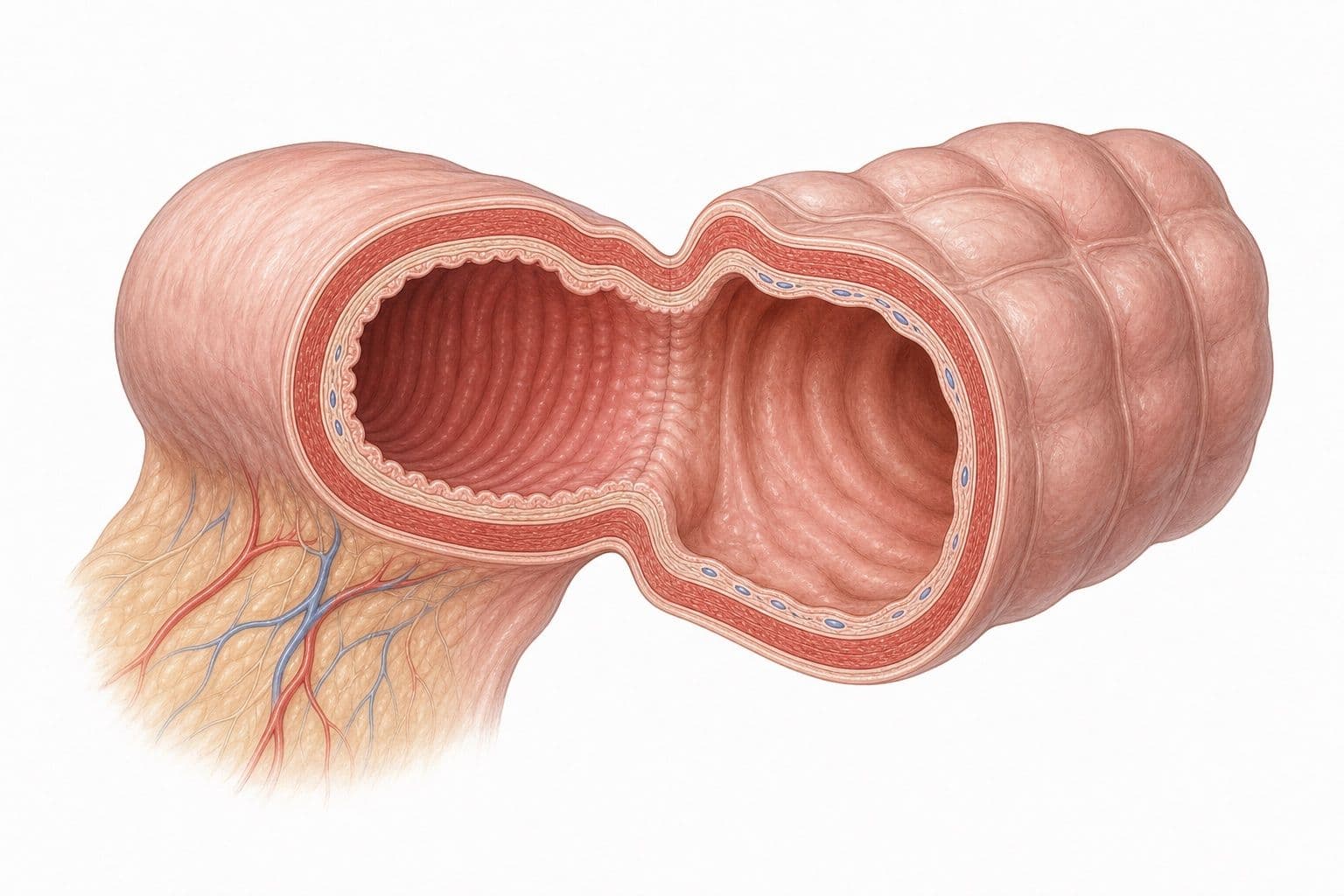
The join is called an anastomosis, and it is the step the rest of the operation is arranged around. Illustration, not a photograph, and not yet certified by Dr Sulaiman.
Afterwards
Recovery, follow-up, and when to pick up the phone.
Immediate care
After the laparoscopic hemicolectomy, the patient is moved to a recovery area where vital signs, including heart rate, blood pressure, and oxygen levels, are closely monitored. Pain management is prioritised with medications used to relieve discomfort. The surgical team also checks for any immediate complications, such as bleeding or infection, and ensures the patient is stable before moving them to a regular hospital room.
Follow-up
Follow-up appointments are scheduled to monitor the patient's progress and the healing of the surgical sites. The surgeon will check for signs of infection, ensure the bowel is functioning properly, and address any concerns the patient may have. Additional imaging or tests may be recommended if there are any complications or if the initial condition requires further monitoring.
Contact Dr Sulaiman or an emergency healthcare provider immediately if you develop severe pain, fever, or signs of infection at the incision site.
Common questions
The questions that come up before a hemicolectomy.
Will I need to change anything in daily life afterwards?
You may need to make some lifestyle changes to aid your recovery and overall health. This can include maintaining a balanced diet, exercising regularly, and avoiding heavy lifting. Your surgeon will provide detailed recommendations based on your specific health needs.
How often will I be seen after the operation?
Follow-up appointments are usually scheduled within the first few weeks after surgery to monitor your recovery and address any concerns. Additional appointments may be needed periodically to check on your long-term health and manage any underlying conditions.
What should make me contact the clinic after surgery?
If you experience severe pain, fever, signs of infection at the incision site, or any other concerning symptoms, contact your colorectal surgeon or an emergency healthcare provider immediately. Prompt medical attention is necessary to address potential complications.
How much of the colon is removed?
A portion of it, not all of it, which is what the hemi in hemicolectomy means. What comes out is the diseased or damaged section, and where the operation is being done for a cancer it is taken together with the surrounding lymph nodes. The two healthy ends are then rejoined, an anastomosis, so the bowel runs continuously again. The step-by-step account of how that is done is in the on-the-day section above.
Why keyhole rather than open surgery?
Laparoscopic hemicolectomy offers several advantages over traditional open surgery. The smaller incisions typically cause less trauma to the body, resulting in less postoperative pain and a more comfortable recovery. Because it is minimally invasive it often results in faster healing and a shorter hospital stay, and patients can usually return to normal activities more quickly. Smaller incisions also reduce the exposure of internal organs to external contaminants, potentially lowering the risk of postoperative infections and other complications. The laparoscope itself provides a magnified view of the internal organs, which enhances precision during surgery.
Book a consultation
Are your symptoms affecting your quality of life?
Looking for a hemicolectomy specialist? Your laparoscopic hemicolectomy doctor, Dr Sulaiman, performs this colorectal operation as a General Surgery specialist. Consult Dr Sulaiman for an assessment and a personalised treatment plan. He sees patients at five clinics in Singapore: Gleneagles Medical Centre, Mount Elizabeth Novena Hospital, Parkway East Hospital, Mount Alvernia Hospital and Farrer Park Medical Centre.