Colonoscopy in Singapore
A colonoscopy can remove the polyp it finds, in the same visit.
If you are deciding whether to have a colonoscopy in Singapore, see who should consider one, how to prepare, what happens during the scope and afterwards, what it costs at Dr Sulaiman’s clinic, and the MediSave limits.
Same-day appointments may be available, and a colonoscopy may be possible within 24 hours.
FRCSEd (General Surgery)Five clinics in Singapore
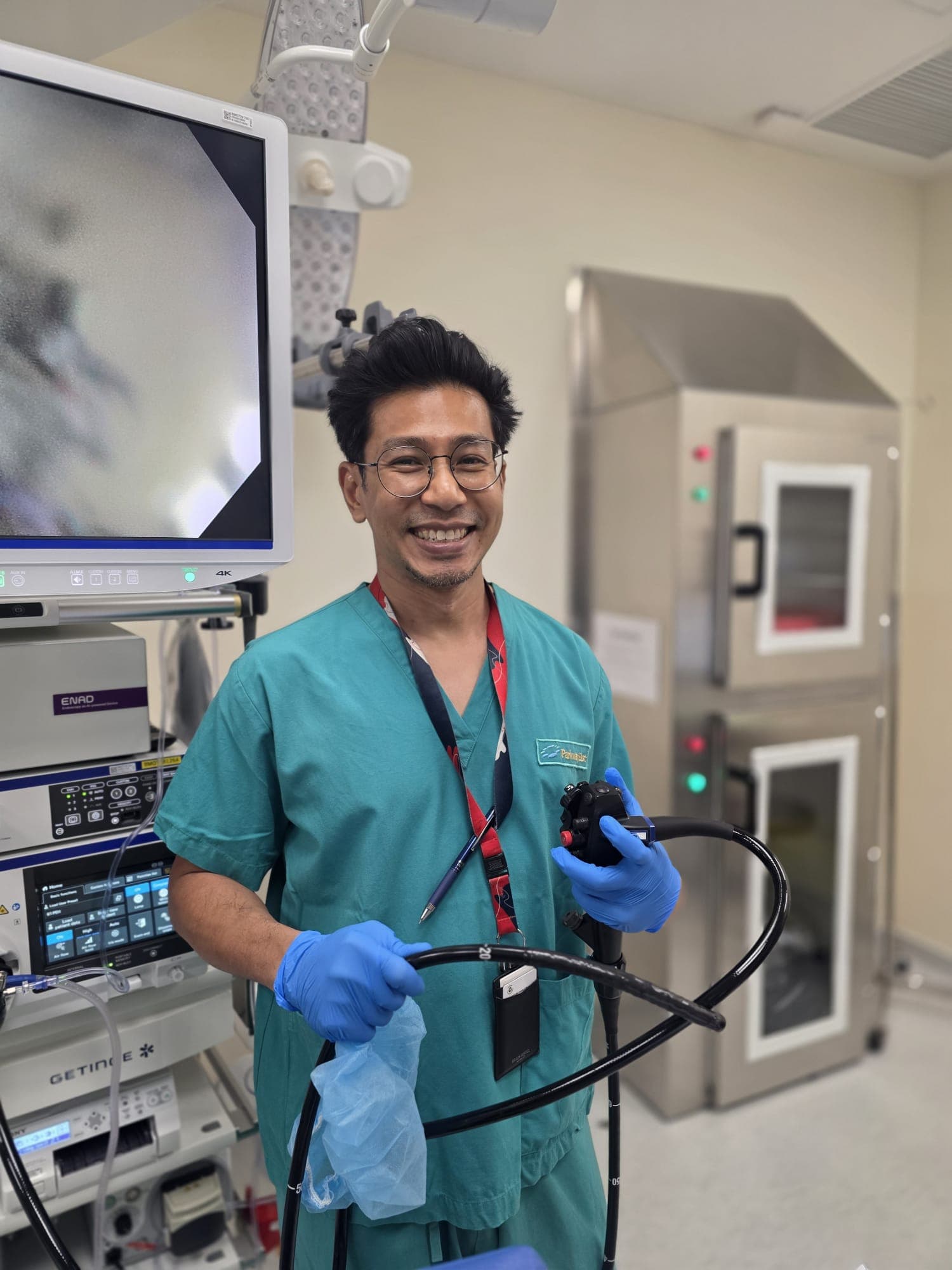
In short
- 30 to 60 min
- the examination itself, once you are sedated
- 20+ years
- of surgical experience
- 10,000+
- endoscopic procedures performed by Dr Sulaiman
- Five clinics
- where he sees patients, across Singapore
Cost and insurance
What a private colonoscopy costs, and what MediSave takes off it.
Most of a day-surgery colonoscopy is claimable from MediSave (source: CPF Board, using MediSave for hospitalisation, opens in a new tab). A routine screening before age 50 cannot use MediSave (source: CPF Board, MediSave for colonoscopy screening, opens in a new tab).
What MediSave can cover for a day-surgery colonoscopy
Up to $1,950
$1,120
operation limit for a diagnostic scope
$830
a day of day-surgery charges
The operation limit rises to $1,390 where a polyp is removed. What you can actually draw is also limited by your own MediSave balance, and the consultation beforehand is billed separately and is not part of the claim.
Cash to pay, after MediSave
$XXX
It depends on your own MediSave balance. The clinic confirms it in writing before the procedure.
Colonoscopy cost in Singapore
- Colonoscopy, his published base priceCovers the procedure, standard sedation, and daycare admission and recovery.
- $1,362.50
- Consultation, beforehandBilled separately. It is not part of the procedure claim.
- $87.20
- Polyp removal, if one is foundRaises the MediSave operation limit from $1,120 to $1,390.
- +$545
- Biopsy, if one is taken
- +$381.50
- If both additions applyThe three procedure-related charges total this, before the consultation and the exclusions below.
- $2,289
Added only if needed
Prices include 9% GST (before GST: $1,250 scope, $80 consultation, $500 polyp removal, $350 biopsy) and exclude take-home medicines and lab tests.
Integrated Shield Plans






Corporate insurance













MediSave, Integrated Shield Plans, and private or corporate insurance may apply, subject to policy eligibility. The clinic team will check your coverage before any treatment is planned.
What the scope looks for
A polyp is a growth on the lining of the colon.
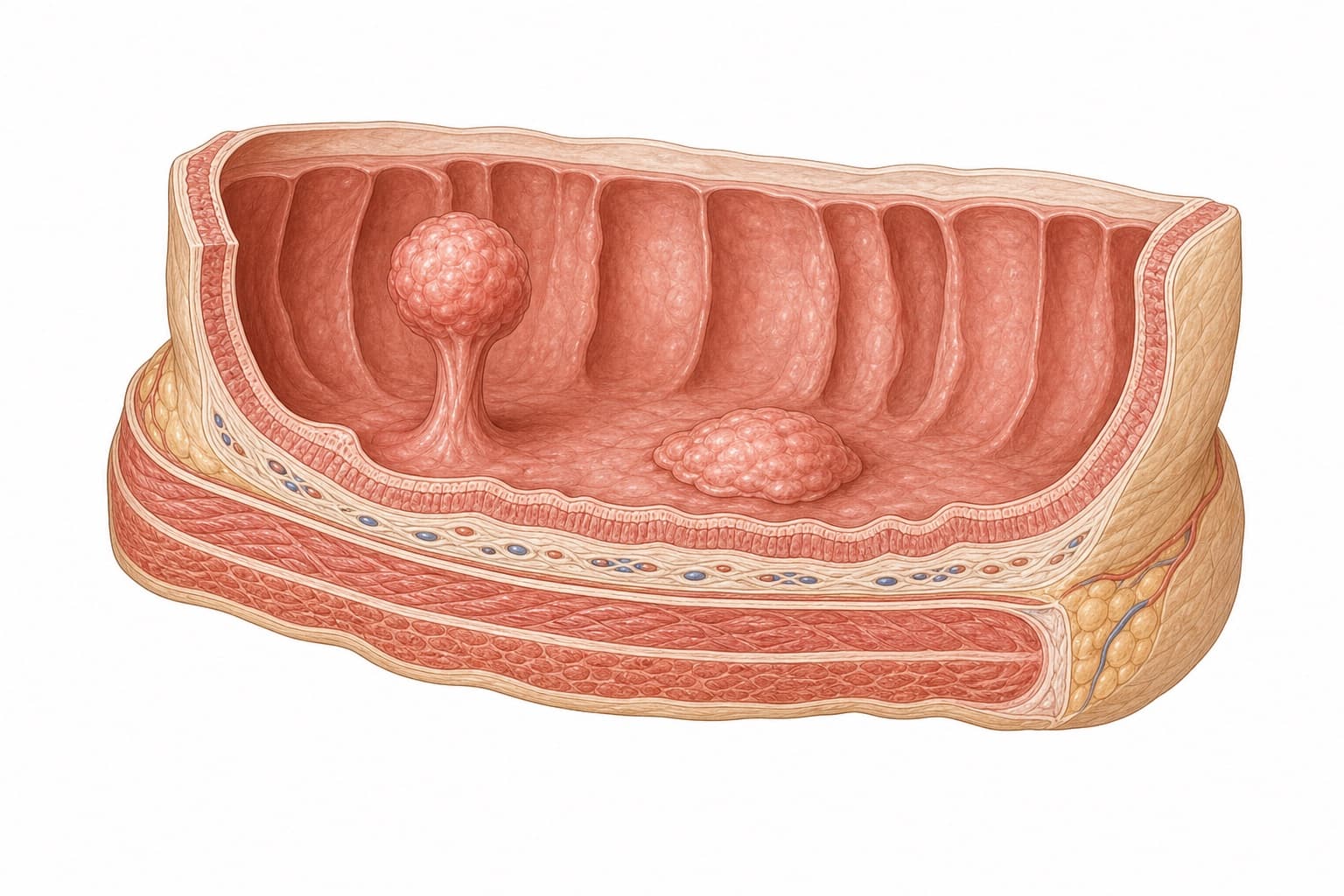
A colonoscopy examines the whole colon directly and can remove a polyp during the same session.
For a closer explanation of these growths, see the colon polyps page.
Examine the colon
The camera looks at the bowel lining directly
Take a biopsy
A tissue sample can be sent to the laboratory
Remove a polyp
When one is found and suitable for removal
His story
Dr Sulaiman Bin Yusof
Senior Consultant Colorectal and General Surgeon, seeing patients at five clinics in Singapore.
- FRCSEd (General Surgery)
- More than 20 years of surgical experience
- 10,000+ endoscopic procedures
- 100+ robotic cancer operations
- Former Director of Endoscopy, Changi General Hospital
- Peter MacCallum Cancer Centre, Melbourne
Five clinics across Singapore
ORCHARD / NAPIER
Gleneagles Medical Centre
6 Napier Road #06-08, Singapore 258499
NOVENA
Mount Elizabeth Novena
38 Irrawaddy Road, #10-48/49, Singapore 329563
JOO CHIAT / EAST COAST
Parkway East Hospital
#05-08, 319 Joo Chiat Place, Singapore 427989
THOMSON
Mount Alvernia Hospital
#08-62, Medical Centre D, 820 Thomson Road, Singapore 574623
FARRER PARK
Farrer Park Medical Centre
#14-12, 1 Farrer Park Station Road, Singapore 217562
Where he consults
Where you can have your colonoscopy with Dr Sulaiman.
Looking for a colonoscopy specialist? Your colonoscopy doctor, Dr Sulaiman, consults at five hospital locations across the island. Choose the one nearest you and ask about a colonoscopy there.
- 6 Napier Road #06-08, Singapore 258499On the Gleneagles Hospital campus, Napier Road
ORCHARD / NAPIER
Gleneagles Medical Centre
- 38 Irrawaddy Road, #10-48/49, Singapore 329563
NOVENA
Mount Elizabeth Novena
- #05-08, 319 Joo Chiat Place, Singapore 427989
JOO CHIAT / EAST COAST
Parkway East Hospital
- #08-62, Medical Centre D, 820 Thomson Road, Singapore 574623
THOMSON
Mount Alvernia Hospital
- #14-12, 1 Farrer Park Station Road, Singapore 217562In Connexion, the building linked to Farrer Park Hospital
FARRER PARK
Farrer Park Medical Centre
Screening intervals
Who should consider a colonoscopy, and when.
Three situations, and the interval is different in each.
10
Years
Age 50 and above, with no symptoms
A colonoscopy every 10 years, or a FIT stool test every year. Of the two, the colonoscopy is the only one that can remove a polyp during the same session. HealthHub publishes the ten-yearly interval for this group.
5
Years
A family history, or higher risk
A first-degree relative diagnosed at 60 or younger, or two or more first-degree relatives: a colonoscopy every 5 years, starting 10 years before the youngest case in your family or at 40, whichever comes first.
Any
Age
Symptoms, at any age
Lower abdominal pain with anaemia or unexplained weight loss
Source: HealthHub, Singapore.
Looking for information about a diagnosis rather than screening? See the colorectal cancer page.
Against the other tests
Colonoscopy and FIT, side by side.
FIT is a yearly stool test that detects hidden blood. A colonoscopy examines the whole colon directly and can remove a polyp during the same session.
| Colonoscopy | FIT, the stool test | |
|---|---|---|
| What it does | Examines the entire colon directly | Detects hidden blood in a stool sample |
| Can remove a polyp in the same session | Yes | No |
| Interval for average-risk screening from age 50 | Every 10 years | Every year |
Source: HealthHub, Singapore.
Preparation
Getting the colon clean.
What the scope can see depends on this part.
A few days before
Follow a low-fibre diet. Tell the clinic every medication you take. Blood thinners may need to pause, and the team will advise you.
The day before
Have clear liquids only, such as clear broths, tea, black coffee, clear juices and water. Avoid anything red or purple. Begin the prescribed laxative solution, usually split into two doses.
Prep complete
Stools run clear and watery. That is the finish line, and it is what makes the examination accurate.
On the day
Have no food for about 6 hours and no fluids for 2 hours before. Arrange for someone to take you home.
The full instructions, day by day, including the medicines that need pausing and what changes if you have diabetes or take blood thinners, are on the colonoscopy bowel preparation page. For meal choices in the days before, read the low-residue diet article.
“The cleaner the colon, the better we can detect polyps.”
What happens on the day
Every step, in his own words.
The film runs for 85 seconds. Everything below it is a sentence he speaks in it, with the time it arrives, so you can hear him say it yourself.
What happens during a colonoscopy, step by step.
01
Sedation
Given through a drip
02
Insertion
Lying on your left side
03
Examination
The whole colon is examined
04
Biopsy or removal
If there is something to test
05
Recovery
Until the sedation wears off
00:21
“Once you're in the scope room, you'll lie down on your left side, and then we will begin the scope once you're properly sedated.”
The sedation is given through a drip. Most patients remember little or nothing of the procedure itself.
00:33
“So the scope will begin here and examine the entire big intestine all the way to the beginning.”
A small amount of air opens the walls of the colon so the camera has a clear view. The examination takes 30 to 60 minutes. Removing a polyp can add time.
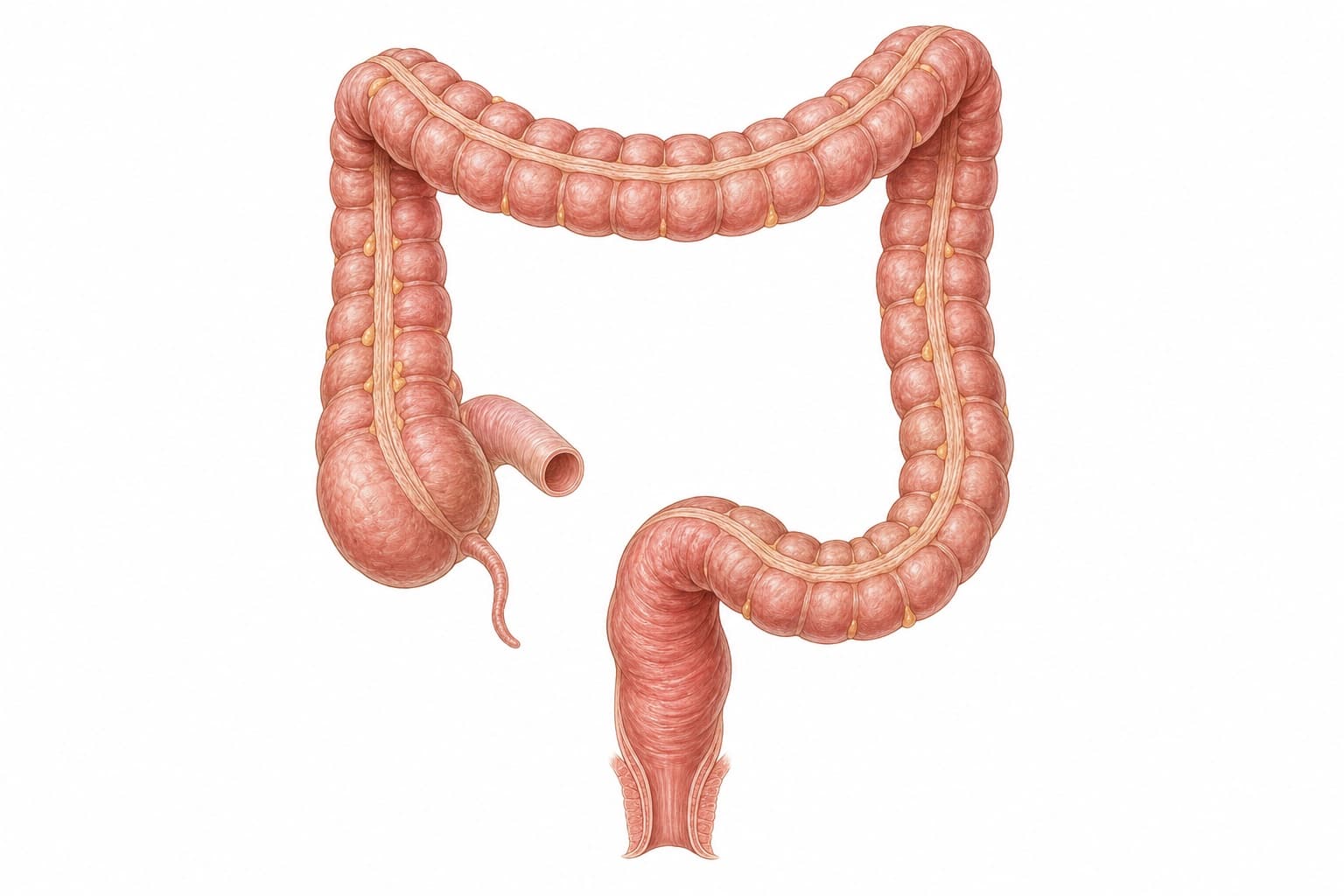
Illustration of the colon examined during a colonoscopy. 00:37
“And during that process, if we see any abnormal polyps or growth within the colon, we will do a biopsy or remove it and be sent for testing.”
Most are dealt with there and then, so you do not need a second appointment. Anything sent to the laboratory is discussed at your follow-up, typically within one to two weeks.
00:50
“Once your scope is done, you'll be brought to the recovery area. It takes between about 10 to 15 minutes before the sedation starts to wear off and you become more aware.”
01:02
“At most you'll feel a bit bloated because we do pump air into the colon. Once the air is passed out you'll feel much better.”
01:09
“Once you can have something to eat and drink you're more or less ready to go home.”
Source: Dr Sulaiman Bin Yusof, and his clinic’s published procedure guidance.
Afterwards
The rest of that day.
What his clinic publishes for the hours after the procedure.
Most patients feel well enough to leave within 1 to 2 hours, and you should allow 3 to 4 hours at the hospital in total. Do not drive and do not use heavy machinery for the rest of that day. A small amount of blood in the stool can happen for a few days after a polyp is removed, and it usually settles on its own.
Results of any biopsies are discussed at your follow-up, typically within one to two weeks.
Risks
What can go wrong after a colonoscopy.
Complications are uncommon, but it is important to know what to watch for.
- UncommonBleeding
- Bleeding is uncommon and is more likely where a polyp has been removed. It usually settles on its own.
- UncommonA tear in the colon wall
- A tear in the colon wall is called a perforation. It is uncommon.
- UncommonA reaction to the sedation
- A reaction to the sedation is uncommon and is more likely in older patients or people with other health conditions. Tell the team about every medication you take.
Seek urgent care
Seek urgent care if you develop severe abdominal pain, fever or chills, heavy or persistent rectal bleeding, or dizziness after your procedure.
Common questions
Questions people ask before a scope.
How often do I need one?
If your result is normal and your risk is average, once every 10 years from age 50 (source: HealthHub, Singapore, screening for colorectal cancer, opens in a new tab). A FIT stool test every year is the alternative. With a family history, or if polyps were found, your interval will be shorter, typically every 3 to 5 years. Source: HealthHub.
What is the difference between a FIT test and a colonoscopy?
Both are used for colorectal screening. FIT is a yearly stool test that detects hidden blood. A colonoscopy examines the entire colon directly and can remove polyps during the same session, which is why a normal result only needs repeating about once every 10 years.
What does a colonoscopy detect?
It examines the whole large intestine directly, so it can find polyps, early colorectal cancer, sources of bleeding such as haemorrhoids or diverticular disease, and inflammation of the bowel lining. If a polyp is found, it can usually be removed during the same scope.
Is a colonoscopy a major surgery?
No. It is a day procedure under sedation, not an operation. There is no incision, and most patients go home the same day and are back to normal activities the next day.
Does a colonoscopy hurt?
With sedation, most patients feel nothing and remember little or nothing of the procedure. Mild cramping or bloating afterwards is normal and settles within hours. Dr Sulaiman will not tell you there is no pain at all.
How long should I set aside?
Plan for 3 to 4 hours at the hospital in total, which is his clinic's published guidance. Most patients feel well enough to leave within 1 to 2 hours afterwards. Arrange for someone to take you home, because you must not drive afterwards.
What happens if you find a polyp?
In his words, if we see any abnormal polyps or growth within the colon, we will do a biopsy or remove it and send it for testing. Most are dealt with there and then, so you do not need a second appointment. What can be seen during the scope, such as a polyp removed, is explained to you on the day. Results are typically discussed at your follow-up within one to two weeks.
How much does a colonoscopy cost in Singapore?
The Ministry of Health publishes fee benchmarks for the private sector. For a colonoscopy with or without biopsy the surgeon fee benchmark is $1,200 to $1,800 (source: Ministry of Health, Singapore, fee benchmarks and bill information for SF702C, opens in a new tab), rising to $1,700 to $2,400 (source: Ministry of Health, Singapore, fee benchmarks and bill information for SF704C, opens in a new tab) where a polyp is removed, and the anaesthetist fee benchmark is $550 to $800 (source: Ministry of Health, Singapore, fee benchmarks and bill information for SF702C, opens in a new tab). Both figures exclude GST, and the hospital's own day-surgery charge is billed on top of them. A benchmark is a reference range published for the whole private sector. It is not a fee cap, and it is not any one surgeon's price. Dr Sulaiman's own published figures are set out in the cost section of this page. Source: Ministry of Health fee benchmarks, private sector, with effect from 1 January 2025.
Can I use MediSave for a colonoscopy?
Yes, for the procedure. The published operation limit is $1,120 (source: Ministry of Health, MediSave withdrawal limits, opens in a new tab) for a diagnostic scope and at least $1,390 (source: Ministry of Health, MediSave withdrawal limits, opens in a new tab) where a polyp is removed, and eligible day surgery charges may draw up to a further $830 a day (source: Ministry of Health, MediSave withdrawal limits, opens in a new tab). If you have symptoms, a positive stool test, or a history of polyps, it is a diagnostic scope and there is no age condition. A purely routine screening scope has one: you need to be 50 or older (source: CPF Board, MediSave for colonoscopy screening, opens in a new tab). The consultation beforehand is billed separately. It is not part of the claim. Source: Ministry of Health, current limits from 1 April 2025.
Ask about a colonoscopy
Talk it through with the surgeon who does it.
If you have been putting this off because of embarrassment, fear of not knowing where to start, this is a conversation worth having.