Colorectal cancer
Colorectal cancer is Singapore's second most common cancer.
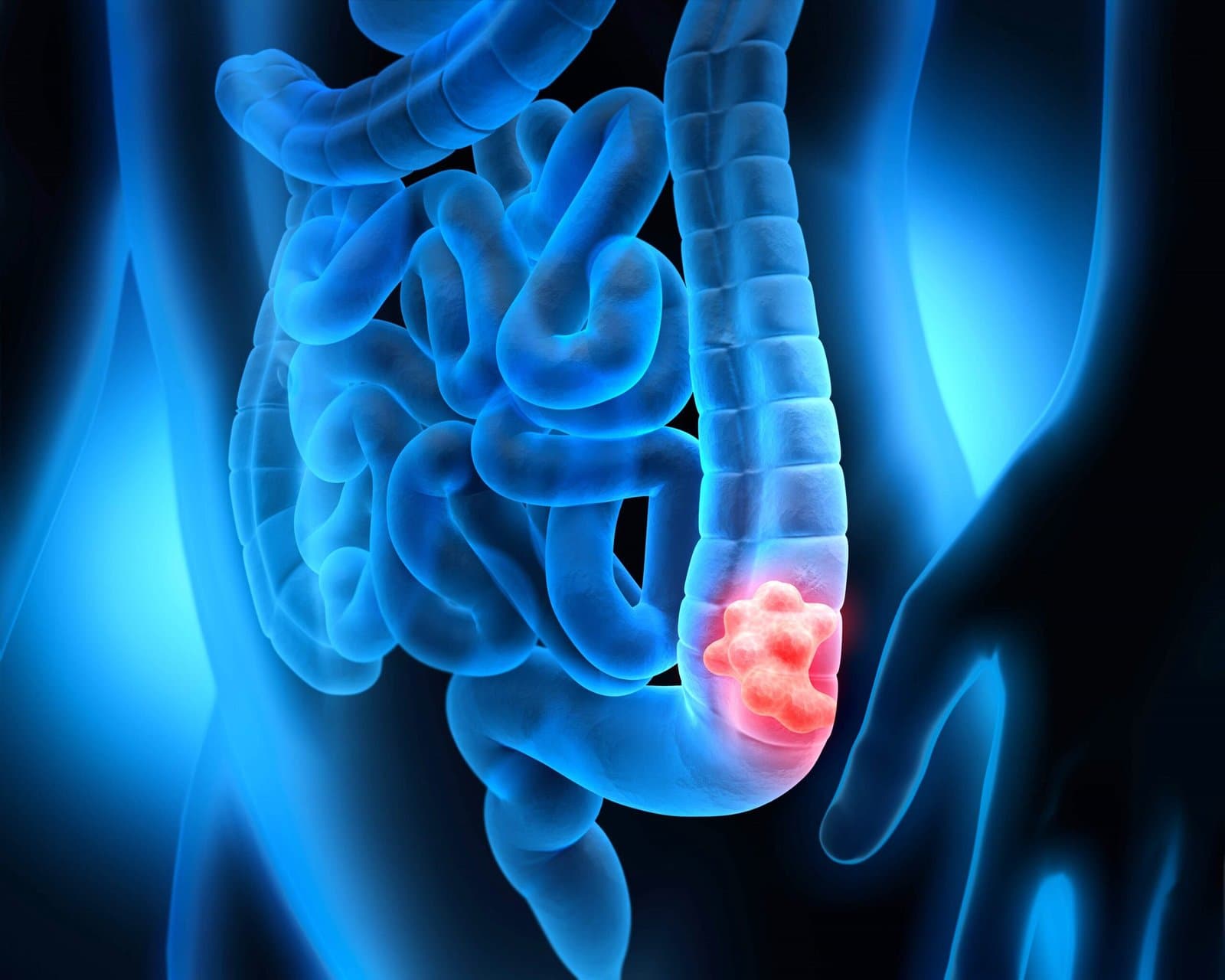
It begins in the colon or the rectum, almost always from a polyp that has been growing quietly for years.
FRCSEd (General Surgery)Five clinics in Singapore
In short
2nd
Most common cancer here
Quiet
How it usually starts
10 to 15
Years of warning
Under 50
Rising group
What every patient should know
Colorectal cancer, what every patient should know
12,950
Cases, 2019 to 2023
Colorectal cancer cases diagnosed in Singapore over the 2019 to 2023 registry window. It is the second most commonly diagnosed cancer here in both men and women, behind prostate and breast.
Source: Singapore Cancer Registry (source: National Registry of Diseases Office, Singapore Cancer Registry, opens in a new tab), via NCCS (source: National Cancer Centre Singapore, colorectal cancer statistics, opens in a new tab)
10 to 15
Years of warning
How long a polyp usually takes to turn cancerous.
Source: HealthHub, Singapore (source: HealthHub, Singapore, colorectal cancer, opens in a new tab)
A polyp forms
Small, and it causes no symptoms
It grows slowly
Usually over 10 to 15 years
Removed at colonoscopy
That polyp cannot become a cancer
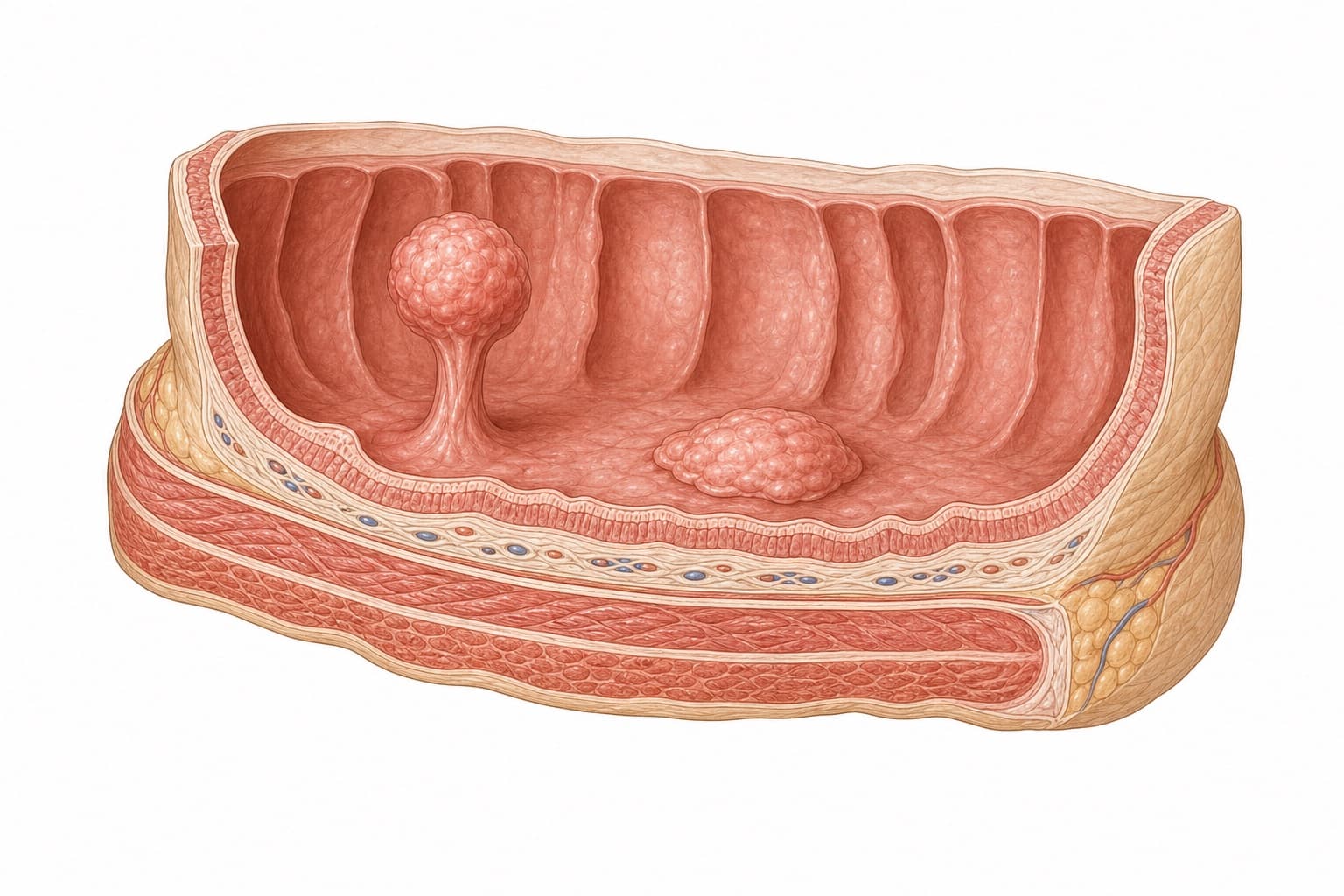
A colonoscopy is a single day-case test that both finds polyps and removes them while you are there.
84 to 86%
Five-year survival, stage one
Survival when colorectal cancer is found at stage one, 84% for men and 86% for women. By stage four it falls to about 10% and 11%. Roughly a third of cases in Singapore are still found at stage three and a quarter at stage four. Individual outcomes depend on the tumour, your general health and how the disease responds, so no figure predicts one person's result.
Source: HealthHub, Singapore
Five-year survival by stage, Singapore
- Stage 1
- 84 to 86%
- Stage 4
- 10 to 11%
Source: HealthHub, Singapore
His story
Dr Sulaiman Bin Yusof
Senior Consultant Colorectal and General Surgeon, seeing patients at five clinics in Singapore.
- MBChB (Sheffield), M.Med (Surgery), FRCSEd (General Surgery)
- Consults in English and Malay
- MOH Fellowship, Peter MacCallum Cancer Centre, Melbourne
- Singapore Health Quality Service Star Award 2023
- Dean's Honour Roll for Teaching
Five clinics across Singapore
ORCHARD / NAPIER
Gleneagles Medical Centre
6 Napier Road #06-08, Singapore 258499
NOVENA
Mount Elizabeth Novena
38 Irrawaddy Road, #10-48/49, Singapore 329563
JOO CHIAT / EAST COAST
Parkway East Hospital
#05-08, 319 Joo Chiat Place, Singapore 427989
THOMSON
Mount Alvernia Hospital
#08-62, Medical Centre D, 820 Thomson Road, Singapore 574623
FARRER PARK
Farrer Park Medical Centre
#14-12, 1 Farrer Park Station Road, Singapore 217562
Symptoms to act on
Colorectal cancer is often silent early. These are the signs worth acting on.
The following warrant assessment by a colorectal surgeon, particularly if they are new or persistent.
Blood in the stool, or a change in bowel habit lasting more than two to three weeks, should be assessed rather than watched.
Blood in the stool
It may be bright red on the toilet paper, on the surface of the stool, or dark and tarry, which points to bleeding higher up in the colon. Many people assume rectal bleeding is piles. Piles are common, but bleeding that persists or keeps coming back needs proper assessment to rule out anything more serious.
A change in bowel habit that sticks
Diarrhoea, constipation, or alternating between the two, lasting more than two to three weeks with no clear explanation.
Narrow or pencil-thin stools
A change in the calibre of the stool can indicate a narrowing of the bowel caused by a tumour.
Feeling you have not fully emptied
A persistent sensation that the bowel has not emptied, even immediately after opening it.
Unexplained weight loss
Weight loss that is not explained by a change in diet or an increase in activity.
Abdominal discomfort that is new and persistent
Cramping, bloating, or a feeling of fullness that is new and does not settle.
Fatigue, or iron deficiency on a blood test
Slow bleeding from a tumour can drain iron stores over months with no visible blood in the stool. Unexplained iron deficiency anaemia in an adult usually warrants investigation of the colon. In women who are still menstruating we first assess whether menstrual blood loss explains it.
These symptoms overlap with many benign conditions. Having one of them does not mean cancer is present. It means a proper assessment is needed. A colonoscopy gives a definitive answer, and if nothing serious is found, that certainty is itself worth having.
What the test involves, and what the day looks like, is on the colonoscopy page.
Surgery and treatment
What treatment looks like depends on stage, location and biology.
Treatment is planned through multidisciplinary discussion involving surgery, oncology and radiology, so that the sequence is decided before anything begins rather than one step at a time.
Surgery, for most cases
Surgery is the primary treatment for most colorectal cancers and is potentially curative at stages I to III. How much is removed depends on where the cancer sits.
Colon cancer
A hemicolectomy removes the affected segment of colon together with the surrounding lymph nodes. This is routinely done laparoscopically or robotically, which means smaller incisions and a shorter recovery than open surgery.
Rectal cancer
Surgery here is more demanding because the rectum sits deep within the pelvis. Depending on where the tumour lies relative to the sphincter, either a low anterior resection, which preserves the sphincter, or an abdominoperineal resection is performed. Most rectal cancers also need chemoradiotherapy before surgery to reduce the risk of the cancer coming back locally.
Robotic surgery
Robotic surgery using the Da Vinci Xi system is well suited to rectal cancer surgery, where the narrow pelvic space and the closeness of critical nerves make precision important for both cancer control and function. Dr Sulaiman has performed more than 100 Da Vinci Xi rectal cancer cases.
Chemotherapy
Given after surgery for stage III colon cancer and selected stage II cases, and before surgery in combination with radiotherapy for most rectal cancers.
Targeted therapy and immunotherapy
These have changed what is possible in stage IV disease. Tumours that are mismatch repair deficient, a specific molecular subtype, respond particularly well to immunotherapy. Molecular testing of the tumour at diagnosis is now standard practice.
Colorectal cancer surgery, including robotic surgery, is MediSave-claimable and covered by most Integrated Shield Plans.
Screening
Two ways to be screened for colorectal cancer, and they are not equivalent.
Screening is how colorectal cancer is caught before it causes symptoms, and in the case of polyp removal, before a cancer develops at all.
How much each test finds
- Colonoscopy
- Over 95%
- FIT, stool test
- 70 to 80%
Source: Dr Sulaiman Bin Yusof, clinical practice
Sensitivity for a significant lesion. The gap widens further for polyps that have not yet started bleeding, which FIT cannot see at all and colonoscopy removes on the spot.
Dr Sulaiman’s view
My first recommendation for anyone with symptoms, a family history, or who is 45 and above is a colonoscopy. It is both diagnostic and preventive in a single procedure.
For patients who are genuinely not ready for a colonoscopy, whether because of fear, time, or preference, I recommend FIT as a starting point. An annual FIT is better than no screening at all. But I am honest with my patients: FIT does not remove polyps. If your FIT is positive, a colonoscopy follows. We are not avoiding the scope indefinitely; we are building toward it.
The current MOH recommended screening age in Singapore is 50 for average-risk adults. Given the evidence on rising incidence in younger adults, I recommend assessment from age 45, in line with American Cancer Society guidelines. For anyone with a family history of colorectal cancer or polyps, I start the conversation earlier.
The prevention window
Most cancers do not announce themselves years ahead. This one does.
The majority of colorectal cancers do not appear out of nowhere. They grow from polyps, small and usually benign growths in the lining of the colon or rectum, through a well-documented process called the adenoma-to-carcinoma sequence. Where in the large bowel the cancer sits also changes the plan; how rectal and colon cancer differ is set out in its own guide.
A colonoscopy identifies polyps while they are still benign and removes them during the same procedure, so that polyp cannot go on to become cancer. This is not only early detection. It is prevention, and it is why colonoscopy is described as both a diagnostic and a preventive procedure.
What polyps are, why most cause no symptoms, and what removal involves is on the colon polyps page.
If you are in the age range for screening, or you have symptoms, every month spent waiting is a month of that window unused.
Diagnosis and staging
Confirming it, then establishing how far it has gone.
How it is staged
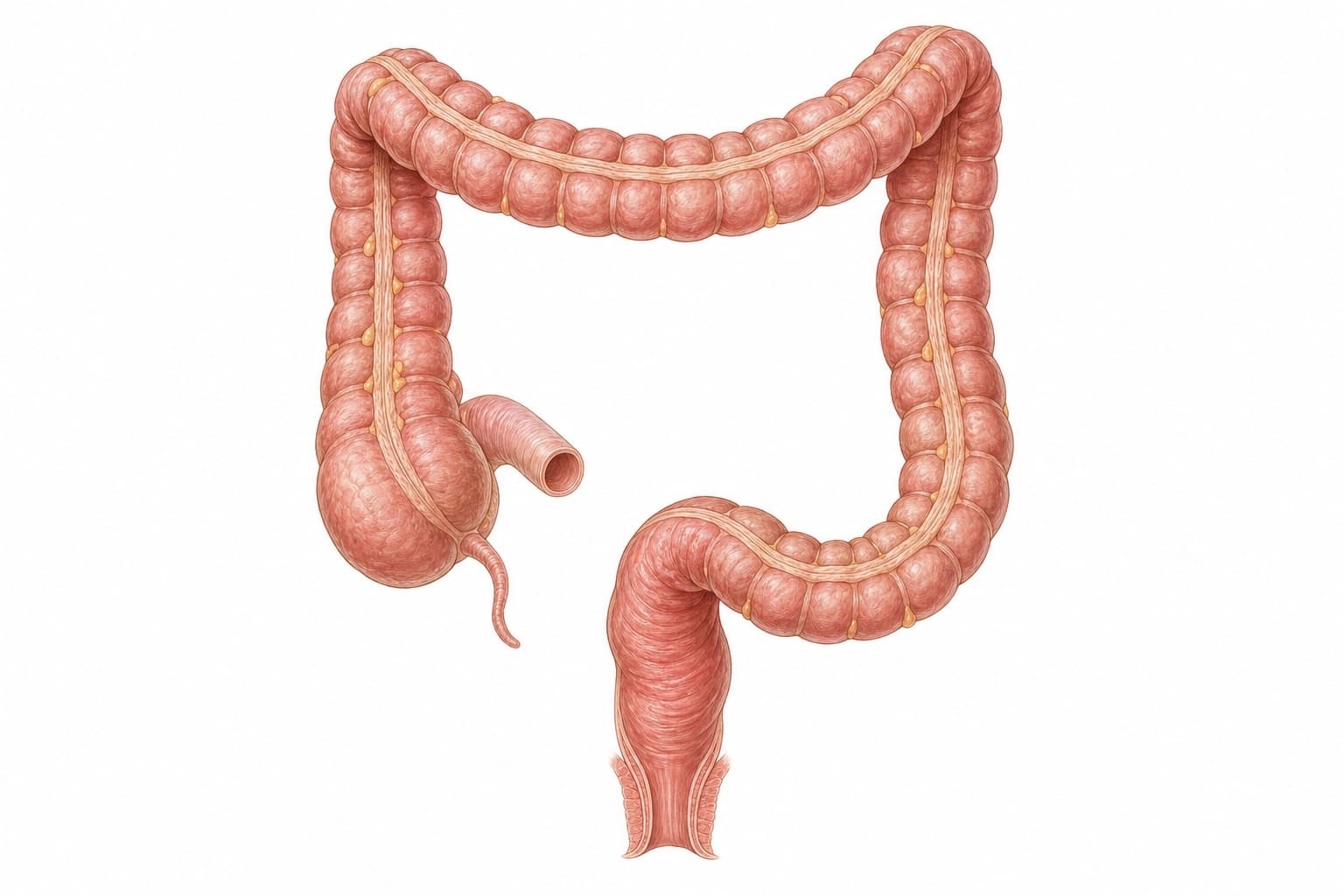
Colorectal cancer is staged using the TNM system, based on how deep the tumour has grown (T), whether lymph nodes are involved (N), and whether it has spread to distant organs (M).
| Stage | What it means | Standard treatment |
|---|---|---|
| Stage I | Cancer has grown into the bowel wall but not beyond it. No lymph node involvement. | Surgery alone is typically curative. |
| Stage II | Cancer has grown through the bowel wall into surrounding tissue. No lymph node involvement. | Surgery is the primary treatment; chemotherapy may be considered in higher-risk cases. |
| Stage III | Cancer has spread to regional lymph nodes. | Surgery followed by adjuvant chemotherapy is standard. |
| Stage IV | Cancer has spread to distant organs, most commonly the liver or lungs. | Multidisciplinary: surgery, chemotherapy, targeted therapy, and in selected cases removal of liver metastases. |
Staging is what decides the treatment, and it is not settled until the scans are done. Dr Sulaiman will go through what your own staging means, and what it changes, at consultation.
Who is at higher risk
Risk factors change when you should be screened, not whether you will get it.
Both lifestyle and inherited factors influence risk.
Doubled
Incidence in adults aged 20 to 49
Colorectal cancer incidence in younger Singaporean adults rose from about 5 to about 10 cases per 100,000 across the study window, which analysed 53,044 Singapore Cancer Registry cases between 1968 and 2019. Symptoms in a younger patient should not be put down to age.
Source: JMIR Public Health and Surveillance, 2025
- Age, with risk increasing steadily from midlife, though younger adults are not exempt
- A family history of colorectal cancer or polyps in a parent, sibling or child
- A personal history of colorectal polyps
- Inherited syndromes such as Lynch syndrome and familial adenomatous polyposis, which carry a much higher lifetime risk and need a dedicated surveillance programme
- Inflammatory bowel disease, both Crohn's disease and ulcerative colitis, with risk rising the longer the disease has been present
- A diet high in red and processed meat and low in fibre
- Obesity and physical inactivity
- Smoking
- Type 2 diabetes
Having risk factors does not mean cancer is inevitable. Many patients with several of them never develop colorectal cancer. The reason to know your risk is that it sets when you should start being screened and how often.
Step by step
What the whole path looks like, from the first test onward.
Screening or presentation
A test, or a symptom you acted on
Before treatment
Staging scans and the team discussion
Surgery
Keyhole or robotic where the tumour allows
Recovery and surveillance
Follow-up over the next five years
Common questions
Questions about colorectal cancer.
Is colon cancer the same as rectal cancer?
Both are colorectal cancers, cancers arising from the inner lining of the large bowel. Colon cancer originates in the colon, the longer portion of the large intestine. Rectal cancer originates in the rectum, the final 15 to 20 cm before the anus. They are treated differently: rectal cancer typically requires pre-operative chemoradiotherapy and technically more demanding surgery because of its location deep within the pelvis. The distinction matters significantly for surgical planning.
How common is colorectal cancer?
Around 2,600 new cases a year, about seven people every day. Source: Singapore Cancer Registry.
Does early colorectal cancer cause symptoms?
Early colorectal cancer often causes no pain and no visible bleeding. By the time symptoms appear it may already be advanced.
Is colorectal cancer hereditary?
Most colorectal cancers are sporadic, arising from genetic changes accumulated over a lifetime and influenced by diet, lifestyle and age. Roughly 5 to 10% are associated with inherited syndromes, most commonly Lynch syndrome and familial adenomatous polyposis. If you have a family history, particularly a first-degree relative diagnosed under 60, or several relatives affected, a genetic assessment may be appropriate.
At what age should I start screening?
If you have symptoms, blood in the stool, a change in bowel habit, unexplained weight loss or anaemia, then now, regardless of age. If you have a family history of colorectal cancer or polyps in a first-degree relative, you should generally start ten years before the age at which your relative was diagnosed. If you have no symptoms and no family history, screening from age 45 is the national recommendation in Singapore, and I would rather have that conversation at 45 than at 50 given what we are seeing in younger adults.
Should I do the FIT stool test or go straight to colonoscopy?
FIT detects hidden blood in the stool, which may indicate a polyp or a cancer. It is non-invasive, inexpensive, and needs no bowel preparation. What it cannot do is detect a polyp that is not yet bleeding, or remove one. A single FIT has a sensitivity of roughly 70 to 80% for colorectal cancer and considerably lower for advanced polyps. A colonoscopy sees the entire colon directly, allows the polyp to be removed in the same sitting, and exceeds 95% sensitivity for significant lesions. FIT has to be repeated every year. A normal colonoscopy buys you ten.
What does a colonoscopy involve?
The gold standard. A flexible camera examines the entire colon and rectum under sedation. It takes 30 to 60 minutes and is done as a day case. Most people return to normal activity the same day. If nothing is found, a repeat is typically recommended every ten years for someone at average risk.
What is the FIT stool test?
A non-invasive test that detects blood invisible to the naked eye, which may point to a polyp or a cancer. It needs no bowel preparation and no sedation and can be done at home. A positive result means a colonoscopy follows. It has to be repeated every year, because it is less sensitive than colonoscopy and it cannot remove a polyp.
A polyp was found. Does that mean I have cancer?
No. It depends on the type and size of the polyp. Hyperplastic polyps carry minimal cancer risk. Adenomatous polyps, the type that can progress through the adenoma-to-carcinoma sequence, need removal and surveillance follow-up. Most adenomas, found and removed early, never progress to cancer at all. The finding of a polyp is not a cancer diagnosis. It is an opportunity.
What happens first, whether you're screened or have symptoms?
A colonoscopy or a FIT. If a polyp is found and removed, that is where it ends. If a cancer is found, the diagnosis and staging workup begins.
How is colorectal cancer confirmed?
A tissue sample from any suspicious area is sent for histological analysis. This is what confirms the diagnosis.
Why is a CT scan done?
Staging the tumour, which means establishing whether the cancer has spread to lymph nodes or to distant organs, is essential before treatment can be planned.
Why is an MRI of the pelvis needed?
Required for rectal cancers, to assess the relationship of the tumour to the mesorectal fascia, the nearby structures and the sphincter complex. The MRI is what determines whether treatment is needed before surgery.
What blood tests are done?
Including a full blood count to assess for anaemia, liver function tests, and CEA, a tumour marker used for a baseline measurement and for surveillance after treatment.
Does the stage at diagnosis really change the outcome that much?
It changes it more than anything else. In Singapore, five-year survival is around 84% for men and 86% for women when colorectal cancer is caught at stage one. By stage four it falls to about 10% for men and 11% for women. The gap is not small and it is not gradual. What makes that figure urgent rather than reassuring is where Singapore actually finds these cancers: roughly a third of cases are diagnosed at stage three and a quarter at stage four. Individual outcomes depend on the tumour, on your general health, and on how the disease responds to treatment, so no figure predicts one person's result. But the single most important factor in outcome is stage at diagnosis, and that is why early detection matters so much. Source: HealthHub, Singapore.
What happens before treatment begins?
CT and MRI staging, then oncology and surgical assessment. Most rectal cancers have chemoradiotherapy first, 8 to 12 weeks before surgery.
What does the surgery involve?
A laparoscopic or robotic colectomy or anterior resection under general anaesthesia. Hospital stay is usually 3 to 5 days, and most patients are mobile within 24 hours.
Will I need a stoma?
Often not. For rectal cancer the operation depends on where the tumour sits relative to the sphincter. Where the position allows, a low anterior resection preserves the sphincter. Where the tumour is too low for that, an abdominoperineal resection is used and does involve a permanent stoma. Which one applies to you is decided from the MRI before any surgery is planned, and Dr Sulaiman will go through it with you at that point rather than leave you guessing.
What happens during recovery and surveillance?
Desk-based work is typically resumed within 2 to 4 weeks. CEA monitoring follows, with a surveillance colonoscopy at 12 months after surgery and long-term follow-up for 5 years.
Is this claimable under MediSave or insurance?
Yes. Colonoscopy, colorectal cancer surgery including robotic surgery, and the related investigations are MediSave-claimable and covered by most Integrated Shield Plans, subject to your plan terms and the applicable surgical codes. Our clinic team can advise on pre-authorisation and procedure codes before your consultation.
Book a consultation
Found early, this is one of the most treatable cancers there is. The difficulty is finding it early.
If you have symptoms you have been putting off, a family history, or you are simply due for screening, book a consultation for an assessment and a plan built around your own case. Same-day and same-week appointments are available across five clinic locations, and self-referrals are welcome.