Anal bleeding, explained by the surgeon who treats it
Blood in your stool is usually treatable, and always worth finding out.
It can also be the first sign of colorectal polyps or colorectal cancer. Any bleeding that persists, recurs, or comes with other symptoms should be assessed by a doctor.

As a colorectal surgeon with over 20 years of surgical experience in Singapore, rectal bleeding is one of the most common reasons patients come to see me. In this article, I explain what causes anal bleeding, what the colour of the blood suggests, the warning signs I take seriously in clinic, and how I investigate and treat it.
+65 8491 1525
Why I never dismiss blood in the stool
Most rectal bleeding turns out to be benign. The reason I assess every case properly is simple: colorectal cancer is one of the most common cancers in Singapore, and rectal bleeding from an early cancer can look identical to bleeding from haemorrhoids . I have seen patients who self-treated ‘piles’ for months while a rectal tumour was the actual source. Confirming the cause, rather than assuming it, is the entire point of an assessment. The Singapore Cancer Registry’s report for 2019 to 2023, published by the National Registry of Diseases Office, records 12,950 colorectal cancer cases in that window and places it second in both sexes.
Benign is not the same as certain, and an examination is how we get to certain.
The published numbers say the same thing. In a UK primary care cohort of 762,325 patients (Jones et al, BMJ, 2007), 15,289 first episodes of rectal bleeding were followed for three years. Colorectal cancer was diagnosed in 2.4 percent of the men and 2.0 percent of the women, and the rate rose with age. Roughly 49 in 50 people with new bleeding did not have cancer, which is why most cases are benign. The 1 in 50 who did is why new bleeding is assessed rather than assumed.
What causes anal bleeding?
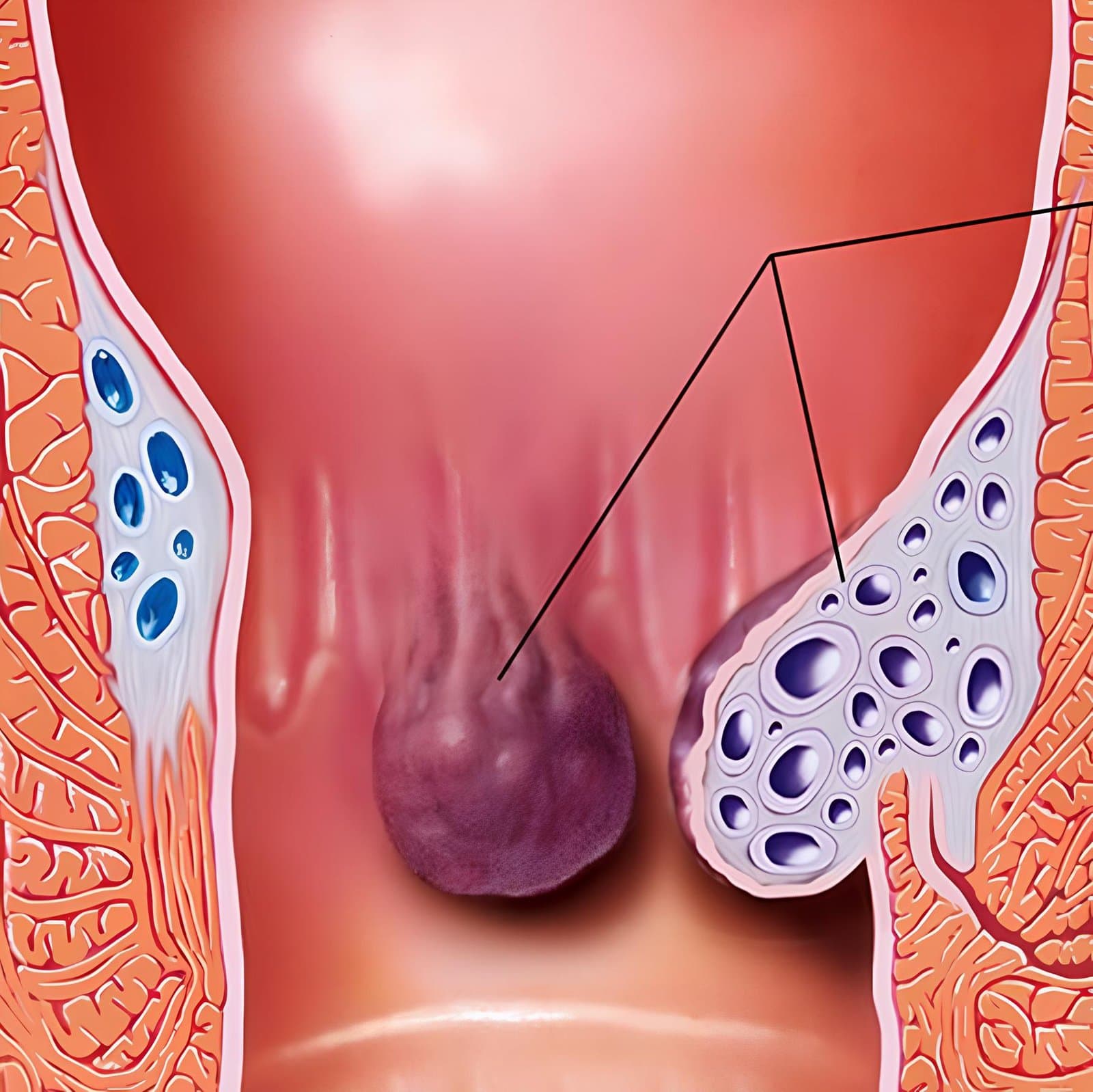
Haemorrhoids (Piles)
Haemorrhoids are swollen blood vessels in the rectum or anus, usually caused by straining during bowel movements, chronic constipation, prolonged sitting, or pregnancy. They are the most common cause of bright red bleeding I see in clinic. The blood usually does not hurt, coats the stool or drips into the bowl, and appears fresh. Why they are especially common in women during and after pregnancy is covered in the guide to haemorrhoids in women.
Anal Fissures
An anal fissure is a small tear in the lining of the anus, usually from passing a hard or large stool. The hallmark is sharp pain during and after bowel movements, with small amounts of bright red blood on the toilet paper.
Colorectal Polyps and Colorectal Cancer
Colon polyps are growths on the lining of the colon or rectum. Most are benign, but some types can develop into colorectal cancer over time, which is why I remove polyps when I find them during colonoscopy. Both polyps and cancers can bleed, sometimes visibly and sometimes in amounts only detectable on a stool test. Bleeding from cancer may be accompanied by a change in bowel habit, unexplained weight loss, or fatigue from anaemia, though early cancers often cause no other symptoms at all.
Diverticular Disease
Diverticular disease involves small pouches (diverticula) forming in the colon wall, more common with age. A blood vessel at the neck of a pouch can erode and bleed, sometimes suddenly and in larger volumes. Diverticular bleeding usually does not hurt and ranges from dark red to maroon. When the pouches become inflamed instead, the result is diverticulitis , which usually presents with pain and fever rather than bleeding.
Inflammatory Bowel Disease (IBD)
Crohn’s disease and ulcerative colitis cause chronic inflammation of the digestive tract. During flare-ups, the inflamed lining ulcerates and bleeds, typically with diarrhoea, mucus, urgency, and abdominal cramping.
Other Causes
Less common causes include perianal abscesses and anal fistulas, proctitis (inflammation of the rectum), rectal ulcers, and infections. Bleeding can also originate higher in the digestive tract; I cover this under gastrointestinal bleeding.
What the colour of the blood suggests
The colour and pattern of bleeding gives me a starting point for where the blood is coming from. It is a clue, not a diagnosis.
| Colour | What it usually suggests | How it shows up |
|---|---|---|
| Bright red | Usually the anus or rectum: haemorrhoids, fissures, or, less commonly, a rectal polyp or cancer | Coats the stool, drips into the bowl, or appears on toilet paper |
| Dark red or maroon | Higher in the colon: diverticular disease, polyps, or a tumour on the right side of the colon | Often mixed through the stool |
| Black, tarry stools (melaena) | The upper digestive tract, typically the stomach or duodenum, such as an ulcer | Needs prompt assessment; the investigation usually starts with a gastroscopy rather than a colonoscopy |
One caution I always give patients: a very brisk bleed from the upper tract can still appear as red blood from below, and a slow lower bleed may not be visible at all. Colour alone is never enough to rule anything in or out.
What patients describe when they see blood in the stool
Patients rarely arrive using medical words. They tell me they saw bright red blood in the stool, or fresh blood after wiping, or that there was blood but no pain at all. Each of those descriptions maps onto the causes and the colours set out above, so it is worth putting them side by side.
Bright red blood in the stool
This is the pattern I see most often. Bright red blood comes from the anus or rectum, which is why haemorrhoids and fissures account for most of it. It coats the stool, drips into the bowl, or shows up on the toilet paper. Common is not the same as confirmed: a rectal polyp or a cancer can produce the same appearance, and that is why the cause is settled by examination rather than by looking.
Fresh blood after wiping
Fresh blood on the paper is the same bright red pattern, noticed at a different moment. Haemorrhoid bleeding appears fresh, and a fissure leaves small amounts of bright red blood on the toilet paper. What that tells me is roughly where the blood is coming from, not how serious it is.
Blood with no pain at all
Bleeding that does not hurt is common, and on its own it is not reassuring. Haemorrhoid bleeding usually does not hurt, while the hallmark of a fissure is sharp pain during and after bowel movements. Pain, or the absence of it, points towards the cause rather than towards the seriousness.
Darker blood, or black and tarry stools
Blood that is dark red or maroon and mixed through the stool suggests a source higher in the colon. Black, tarry stools point to the upper digestive tract and need prompt assessment. The table above sets out what each pattern usually suggests, with the same caution attached: colour alone is never enough to rule anything in or out.
When to see a surgeon
When a patient describes rectal bleeding, these accompanying features determine how urgently I investigate:
- Pain during bowel movements points towards an anal fissure or thrombosed haemorrhoid.
- A change in bowel habit, such as new constipation, diarrhoea, narrower stools, or a feeling of incomplete emptying lasting more than a few weeks.
- Unexplained weight loss or persistent fatigue, which can reflect anaemia from chronic blood loss or an underlying cancer.
- Abdominal pain or cramping, which suggests a condition affecting the bowel itself, such as IBD or diverticular disease.
- A family history of colorectal cancer or polyps, which raises baseline risk regardless of symptoms.
Go to the A&E immediately if there is heavy or continuous bleeding, black tarry stools with weakness, dizziness, fainting, or a racing heartbeat. These suggest significant blood loss.
See a doctor promptly if bleeding persists or keeps recurring, if you are 45 or older with new bleeding, or if bleeding comes with a change in bowel habit, weight loss, fatigue, or a family history of colorectal cancer.
Even minor bleeding deserves a check if it does not settle. The consultation is brief, and most causes are straightforward to treat once confirmed.
In Singapore, if you are 50 or above and have never been screened, do not wait for symptoms. The national screening programme recommends a yearly FIT test or a screening colonoscopy, because polyps and early cancers usually bleed before they cause anything you would notice. In one 2025 Singapore study of 350 adults (Tan et al.), the commonest reason given for not screening was having no symptoms (47.5% of those not screened), and 19.7% gave not knowing about screening.
How I diagnose the cause of anal bleeding
Most people find the reality more ordinary than the fear. In a 2021 study of 394 patients who were offered a colonoscopy after a positive screening test (Lim et al.), 85.8% said they did not consider the procedure embarrassing.
Consultation and Examination
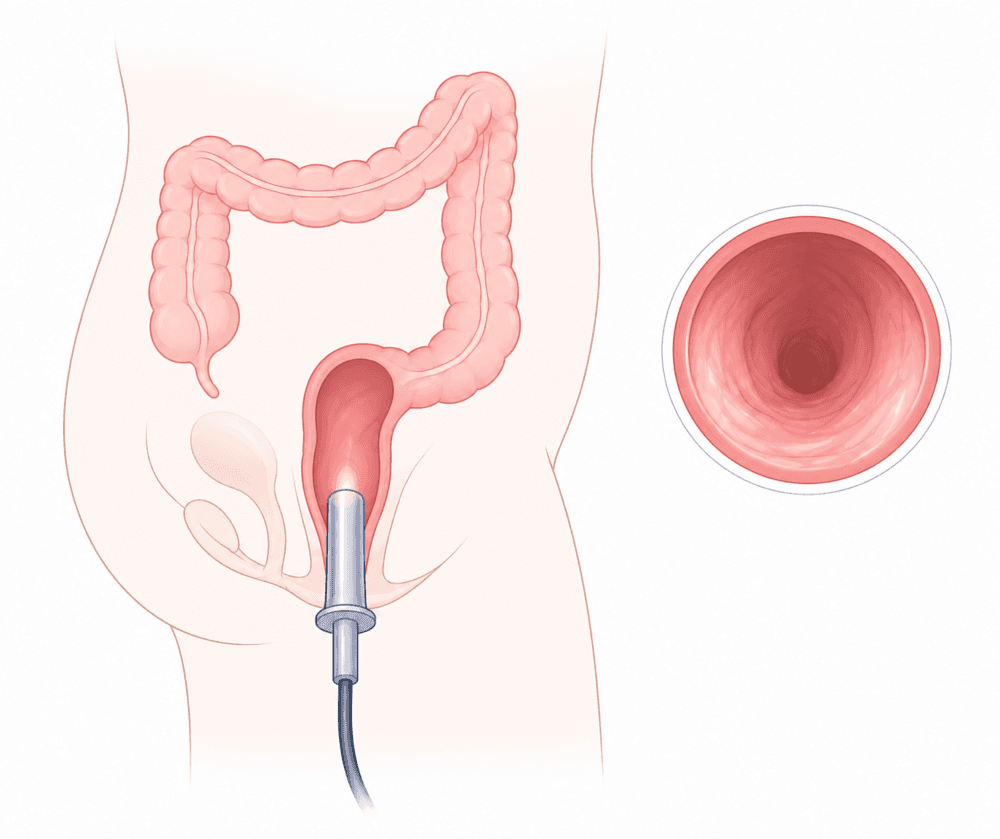
I start with a detailed history: the colour and pattern of bleeding, bowel habit, diet, medications (blood thinners matter here), and family history. A physical examination includes inspection of the anus and a digital rectal examination, which identifies most fissures, external haemorrhoids, and low rectal masses within minutes.
Proctoscopy
A proctoscopy is a brief clinic-based examination of the anal canal and lower rectum. It allows me to directly see internal haemorrhoids and confirm whether they are the bleeding source.
Colonoscopy
A colonoscopy is the definitive investigation for rectal bleeding. It examines the entire colon and rectum, and allows me to remove polyps and take biopsies during the same procedure. I recommend it for any patient with persistent or unexplained bleeding, anyone aged 45 and above with new bleeding, and patients with risk factors such as a family history of colorectal cancer. Patients often ask about fees; I have set out the full breakdown in the colonoscopy cost breakdown.
Stool and Blood Tests
The faecal immunochemical test (FIT) detects hidden blood in the stool and is the basis of Singapore’s national colorectal cancer screening programme for those aged 50 and above. A positive FIT result always warrants a colonoscopy. Blood tests check for anaemia from chronic blood loss.
Imaging
CT scans or CT colonography have a role when colonoscopy is not feasible or when I need to assess complications such as diverticulitis.
Treatment options for anal bleeding
Treatment is directed at the cause, not the bleeding itself.
Non-Surgical Treatment
| Treatment | What it involves |
|---|---|
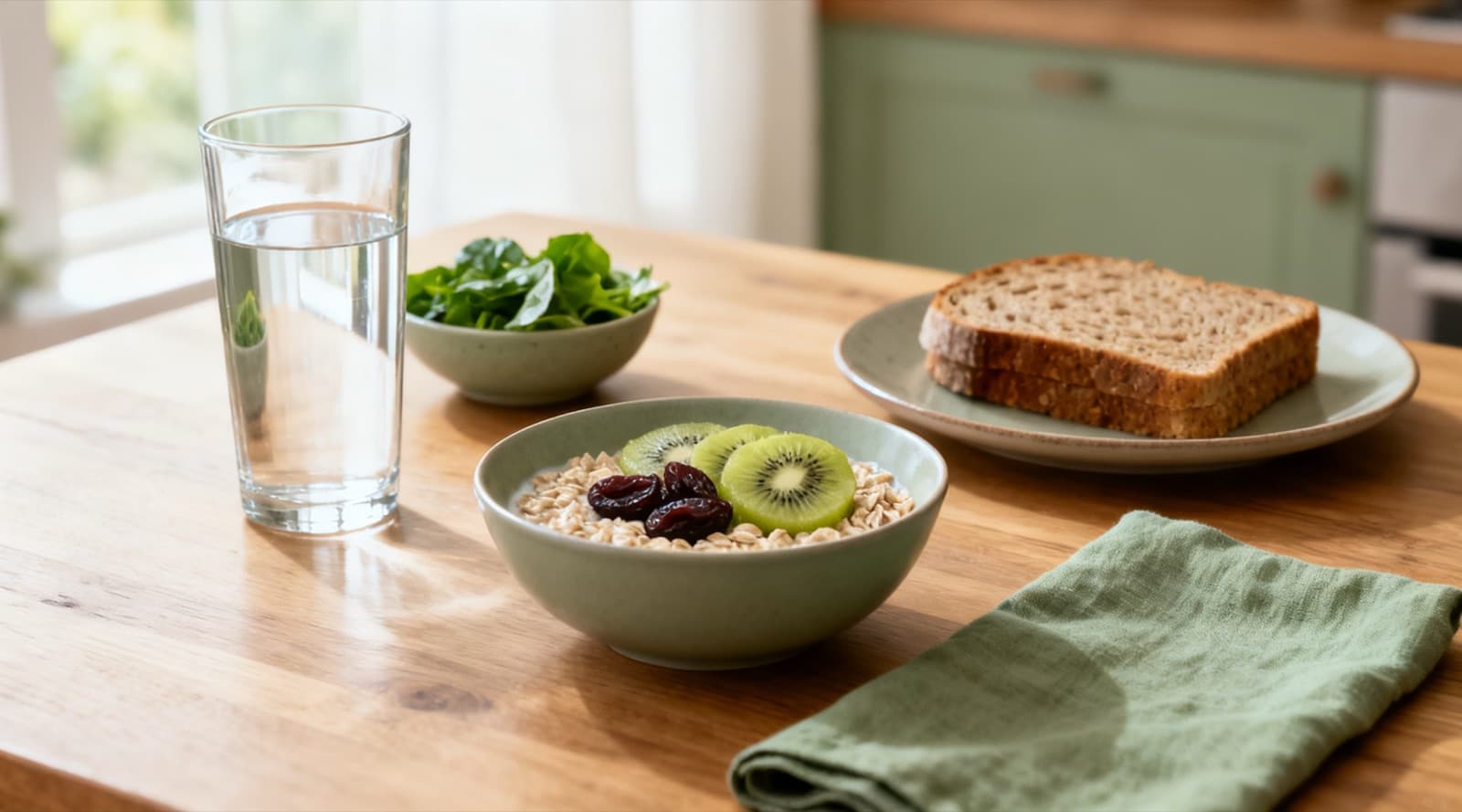
| Dietary and lifestyle measures | Increasing fibre and fluid intake and avoiding straining resolves a substantial proportion of haemorrhoid and fissure bleeding without any procedure. |
| Medication | Topical creams and suppositories reduce inflammation and discomfort in haemorrhoids and fissures. Fissures may also be treated with ointments that relax the anal sphincter. IBD requires dedicated anti-inflammatory or immunomodulating medication. |
| Rubber band ligation | For persistent internal haemorrhoids, I place a small band at the base of the haemorrhoid during a clinic visit, cutting off its blood supply so it shrinks and detaches. |
Surgical Treatment
| Treatment | What it involves |
|---|---|
| Haemorrhoidectomy | For large or recurrent haemorrhoids that have not responded to other measures, surgical removal addresses the source of bleeding directly. I discuss the options, including the associated costs of haemorrhoid surgery, during consultation. |
| Lateral sphincterotomy | For chronic anal fissures that fail medical treatment, this procedure releases excess tension in the internal sphincter muscle so the tear can heal. |
| Abscess drainage and fistula surgery | Infected collections are drained, and fistula tracts are treated surgically. |
| Colectomy or bowel resection | For colorectal cancer and some cases of severe diverticular disease, removal of the affected segment of colon is required. My primary platform for this is robotic-assisted surgery, with laparoscopic and open approaches used where appropriate. |
What anal bleeding can cost
Cost depends on what is causing the bleeding, so the honest sequence is consultation first, diagnosis, then the options and what they cost.
If you have an Integrated Shield Plan or company insurance, the clinic staff can advise on using your plan. If you want the procedure itself priced out before you come in, the published base price, possible additions and MediSave limits are set out in colonoscopy costs, MediSave and insurance.
Frequently asked questions
Is blood in the stool always serious?
No. Most rectal bleeding is caused by haemorrhoids or anal fissures, which are benign and treatable. Because bleeding from colorectal cancer can look identical, bleeding that persists, recurs, or comes with other symptoms should always be properly assessed rather than assumed to be piles.
Can haemorrhoids cause blood in the stool?
Yes. Haemorrhoids are the most common cause of bright red rectal bleeding. The blood usually does not hurt and is seen on toilet paper, coating the stool, or dripping into the bowl. A diagnosis of haemorrhoids should be confirmed by examination, since other conditions can produce the same pattern of bleeding.
What colour of blood is most concerning?
Black, tarry stools (melaena) suggest bleeding from the stomach or duodenum and need prompt medical attention. Dark red or maroon blood mixed through the stool suggests bleeding from within the colon. Bright red blood usually comes from the anus or rectum. All persistent bleeding warrants assessment regardless of colour.
When should I see a doctor about rectal bleeding?
See a doctor if bleeding persists, keeps returning, or is accompanied by a change in bowel habit, weight loss, fatigue, or abdominal pain. Go to the A&E immediately for heavy bleeding, black tarry stools, dizziness, or fainting. If you are 45 or older, new bleeding should be assessed even without other symptoms.
Do I need a colonoscopy for blood in my stool?
Not always, but it is the definitive way to find the source of bleeding. I recommend a colonoscopy for persistent or unexplained bleeding, patients aged 45 and above with new bleeding, anyone with a positive FIT screening result, and those with a family history of colorectal cancer or polyps.
Can younger people get colorectal cancer?
Yes. While risk rises with age, colorectal cancer in adults below 50 has been increasing worldwide, and I do see it in younger patients. Age alone is not a reason to dismiss persistent rectal bleeding, particularly with a family history of colorectal cancer or polyps. For context, in figures published by MOH in 2026, the median age at colorectal cancer diagnosis in Singapore rose over the decade, from 66.8 in 2013 to 69.7 in 2023. Younger cases are real, but they are not the typical case, and age is not a reason to wait with bleeding that persists.
Will anal bleeding stop on its own?
Bleeding from minor haemorrhoids or fissures often settles with fibre, fluids, and avoiding straining. The risk of waiting is that bleeding from a polyp or cancer can also be intermittent, which falsely reassures people. If bleeding recurs or persists, have it assessed.
What does bright red blood in the stool mean?
Bright red blood usually means the bleeding is coming from the anus or rectum, which is why haemorrhoids and anal fissures are the most common causes. It typically coats the stool, drips into the bowl, or appears on the toilet paper. Because a rectal polyp or a cancer can look the same, the cause should be confirmed by examination rather than assumed from the colour.
Why is there fresh blood in my stool?
Fresh, bright red blood suggests the bleeding started close to the anus or rectum rather than higher up in the bowel, and haemorrhoids or a fissure are the usual reasons. Freshness and colour are a clue to where the blood is coming from, not a diagnosis, so the source still needs to be established.
Is bleeding that does not hurt less serious?
No. Haemorrhoid bleeding usually does not hurt, while an anal fissure typically causes sharp pain during and after bowel movements, so pain points towards the cause rather than towards the seriousness. Bleeding that does not hurt still needs assessing if it persists, keeps returning, or comes with other symptoms.
Is bleeding from the anus without pain serious?
Bleeding without pain is often from haemorrhoids, which are not serious. However, absence of pain does not rule out a polyp or cancer, which can also bleed silently in the early stages. Any bleeding that recurs, persists, or increases over time warrants a proper assessment regardless of whether it hurts.
When should I worry about blood in my stool?
Seek assessment if the bleeding persists, recurs over a longer period, comes with a change in bowel habit, unexplained weight loss, or fatigue. Even if you believe the cause is haemorrhoids or a fissure, an assessment helps establish the cause. Starting with a doctor's examination is more reliable than guessing from the appearance of the blood.
Which specialist should I see for rectal bleeding?
Rectal bleeding is assessed by a colorectal surgeon, the specialist who deals with the colon, rectum and anus. A GP is a reasonable first stop and can refer you on, but if the bleeding persists, keeps returning, or you are 45 or older, seeing a colorectal specialist directly saves a step, because the same specialist does the examination and, where needed, the colonoscopy that finds the source.
Related services
Where this leads.
The author
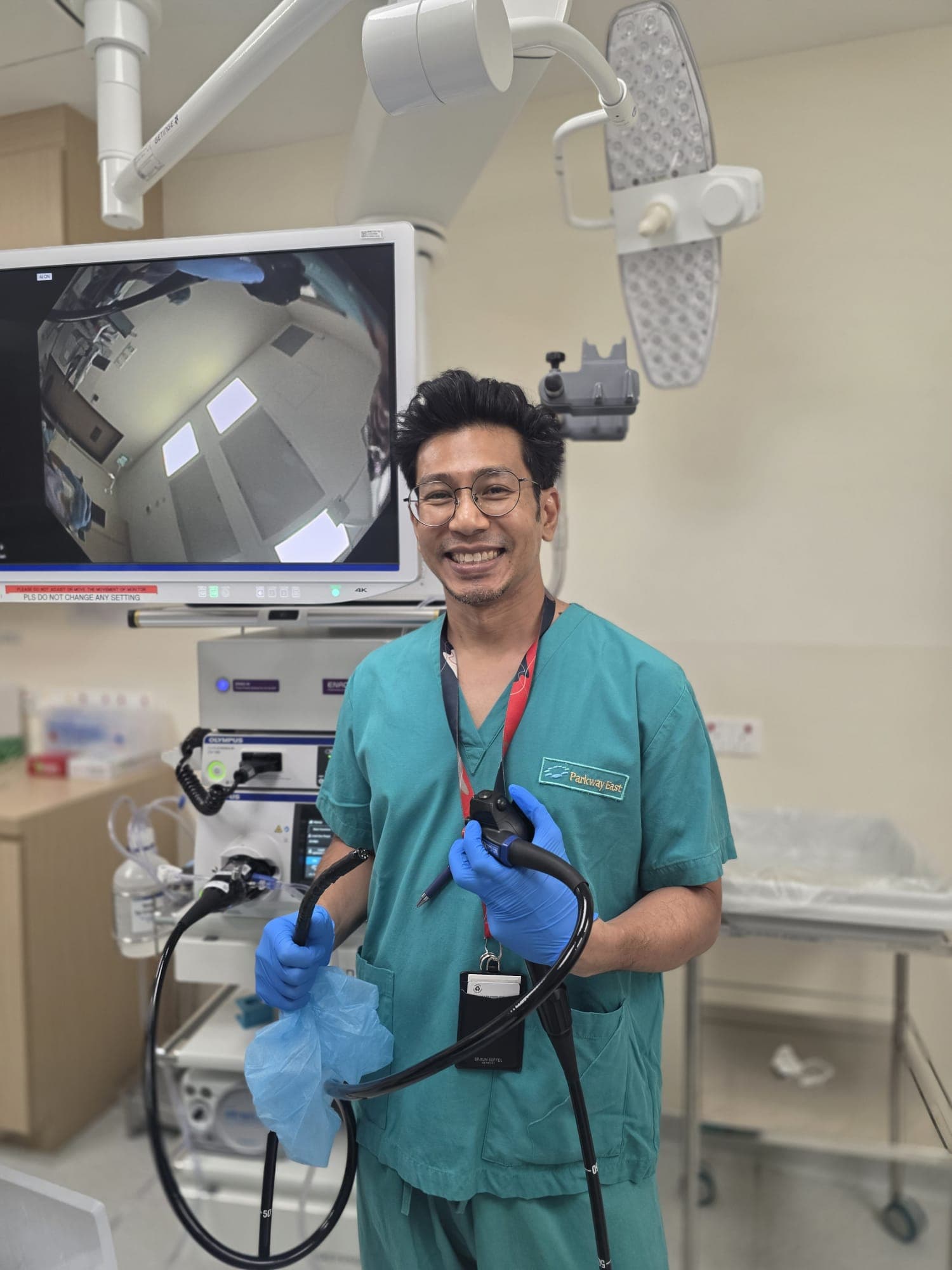
Dr Sulaiman Bin Yusof
Senior Consultant Colorectal and General Surgeon, with over 20 years in surgery.
- Qualifications
- MBChB (Sheffield)
- M.Med (Surgery)
- FRCSEd (General Surgery)
- Fellowship
- Peter MacCallum Cancer Centre, Melbourne
- Previously
- Former Director of Endoscopy, Changi General Hospital
- Also
- Visiting Consultant, Changi General Hospital
Getting seen
Message the clinic.
Anal bleeding has many causes, and most of them are benign. The cause should be confirmed, not assumed, because the benign and the serious can look exactly the same in the toilet bowl. A proper assessment is quick, and treatment, once the diagnosis is clear, is usually straightforward.
If you have noticed blood and it has not settled, or you have been putting this off because of embarrassment, message my clinic for an assessment and a personalised treatment plan. You do not need to phrase it perfectly.
+65 8491 1525