
How Much Does Piles Treatment Cost in Singapore?
How much does piles treatment cost in Singapore? Explore costs for non-surgical and surgery based on MOH benchmarks from private hospital bill data.

A member of the Colorectal Clinic Associates

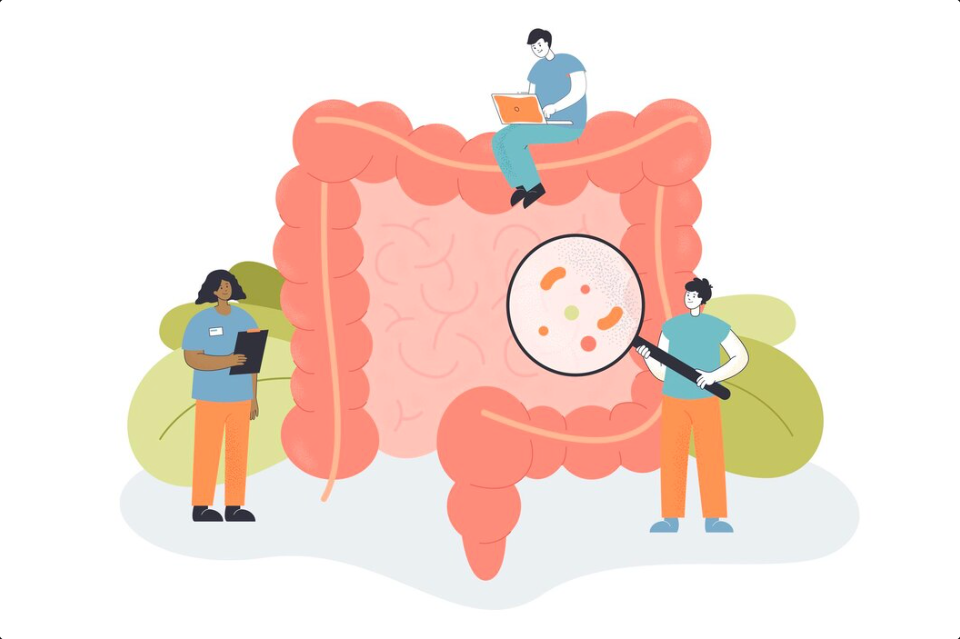
Most weeks in clinic, I sit with a patient whose colonoscopy turned up a polyp they did not expect, and the first question is almost always the same: should I be worried. The honest answer is that it depends on the type, and the type we confirm after the polyp has been removed and examined under the microscope.
Colon polyps are among the most common findings at routine colonoscopy. The majority are harmless, cause no symptoms, and most people who carry them would never know without screening. That part is reassuring, and I say it first.
A smaller share of polyps are precancerous, and over years some of those can progress to colorectal cancer. That is the reason we look for them, remove them, and base your follow-up interval on what the pathology shows.
Colon polyps are abnormal growths that develop from the inner lining of the colon (the large intestine) or rectum. They form when cells in that lining divide more than they should, producing a small projection of tissue where the wall should be smooth.
They vary in shape and size. Some are flat against the lining, some sit on a broad base (sessile), and others hang from a stalk (pedunculated). A polyp can range from a couple of millimetres to several centimetres. The polyp itself is a finding, not yet a diagnosis. What it means for you comes from the pathology after removal.
How serious a polyp is depends on what type it turns out to be. Clinical classification divides polyps into two broad groups, non-neoplastic and neoplastic, and the difference shapes your follow-up plan.
Non-neoplastic polyps are generally harmless and unlikely to become cancerous. The main types are:
Even non-neoplastic polyps are typically removed during colonoscopy. The reason is straightforward: I cannot tell what a polyp is by looking at it through the scope, so complete removal followed by histology is standard practice.
Neoplastic polyps carry malignant potential, which is the reason their detection and removal matter. They include:
Size carries weight here. Larger precancerous polyps carry greater cancer risk, and any polyp 10mm or larger is classified as advanced.¹ That is the figure I pay attention to when I plan your follow-up.
The majority of colon polyps produce no symptoms at all, which is the principal reason regular colonoscopy screening in Singapore is worth the effort. Polyps are typically found because someone went looking, not because they made themselves known.
When symptoms do appear, they are more often associated with larger polyps, or polyps that have undergone significant change. The symptoms worth bringing to a consultation are:
None of these symptoms are diagnostic on their own. They are reasons to have the colon properly assessed, not to assume.
Complete removal is standard practice for every polyp we detect at colonoscopy. I cannot reliably judge a polyp’s malignant potential by appearance alone, even with high-definition equipment, and the answer for any given polyp is one only pathology can give.
Colon polyp removal, or polypectomy, is almost always performed during the same colonoscopy in which the polyp is found, with no separate procedure required. The technique depends on the size and shape:
Every polyp removed is sent for pathology. The result is what determines what happens next.
Colon polyp removal recovery is straightforward for most patients. Polypectomy at colonoscopy is a day procedure, and most patients return to normal activities within 1 to 2 days. Mild bloating or cramping after the procedure is normal and settles quickly.
The picture changes if a larger polyp required endoscopic mucosal resection, or if laparoscopic surgery was needed. Recovery is longer in those cases, and the specific instructions your surgeon gives you take precedence over anything written here in general terms.
In the first 24 hours, I generally advise a soft, low-fibre diet to let the polypectomy site settle. Clear fluids, soft-cooked foods, and avoiding spicy, high-fibre, or rough foods for a short period support healing.
One caveat worth keeping in mind: follow your treating doctor’s specific guidance rather than any general recommendation. Advice varies with the size and number of polyps removed, and with the technique used. What suits a single small hyperplastic polyp is not what suits an endoscopic resection of a large adenoma.
A removed polyp does not regrow in the same place. The tissue is gone, the site heals over, and that polyp is not coming back. What can happen is that new polyps develop elsewhere in the colon over time, which is the reason your follow-up colonoscopy interval matters.
The intervals I work with sit roughly in this range:
The exact interval is determined by your pathology results, along with the number, size, and type of polyps removed. For some patients, a single hyperplastic polyp means we are back to the standard screening cycle. For others, a high-grade adenoma or multiple advanced polyps means a closer watch.
If you have been told you have polyps, or you are due a screening colonoscopy, consult a colorectal doctor in Singapore to have it properly assessed.
I am a Senior Consultant Colorectal and General Surgeon in Singapore, practising at Gleneagles, Mount Elizabeth Novena, Parkway East, Mount Alvernia, and Farrer Park. I perform the colonoscopy as part of a full assessment, remove polyps where found, send them for pathology, and set your follow-up interval based on the result.
Contact us on WhatsApp to arrange a consultation.
Disclaimer: The information here is for general informational purposes only and does not replace consultation, diagnosis, or treatment by a qualified medical professional. Symptoms vary between individuals; if any of the warning signs above apply to you, seek a clinical evaluation.
That depends entirely on the type. Most polyps are benign and pose no real cancer risk. Adenomatous polyps and serrated polyps are precancerous, and although the majority will never progress to cancer, some do over the course of years. The seriousness comes from not knowing in advance which polyp belongs to which category, which is why I send every polyp removed for pathology.
For someone of average risk, screening colonoscopy from age 50 is the standard recommendation.³ For those with a family history of colorectal cancer or polyps, I generally start earlier, around age 40, or 10 years before the youngest affected relative was diagnosed, whichever comes first. The right age is a conversation, not a fixed rule.
Most are not. Most polyps develop sporadically over time, related to age, lifestyle, and chance. A meaningful minority are linked to inherited conditions, such as familial adenomatous polyposis (FAP) and Lynch syndrome. A family history of polyps or colorectal cancer is a reason to screen earlier and more often, and worth flagging when we plan your assessment.

MbChB (Sheffield)
M.Med (Surgery)
FRCSEd (General Surgery)
蘇萊曼·尤索夫博士
Dr. Sulaiman Bin Yusof is a Senior Consultant colorectal and general surgeon in Singapore with over 15 years of specialist experience across public and private practice. Trained in the United Kingdom and awarded a Ministry of Health Fellowship to the Peter MacCallum Cancer Centre in Melbourne, he has built his practice around complex colorectal surgery, with robotic-assisted technique as his primary surgical platform for colectomy and anterior resection.
Patients consult Dr. Sulaiman for his depth of experience in colorectal cancer and perianal conditions, as well as for consultations that are thorough, unhurried, and focused on giving patients a clear understanding of their options.
Dr. Sulaiman holds an MBChB from the University of Sheffield, a Master of Medicine in Surgery (M.Med), and a Fellowship of the Royal Colleges of Surgeons of Edinburgh in General Surgery (FRCSEd). He completed a Ministry of Health Fellowship at the Peter MacCallum Cancer Centre in Melbourne, one of the world’s foremost oncology institutions, serves as a Visiting Consultant at Changi General Hospital and has contributed eight peer-reviewed publications to medical literature.
Dr. Sulaiman served as Director of Endoscopy at Changi General Hospital, overseeing one of Singapore’s busiest endoscopy units, and brings that public-sector depth of experience to his private practice. In this role, he led a high-volume diagnostic endoscopy service encompassing colonoscopy and gastroscopy across a broad and diverse patient population.
Dr. Sulaiman holds concurrent Adjunct Associate Professor appointments at the NUS Yong Loo Lin School of Medicine, Lee Kong Chian School of Medicine, and Duke-NUS Medical School. He has been recognised on the Dean’s Honour Roll for Teaching and received the Singapore Health Quality Service Star Award 2023, reflecting his contribution to both surgical education and clinical care.
Consult Dr. Sulaiman for an accurate diagnosis and a personalised treatment plan today.
6 Napier Road #06-16
Singapore 258499
38 Irrawaddy Road, #10-48/49
Singapore 329563
#05-08, 319 Joo Chiat Place
Singapore 427989
#08-62, Medical Centre D
820 Thomson Road
Singapore 574623
Farrer Park Medical Centre #14-12
1 Farrer Park Station Road
Singapore 217562
How much does piles treatment cost in Singapore? Explore costs for non-surgical and surgery based on MOH benchmarks from private hospital bill data.
By Dr Sulaiman Yusof, Senior Consultant Colorectal and General SurgeonColorectal Clinic Associates | Singapore For rectal cancer surgery, the challenge is...

Patient Guide · 2026 Update How the Bill Is Structured The total cost of piles surgery in Singapore is not a single...