
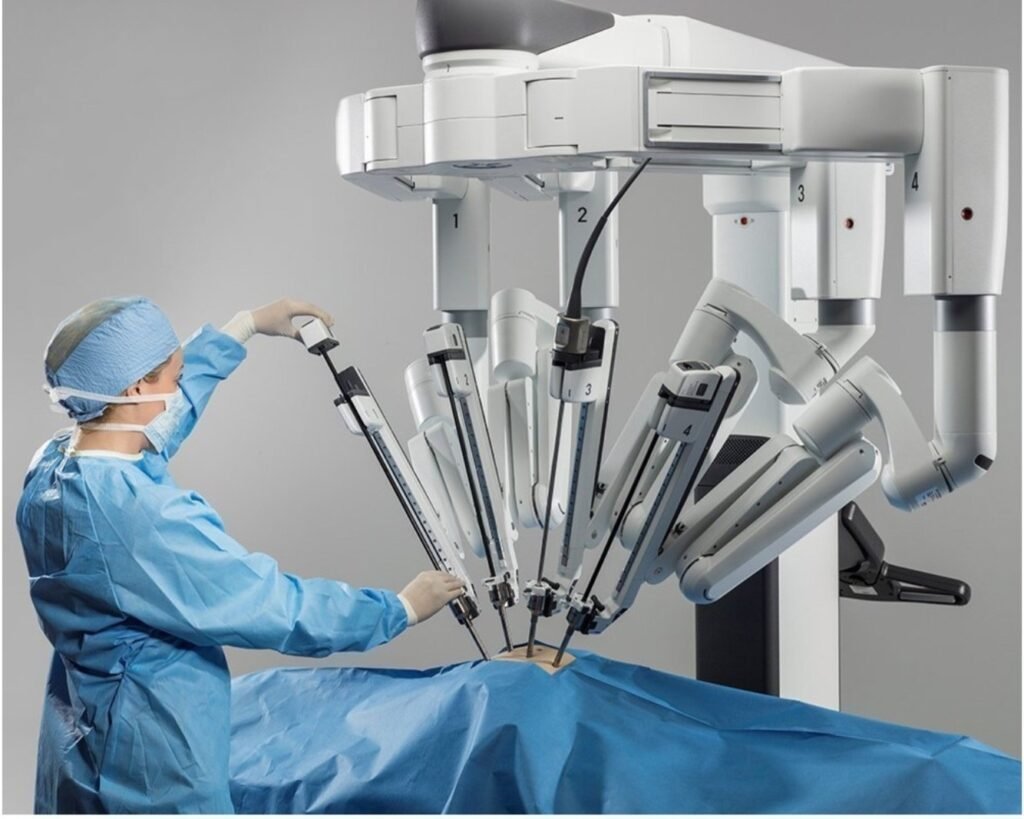
Robotic vs Laparoscopic Colorectal Surgery: How I Decide Which Approach Is Right for You
By Dr Sulaiman Yusof, Senior Consultant Colorectal and General SurgeonColorectal Clinic Associates | Singapore For rectal cancer surgery, the challenge is...

A member of the Colorectal Clinic Associates


H. pylori is one of the most underdiagnosed conditions I encounter in clinical practice. In my experience performing gastroscopies, up to 30% of patients who come in for an upper GI assessment turn out to have H. pylori, many of them with no symptoms at all, and no idea they were carrying it.
That last part is the problem. The absence of symptoms does not mean the infection is benign. What I often find on gastroscopy in these patients is pronounced inflammation of the stomach lining and duodenum, sometimes with erosions (early damage that precedes ulcers). In more severe cases, they may present with severe pain and even bleeding due to ulcers.
Long-term H. pylori infection is associated with chronic inflammation, which over time can progress to intestinal metaplasia, a pre-cancerous state of the stomach lining.
That is what makes H. pylori worth taking seriously, even when you feel fine.
H. pylori is a spiral-shaped bacterium that colonises the stomach lining and the duodenum, the first section of the small intestine. To survive in such an acidic environment, it produces enzymes that neutralise the stomach acid immediately around it, allowing it to persist for years, often decades, without treatment and without causing obvious symptoms.
How common is H. pylori in Singapore? According to NUHS, prevalence rises sharply with age: approximately 3% in children under five, climbing to 71% in adults over 65. It is one of the more prevalent chronic bacterial infections in the local population.
Transmission most often occurs through oral-to-oral contact (shared utensils, close personal contact) or faecal-to-oral routes, in settings with poor sanitation or crowded living conditions. Infections acquired in childhood often persist into adulthood without causing symptoms. Without treatment, H. pylori rarely resolves on its own.
This is the point most health information gets wrong. The majority of people with H. pylori have no symptoms. This is often interpreted as reassurance. It should not be.
On gastroscopy, patients with no symptoms frequently show significant inflammation of the stomach and duodenal lining, and in some cases erosions, which are shallow breaks in the mucosal surface that are precursors to ulcers. This damage is happening silently.1
Chronic H. pylori-associated inflammation is a well-established driver of intestinal metaplasia, a condition where the normal stomach lining is gradually replaced by intestinal-type cells.2, 3 Intestinal metaplasia is a recognised precancerous state and is the change I am most concerned about detecting. It does not cause symptoms. The only way to find it is to look.
This is why I do not treat H. pylori as a condition that only matters when it hurts.
When H. pylori symptoms do appear, they typically arise because the infection has progressed
to gastritis or peptic ulcer disease. The most common include:
Severe abdominal pain, black tarry stools, or blood in vomit may suggest a bleeding peptic ulcer and should not be left unexamined.
My approach is as follows. Patients with no symptoms can opt for a breath test. It is accurate, non-invasive, and gives a clear result on active infection. Symptomatic patients should have a gastroscopy, because the test answers more than one question at once: it confirms H. pylori, and it lets me directly assess the severity of inflammation, check for erosions or ulcers, and look for intestinal metaplasia.
Beyond symptomatic patients, testing is also appropriate for:
H. pylori testing addresses the upper GI tract specifically. Patients who also present with lower abdominal pain or changes in bowel habits should discuss the full symptom picture with a specialist, as these may point to separate or co-existing conditions.
There are several ways to test for H. pylori. The right method depends on your symptoms, medical history, and whether a broader upper GI assessment is clinically indicated.
The H. pylori breath test is widely regarded as the most accurate non-invasive method for detecting active infection. The patient drinks a urea solution; if H. pylori is present, the bacteria break it down and release carbon dioxide, which is detected in a second breath sample taken approximately 15 minutes later. The entire procedure may take between 15 and 30 minutes and requires no sedation.
One preparation requirement: Proton pump inhibitors should be stopped at least two weeks before testing; antibiotics at least four weeks before. Both can suppress H. pylori activity and produce a false negative result.
A stool sample is tested for H. pylori antigens (proteins specific to the bacteria) using either a standard stool antigen test or a PCR-based stool test. Both are non-invasive and can be completed with a sample collected at home.
This is a reliable alternative for patients who cannot tolerate breath testing or where breath test facilities are unavailable. As with the breath test, certain medications must be paused before testing.
A standard blood draw is sent to a laboratory for H. pylori-specific antibodies. The H. pylori blood test is widely offered and simple to perform.
The key limitation: the test detects antibodies to past or current infection and cannot reliably confirm whether an active infection is present or whether eradication has been successful after treatment. It is generally less preferred than the breath or stool test for diagnosing active infection, though it remains useful in certain clinical contexts.
Gastroscopy involves passing a thin flexible scope through the mouth into the stomach and duodenum, allowing direct visualisation and the collection of small tissue samples (biopsies) for H. pylori testing. Sedation is preferred for the duration of the test and is used for comfort during the procedure.
I recommend gastroscopy for symptomatic patients, and for those with alarm symptoms, a history of peptic ulcers, or a family history of gastric cancer. The reason is clinical: gastroscopy answers more than the H. pylori question. It lets me directly assess the stomach lining for inflammation, erosions, ulcers, and intestinal metaplasia, none of which a breath test or blood test cannot detect. If you have symptoms, a breath test alone is not enough information.
Treatment involves a combination of a proton pump inhibitor (to reduce stomach acid and support healing) and two antibiotics, taken over seven to 14 days. The course must be completed in full; stopping early may increase the risk of the infection returning and of antibiotic resistance developing.
Once treatment is finished, a follow-up test is arranged to confirm eradication. This is performed at least four weeks after completing antibiotic treatment, using either a urea breath test or a stool antigen test.⁴ Eradication confirmation is a required clinical step.
Where first-line treatment does not succeed, second-line regimens are available. I will advise on the next step based on your clinical picture and, where relevant, local antibiotic resistance patterns.

If you have been experiencing any of the symptoms described above, or if you fall into one of the risk groups outlined, a consultation is the appropriate next step.
I am a Senior Consultant Colorectal and General Surgeon practising at Parkway East Hospital, Gleneagles Hospital, Mount Elizabeth Novena, Mount Alvernia Hospital, and Farrer Park Hospital. I perform gastroscopy as part of my upper GI assessment and can advise on the most appropriate H. pylori test for your situation. If infection is confirmed, I will outline a clear, evidence-based treatment plan and arrange follow-up to confirm eradication.
Contact us on WhatsApp to arrange a consultation.
In the majority of cases, H. pylori does not resolve without treatment. While the bacteria may not have evolved specifically to survive in the acidic environment of the stomach, without an appropriate antibiotic regimen, the infection may persist indefinitely. Spontaneous clearance is documented but extremely rare in adults. More importantly, the longer the infection persists, the greater the cumulative mucosal damage. Early detection gives the best opportunity to intervene before that progression occurs.
Yes. You will typically be asked to fast for at least four hours before the test. Antibiotics and proton pump inhibitors should be avoided for two to four weeks prior, as these can suppress H. pylori activity and produce a false negative result. Specific preparation instructions will be provided at the time of booking.
Potentially, yes. The absence of symptoms does not mean the infection is inactive or harmless. On gastroscopy, many asymptomatic H. pylori carriers show significant inflammation and early mucosal damage. Intestinal metaplasia, a precancerous change in the stomach lining, can develop silently over time with chronic infection. If you are over 45, have a family history of gastric cancer, or have never been tested, a consultation is a reasonable next step.
A breath test confirms whether H. pylori is present. It is accurate, non-invasive, and appropriate for patients with no symptoms. A gastroscopy does the same, but it also allows direct visualisation of the stomach lining, which means I can assess the severity of inflammation, identify erosions or ulcers, and check for intestinal metaplasia. For symptomatic patients, gastroscopy provides additional clinical information that a breath test alone may not sufficiently offer.
This is a question I get often, and the honest answer is no, not as a standalone treatment.
Several natural substances, including garlic, Manuka honey, and certain plant extracts, have shown antibacterial activity against H. pylori in laboratory settings. The problem is that laboratory results do not translate to clinical eradication. The concentrations needed to inhibit H. pylori in a petri dish are simply not achievable by consuming these substances, and no clinical trial has demonstrated that any home remedy reliably eradicates H. pylori in humans.⁵
Probiotics are the most credible adjacent topic. Evidence from multiple randomised trials suggests that certain probiotic strains (particularly Lactobacillus species), when taken alongside standard antibiotic triple therapy, can modestly improve eradication rates and reduce treatment side effects such as diarrhoea and nausea.⁶ The critical distinction is that probiotics work as an adjunct to antibiotic treatment, not as a replacement for it.
The more important concern is delay. H. pylori causes progressive mucosal damage and can drive intestinal metaplasia without causing any symptoms. Spending months on home remedies can delay an otherwise confirmed diagnosis and treatment, during which mucosal damage may continue. If you suspect you have H. pylori, the right step is to get tested and, if confirmed, complete a proper eradication course.
Yes. H. pylori is classified as a Group 1 carcinogen by the World Health Organisation. The mechanism runs through chronic inflammation, intestinal metaplasia, and dysplasia before reaching gastric cancer, a progression that can take years or decades and is largely silent. Eradicating H. pylori, particularly before intestinal metaplasia develops, is associated with a meaningful reduction in gastric cancer risk.
Testing even in the absence of symptoms remains clinically warranted for this reason.², ³
The standard treatment course is seven to fourteen days, consisting of a proton pump inhibitor combined with two antibiotics. The full course must be completed even if you feel better before it ends. A confirmatory test is then performed at least four weeks after finishing treatment to verify eradication.
References
Dr Sulaiman Yusof is a Senior Consultant Colorectal and General Surgeon with Colorectal Clinic Associates, fellowship-trained in colorectal cancer surgery at the Peter MacCallum Cancer Centre, Melbourne. He is listed on the Da Vinci Xi surgeon locator and holds Adjunct Associate Professor appointments at NUS Yong Loo Lin School of Medicine, Lee Kong Chian School of Medicine, and Duke-NUS Medical School.

MbChB (Sheffield)
M.Med (Surgery)
FRCSEd (General Surgery)
蘇萊曼·尤索夫博士
Dr. Sulaiman Bin Yusof is a Senior Consultant colorectal and general surgeon in Singapore with over 15 years of specialist experience across public and private practice. Trained in the United Kingdom and awarded a Ministry of Health Fellowship to the Peter MacCallum Cancer Centre in Melbourne, he has built his practice around complex colorectal surgery, with robotic-assisted technique as his primary surgical platform for colectomy and anterior resection.
Patients consult Dr. Sulaiman for his depth of experience in colorectal cancer and perianal conditions, as well as for consultations that are thorough, unhurried, and focused on giving patients a clear understanding of their options.
Dr. Sulaiman holds an MBChB from the University of Sheffield, a Master of Medicine in Surgery (M.Med), and a Fellowship of the Royal Colleges of Surgeons of Edinburgh in General Surgery (FRCSEd). He completed a Ministry of Health Fellowship at the Peter MacCallum Cancer Centre in Melbourne, one of the world’s foremost oncology institutions, serves as a Visiting Consultant at Changi General Hospital and has contributed eight peer-reviewed publications to medical literature.
Dr. Sulaiman served as Director of Endoscopy at Changi General Hospital, overseeing one of Singapore’s busiest endoscopy units, and brings that public-sector depth of experience to his private practice. In this role, he led a high-volume diagnostic endoscopy service encompassing colonoscopy and gastroscopy across a broad and diverse patient population.
Dr. Sulaiman holds concurrent Adjunct Associate Professor appointments at the NUS Yong Loo Lin School of Medicine, Lee Kong Chian School of Medicine, and Duke-NUS Medical School. He has been recognised on the Dean’s Honour Roll for Teaching and received the Singapore Health Quality Service Star Award 2023, reflecting his contribution to both surgical education and clinical care.
Consult Dr. Sulaiman for an accurate diagnosis and a personalised treatment plan today.
6 Napier Road #06-16
Singapore 258499
38 Irrawaddy Road, #10-48/49
Singapore 329563
#05-08, 319 Joo Chiat Place
Singapore 427989
#08-62, Medical Centre D
820 Thomson Road
Singapore 574623
Farrer Park Medical Centre #14-12
1 Farrer Park Station Road
Singapore 217562
By Dr Sulaiman Yusof, Senior Consultant Colorectal and General SurgeonColorectal Clinic Associates | Singapore For rectal cancer surgery, the challenge is...

Patient Guide · 2026 Update How the Bill Is Structured The total cost of piles surgery in Singapore is not a single...

Most people would say an emphatic "no" if asked whether they would voluntarily choose to undergo major surgery, endure months...