H. pylori, explained by the surgeon who scopes for it
H. pylori often causes no symptoms. That does not make it benign.
H. pylori, short for Helicobacter pylori, is a spiral-shaped bacterium that colonises the stomach lining and the duodenum.
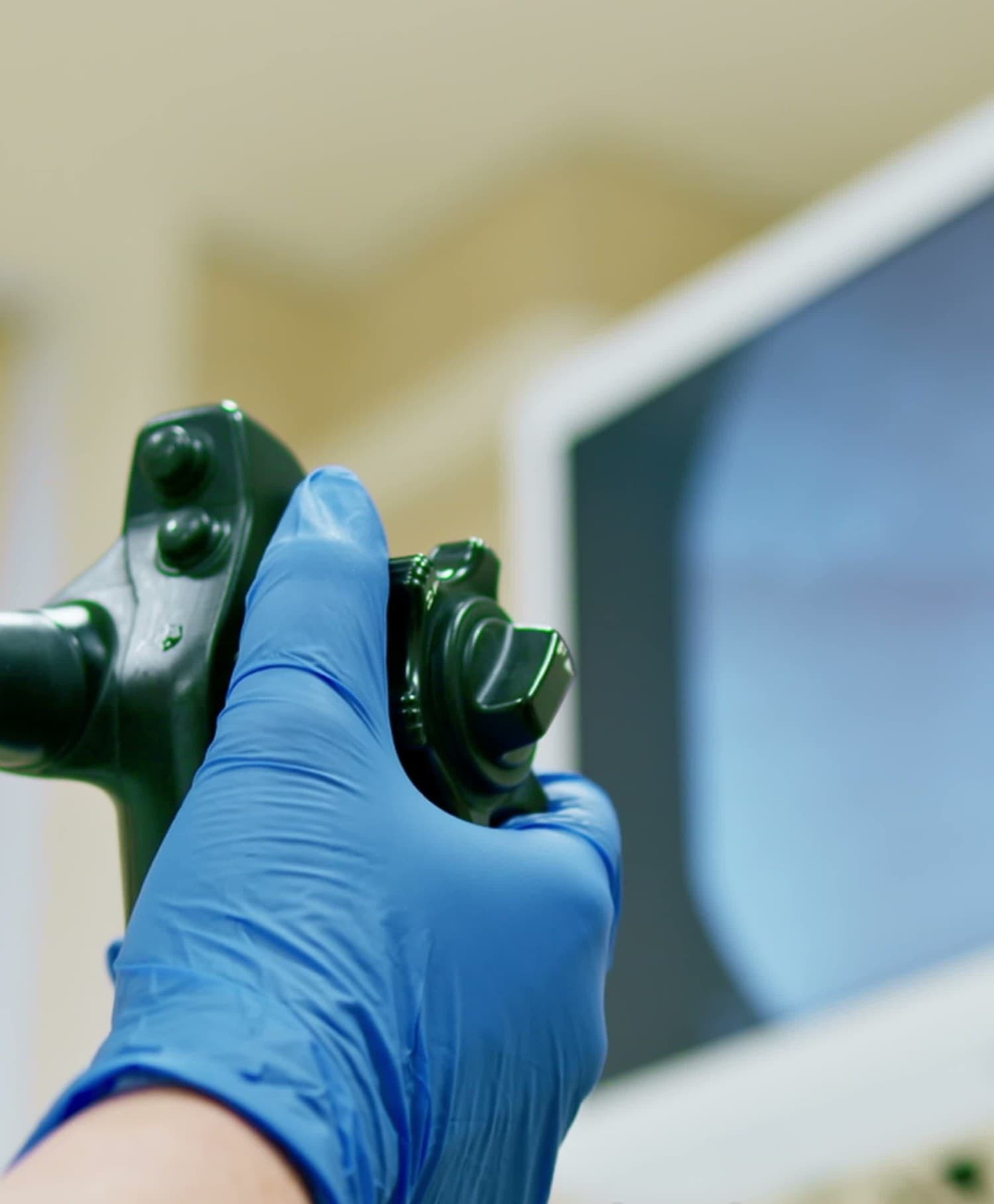
The absence of symptoms does not mean the infection is benign. In this article I explain what H. pylori is, how common it is in Singapore, why a silent infection still matters, the four ways to test for it, and what eradication treatment involves.
+65 8491 1525
A surgeon’s perspective
H. pylori is one of the most underdiagnosed conditions I encounter in clinical practice. In my experience performing gastroscopies, up to 30% of patients who come in for an upper GI assessment turn out to have H. pylori, many of them with no symptoms at all, and no idea they were carrying it.
That last part is the problem. The absence of symptoms does not mean the infection is benign. What I often find on gastroscopy in these patients is pronounced inflammation of the stomach lining and duodenum, sometimes with erosions, which is early damage that precedes ulcers. In more severe cases, they may present with severe pain and even bleeding due to ulcers.
Long-term H. pylori infection is associated with chronic inflammation, which over time can progress to intestinal metaplasia, a pre-cancerous state of the stomach lining.
That is what makes H. pylori worth taking seriously, even when you feel fine.
What is H. pylori?
H. pylori, in full Helicobacter pylori, is a spiral-shaped bacterium that colonises the stomach lining and the duodenum, the first section of the small intestine. To survive in such an acidic environment, it produces enzymes that neutralise the stomach acid immediately around it, allowing it to persist for years, often decades, without treatment and without causing obvious symptoms.
A 2017 Singapore Medical Journal review by Chew and colleagues cited a local seroprevalence of 31%. This was an antibody-based measure of past or current infection, not a current count of people with active infection.
Transmission most often occurs through oral-to-oral contact (shared utensils, close personal contact) or faecal-to-oral routes, in settings with poor sanitation or crowded living conditions. Infections acquired in childhood often persist into adulthood without causing symptoms. Without treatment, H. pylori rarely resolves on its own.
Why asymptomatic H. pylori still matters
This is the point most health information gets wrong. The majority of people with H. pylori have no symptoms. This is often interpreted as reassurance. It should not be.
On gastroscopy, patients with no symptoms frequently show significant inflammation of the stomach and duodenal lining, and in some cases erosions, which are shallow breaks in the mucosal surface that are precursors to ulcers. This damage is happening silently.
Chronic H. pylori-associated inflammation is a well-established driver of intestinal metaplasia, a condition where the normal stomach lining is gradually replaced by intestinal-type cells. Intestinal metaplasia is a recognised precancerous state and is the change I am most concerned about detecting. It does not cause symptoms. The only way to find it is to look.MAPS III guideline, 2025.
This is why I do not treat H. pylori as a condition that only matters when it hurts.
Intestinal metaplasia causes no symptoms, so the only way to find it is to look at the stomach lining directly.
Common H. pylori symptoms in Singapore
When H. pylori symptoms do appear, they typically arise because the infection has progressed to gastritis or peptic ulcer disease. The most common include:
- A gnawing or burning sensation in the upper abdomen, particularly on an empty stomach
- Persistent bloating or a feeling of fullness after eating only a small amount
- Nausea or vomiting
- Frequent burping
- Loss of appetite
- Unexplained weight loss
- Dark or tarry stools, which may indicate bleeding and warrant urgent medical attention
Severe abdominal pain, black tarry stools, or blood in vomit may suggest a bleeding peptic ulcer and should not be left unexamined.
Who should get tested for H. pylori in Singapore?
A breath or stool test may be an appropriate first step for some patients. Gastroscopy may be recommended based on your age, warning symptoms, persistent symptoms and gastric-cancer risk. It allows the stomach lining to be examined and biopsies to be taken when needed. NUHS dyspepsia guidance.
Other factors a doctor may consider when deciding whether to test include:
- Individuals with a personal or family history of gastric cancer
- Those with close, prolonged contact with a confirmed H. pylori carrier
- Patients on long-term NSAIDs or aspirin, which increase the risk of ulcer complications in the presence of H. pylori
- People whose age, medical history or individual risk makes testing appropriate after assessment
H. pylori testing addresses the upper GI tract specifically. Patients who also present with lower abdominal pain or changes in bowel habits should discuss the full symptom picture with a specialist, as these may point to separate or co-existing conditions.
How can I check for H. pylori in Singapore?
There are several ways to test for H. pylori. The right method depends on your symptoms, medical history, and whether a broader upper GI assessment is clinically indicated.
| Test | What it shows | What to know |
|---|---|---|
| Urea breath test | Detects active infection without sedation. | Testing generally requires two weeks off proton pump inhibitors and four weeks after antibiotics. Follow the clinic's instructions; do not stop prescribed treatment on your own. |
| Stool antigen test | Detects H. pylori antigens in a sample you can collect at home. | An alternative where breath testing is not tolerated or not available. Ask the clinic about medicines and preparation. |
| Blood antibody test | Detects antibodies to past or current infection. A standard blood draw. | Cannot reliably confirm active infection, or that eradication has worked after treatment. |
| Gastroscopy with biopsy | Confirms infection and shows the stomach lining directly, with tissue samples taken. | Sedation is used for comfort. It is the only one of the four that can find inflammation, erosions, ulcers or intestinal metaplasia. |
Urea breath test
The urea breath test checks for active H. pylori infection without an endoscopy. After you drink a urea solution, the test measures labelled carbon dioxide in your breath. The clinic will tell you the sampling schedule and how long to allow for the appointment.
Tell the clinic about recent antibiotics and acid-suppressing medicines. Breath testing generally requires at least four weeks after antibiotics and at least two weeks off proton pump inhibitors. Follow the clinic’s instructions about fasting and medication changes; do not stop prescribed treatment on your own. SGH breath-test instructions; European breath-test guideline.
Abd Rahim and colleagues’ 2019 meta-analysis of 11 studies in Asian populations found a pooled sensitivity of 97% and specificity of 96% for the carbon-13 urea breath test. The 95% confidence intervals were 96% to 98% and 95% to 97%, respectively. Results varied between studies, and correct preparation matters.
Stool antigen test
A stool antigen test checks a stool sample for proteins from H. pylori. The clinic will explain how to collect and return the sample.
Ask the clinic about preparation and medicines; do not stop prescribed treatment on your own. Singapore review of H. pylori testing.
Blood antibody test
A standard blood draw is sent to a laboratory for H. pylori-specific antibodies. The H. pylori blood test is widely offered and simple to perform.
The key limitation: the test detects antibodies to past or current infection and cannot reliably confirm whether an active infection is present or whether eradication has been successful after treatment. It is generally less preferred than the breath or stool test for diagnosing active infection, though it remains useful in certain clinical contexts.
Gastroscopy with biopsy
Gastroscopy involves passing a thin flexible scope through the mouth into the stomach and duodenum, allowing direct visualisation and the collection of small tissue samples (biopsies) for H. pylori testing. Sedation is used for comfort during the procedure.
A breath or stool test may be an appropriate first step for some patients. Gastroscopy may be recommended based on your age, warning symptoms, persistent symptoms and gastric-cancer risk. It allows the stomach lining to be examined and biopsies to be taken when needed. NUHS dyspepsia guidance.
Patients often ask what an upper endoscopy costs before they book one. I have set the full breakdown out in a guide to gastroscopy cost in Singapore.

How H. pylori is treated
Singapore treatment reviews describe a two-week course combining acid suppression and antibiotics. Ang and Ang explained in their 2021 review why the duration of triple therapy had been extended from one week to two. Your doctor will prescribe the regimen appropriate for you. Complete the course as directed.
In a retrospective Singapore study, Pei and colleagues reported successful first-line triple therapy in 891 of 972 patients treated in 2019 and 2020, or 91.7%. This describes that study group, not a promised result for an individual patient.
Once treatment is finished, a follow-up breath or stool test checks whether the infection has cleared. It is generally performed at least four weeks after antibiotics. Follow the clinic’s instructions about medicines and fasting before the test. Chew and colleagues, Singapore Medical Journal, 2017 review; European breath-test guideline.
Where first-line treatment does not succeed, second-line regimens are available. I will advise on the next step based on your clinical picture and, where relevant, local antibiotic resistance patterns.
| Component | What it does | For how long |
|---|---|---|
| Proton pump inhibitor | Reduces stomach acid and supports healing. | Two weeks, together with the antibiotics. |
| Two antibiotics | Clear the infection. The full course must be completed even if you feel better before it ends. | Two weeks. Stopping early may increase the risk of the infection returning and of antibiotic resistance developing. |
| Confirmatory breath or stool test | Checks whether the infection has cleared after treatment. | At least four weeks after the antibiotic course ends. |
91.7%
First-line triple therapy in a 2019 to 2020 Singapore study
In Pei and colleagues’ retrospective study, first-line triple therapy was successful in 891 of 972 patients. This is a study result, not a prediction for an individual patient. Your clinic will give you a treatment and follow-up plan.
Source: Pei and colleagues, Journal of Digestive Diseases, 2022, 891 of 972 patients treated in 2019 and 2020
Infection confirmed
By breath test, stool test or biopsy
Fourteen days
One acid blocker and two antibiotics
Wait four weeks
Before the confirmatory test
Eradication confirmed
Breath test or stool antigen test
Frequently asked questions about H. pylori
Can H. pylori go away on its own without treatment?
In the majority of cases, H. pylori does not resolve without treatment. The bacteria are adapted to survive in the acidic environment of the stomach, and without an appropriate antibiotic regimen the infection may persist indefinitely. Spontaneous clearance is documented but extremely rare in adults. More importantly, the longer the infection persists, the greater the cumulative mucosal damage. Early detection gives us the opportunity to intervene before that progression occurs.
Do I need to fast before I go for an H. pylori breath test?
Tell the clinic about recent antibiotics and acid-suppressing medicines. Breath testing generally requires at least four weeks after antibiotics and at least two weeks off proton pump inhibitors. Follow the clinic’s instructions about fasting and medication changes; do not stop prescribed treatment on your own.
SGH breath-test instructions; European breath-test guideline
If I have no symptoms, do I still need to be tested?
Testing may be appropriate even without symptoms, depending on your history and individual risk. Ask your doctor whether testing is indicated and which test suits your situation.
Chew and colleagues, Singapore Medical Journal, 2017 review; NUHS dyspepsia guidance
What is the difference between a breath test and a gastroscopy for H. pylori?
A breath test checks for active H. pylori infection without an endoscopy. Gastroscopy also allows examination of the stomach lining and collection of biopsies. Symptoms alone do not mean everyone needs gastroscopy. The choice depends on your age, warning signs, persistent symptoms and individual risk.
Can I treat H. pylori with home remedies or natural treatments?
Home remedies should not replace prescribed H. pylori treatment. Probiotics have been studied as an addition to standard treatment, including a 2023 randomised trial by Ismail and colleagues. That study does not establish probiotics as a replacement for antibiotics. Ask your doctor before adding a supplement to your treatment plan.
Is H. pylori linked to stomach cancer?
Yes. H. pylori is classified as a Group 1 carcinogen by the International Agency for Research on Cancer, the World Health Organisation's cancer agency, with sufficient evidence for cancer of the stomach. Whether you need testing depends on your history and individual risk.
IARC classifications by cancer site; NUHS dyspepsia guidance
How long does H. pylori treatment take?
A two-week course of acid suppression and antibiotics is described in the Singapore treatment reviews cited below. Your doctor will prescribe the regimen appropriate for you. Complete it as directed, and follow the clinic's instructions for a breath or stool test to check whether the infection has cleared. This is generally arranged at least four weeks after antibiotics.
Ang and Ang, 2021 Singapore treatment review; Chew and colleagues, Singapore Medical Journal, 2017 review; European breath-test guideline
Which H. pylori test should I choose?
It depends on whether you have alarm symptoms and on what you have been taking. The urea breath test and the stool antigen test both detect a current infection without a scope, and both are also the tests used to confirm the infection has cleared. A blood antibody test shows past exposure and cannot tell a cleared infection from an active one, which is why it is not used to confirm treatment worked. A gastroscopy is the route when there are alarm symptoms or a reason to look at the stomach lining directly, because it allows biopsies. The clinic matches the test to your situation rather than offering one to everyone.
How accurate is the urea breath test for detecting H. pylori?
Abd Rahim and colleagues' 2019 meta-analysis of 11 studies in Asian populations found a pooled sensitivity of 97% and specificity of 96% for the carbon-13 urea breath test. Results varied between studies. Recent medicines can affect the result, so follow the clinic's preparation instructions and tell the team what you have taken.
Abd Rahim and colleagues, 2019 meta-analysis; European breath-test guideline
What the numbers say
What the numbers say
Up to 30%
Of his upper GI gastroscopies
In my experience performing gastroscopies, up to 30% of patients who come in for an upper GI assessment turn out to have H. pylori. Many of them have no symptoms at all, and no idea they were carrying it.
Source: Dr Sulaiman Bin Yusof, clinical practice
Without treatment, H. pylori rarely resolves on its own.
H. pylori is classified as a Group 1 carcinogen by the International Agency for Research on Cancer, with sufficient evidence for cancer of the stomach. Testing decisions depend on your history and individual risk.
Related services
Where this leads.
The author
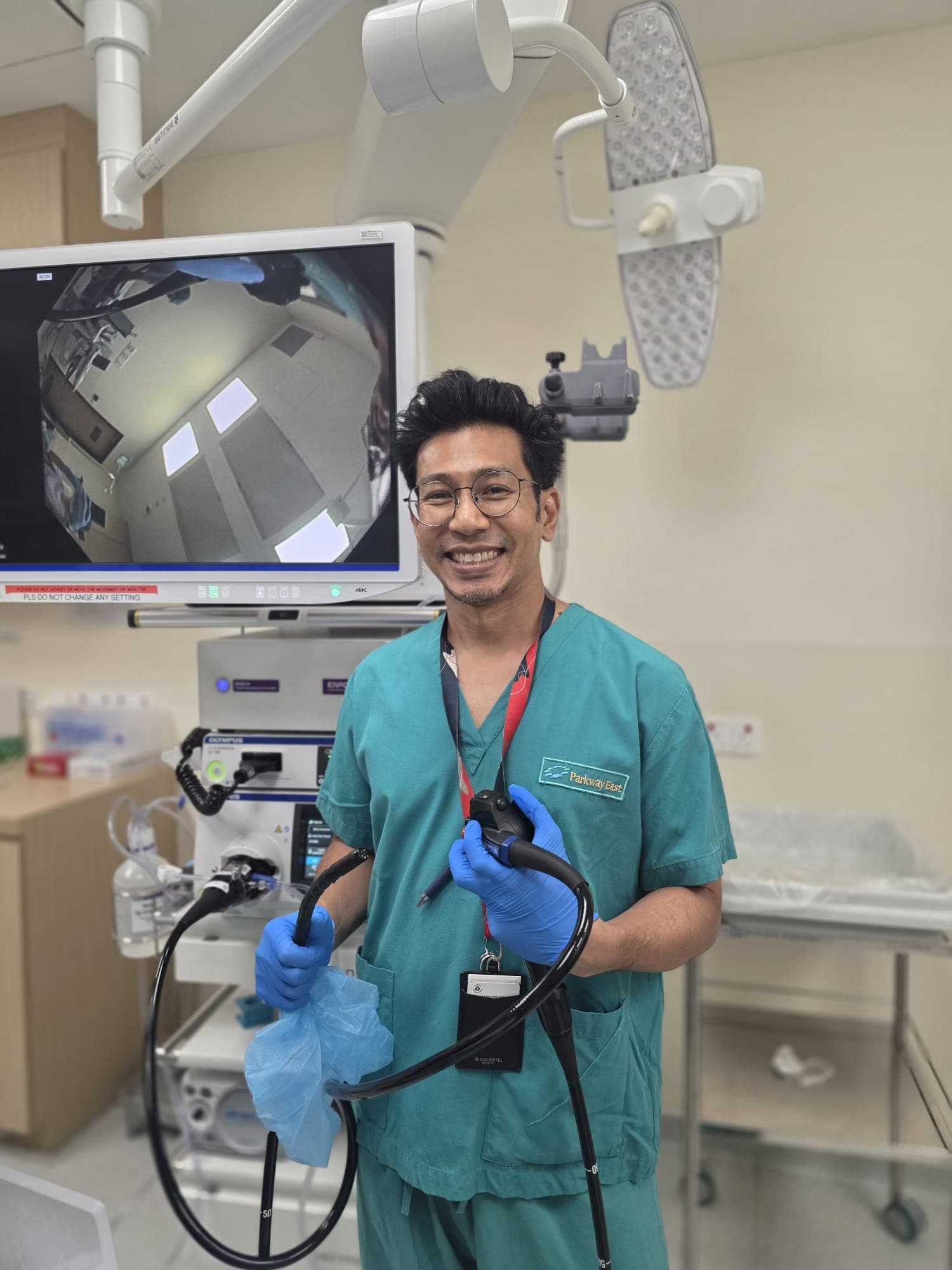
Dr Sulaiman Bin Yusof
Senior Consultant Colorectal and General Surgeon with Colorectal Clinic Associates, Singapore, with over 20 years of surgical experience across public and private practice. He performs gastroscopy as part of his upper GI assessment.
He wrote this article and is responsible for its clinical content.
- Qualifications
- MBChB (Sheffield)
- M.Med (Surgery)
- FRCSEd (General Surgery)
- Fellowship
- Peter MacCallum Cancer Centre, Melbourne
- Previously
- Former Director of Endoscopy, Changi General Hospital
- Also
- Visiting Consultant, Changi General Hospital
Getting seen
Speak to a colorectal specialist.
If you have been experiencing any of the symptoms described above, or if you fall into one of the risk groups outlined, a consultation is the appropriate next step.
I am a Senior Consultant Colorectal and General Surgeon practising at Parkway East Hospital, Gleneagles Hospital, Mount Elizabeth Novena, Mount Alvernia Hospital, and Farrer Park Hospital. I perform gastroscopy as part of my upper GI assessment and can advise on the most appropriate H. pylori test for your situation. If infection is confirmed, I will outline a clear, evidence-based treatment plan and arrange follow-up to confirm eradication.
Message the clinic on WhatsApp to arrange a consultation, or see where the clinics are.
+65 8491 1525