Inguinal hernia
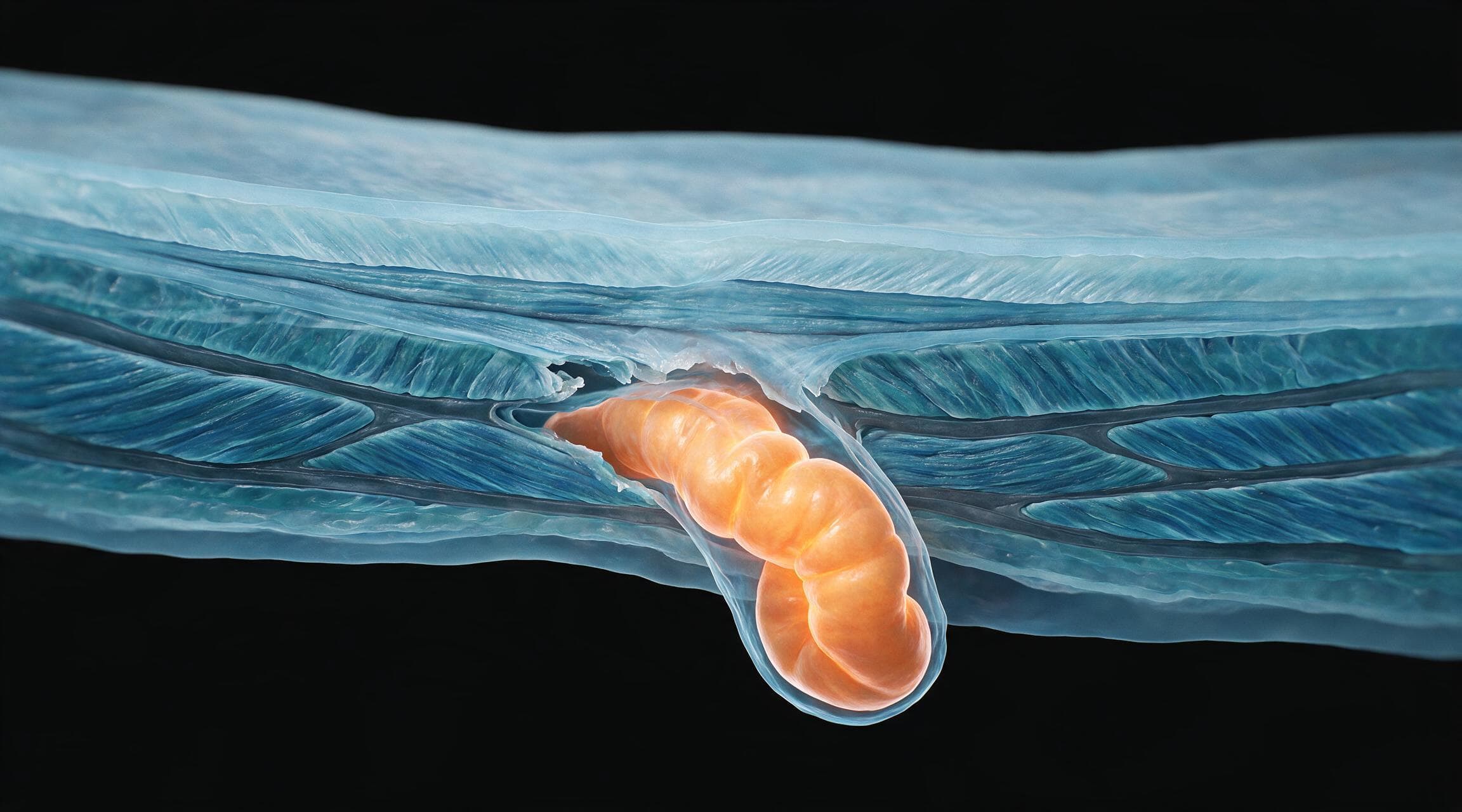
An inguinal hernia is a bulge in the groin, and it does not go away.
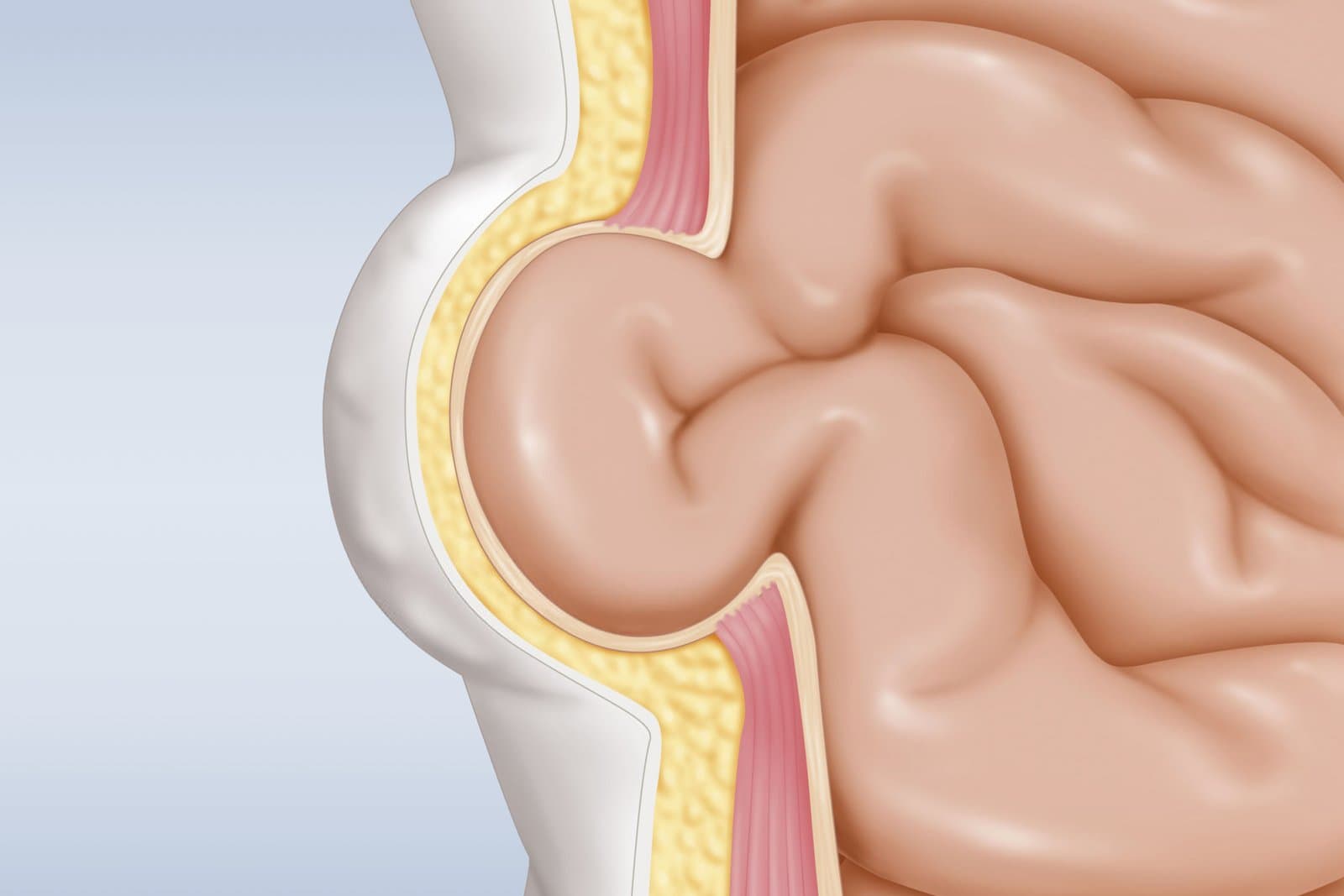
A portion of intestine or fatty tissue pushes through a weak spot in the inguinal canal of the lower abdominal wall. A small hernia causing no real symptoms may simply be monitored.
FRCSEd (General Surgery)Five clinics in Singapore
In short
Groin
Where it shows
Men
Most affected
0
Chance it heals
A&E
If it traps
Incarceration and strangulation are emergencies. See section 01.
His story
Dr Sulaiman Bin Yusof
Senior Consultant Colorectal and General Surgeon, seeing patients at five clinics in Singapore.
- MBChB (Sheffield), M.Med (Surgery), FRCSEd (General Surgery)
- Consults in English and Malay
- MOH Fellowship, Peter MacCallum Cancer Centre, Melbourne
- Singapore Health Quality Service Star Award 2023
- Dean's Honour Roll for Teaching
Five clinics across Singapore
ORCHARD / NAPIER
Gleneagles Medical Centre
6 Napier Road #06-08, Singapore 258499
NOVENA
Mount Elizabeth Novena
38 Irrawaddy Road, #10-48/49, Singapore 329563
JOO CHIAT / EAST COAST
Parkway East Hospital
#05-08, 319 Joo Chiat Place, Singapore 427989
THOMSON
Mount Alvernia Hospital
#08-62, Medical Centre D, 820 Thomson Road, Singapore 574623
FARRER PARK
Farrer Park Medical Centre
#14-12, 1 Farrer Park Station Road, Singapore 217562
When it cannot wait
Some symptoms mean today, not next week.
If left untreated, an inguinal hernia can become incarcerated, where it becomes trapped, or strangulated, where the blood supply to the herniated tissue is cut off. Both require emergency medical attention. Where the trapped tissue is a loop of intestine, it can also block the bowel entirely, which is a small bowel obstruction.
Go to an emergency department if you have sudden severe pain in the groin or abdomen, nausea or vomiting alongside a painful lump, or a firm tender lump that cannot be pushed back in.
What it feels like
An inguinal hernia is a bulge that shows itself when you stand, cough or strain.
Visible bulge
A visible bulge in the groin is a clear sign. It becomes more noticeable when standing, coughing or straining, because the increased abdominal pressure pushes the herniated tissue further out.
Pain or discomfort
Common in the groin, especially when bending over, lifting heavy objects or coughing.
Weakness or pressure
Many people feel weakness, pressure or heaviness in the groin, from the strain the herniated tissue puts on the abdominal wall.
Burning or aching
A burning or aching sensation at the site of the bulge, constant or intermittent, often worse with physical exertion. It comes from irritation and inflammation of the tissues around the hernia.
Swelling around the testicles
In men, the hernia can cause swelling around the testicles if the protruding intestine descends into the scrotum.
Two types
Two types of inguinal hernia, and the difference is when the weakness started.
Indirect
The most common type, often occurring in infants and children because of a congenital weakness in the abdominal wall. The hernia follows the pathway the testicles take during foetal development, and in males it can extend into the scrotum.
Direct
Typically occurs in adults as the abdominal muscles weaken over time. It is caused by a defect or weakness in the posterior wall of the inguinal canal, which lets intestine or fatty tissue protrude directly through the abdominal wall.
Why it happened
Six things that make an inguinal hernia more likely.
A weakness you were born with
Some people are born with an innate weakness in the abdominal wall, particularly in the inguinal canal. The muscles are not as strong, which lets tissue push through.
Pressure inside the abdomen
Activities and conditions that raise intra-abdominal pressure can weaken the abdominal muscles over time.
Pregnancy and weight
Increased weight and pressure, especially across multiple pregnancies, can weaken the abdominal muscles as they stretch.
Age, and being male
Muscles naturally lose strength and elasticity with age, which makes the abdominal wall more susceptible. Men are more likely to develop inguinal hernias than women because the inguinal canal is larger in men, being the route the testes descend through before birth.
Family history
A family history can raise the risk, through genetic factors that contribute to weak spots in the abdominal muscles.
Low birth weight or prematurity
Infants born prematurely or with a low birth weight are at higher risk, because their abdominal muscles may not be fully developed.
How it is confirmed
Diagnosing an inguinal hernia, usually by examination and sometimes a scan.
Ultrasound
Uses sound waves to create images from inside the body and can pick up hernias that are harder to spot.
CT scan
Gives detailed pictures of the abdomen, showing whether there is a hernia and how big it is.
MRI
Uses magnetic fields and radio waves for even more detail, another way to confirm a hernia and see how it affects the surrounding tissues.
What can be done
Managing the symptoms, and repairing the wall.
Non-surgical treatment can help manage symptoms and reduce discomfort. It does not repair the hernia.
Pain relief
Over-the-counter pain relievers such as paracetamol or ibuprofen can help manage the pain and improve day-to-day functioning.
A truss or supportive garment
Provides external support, helping to hold the hernia in place and reduce discomfort, particularly during physical activity. A properly fitted truss should be used under a doctor's guidance, to make sure it works and to prevent further complications.
Surgery is required when non-surgical measures stop managing the symptoms, or when complications develop.
Open repair
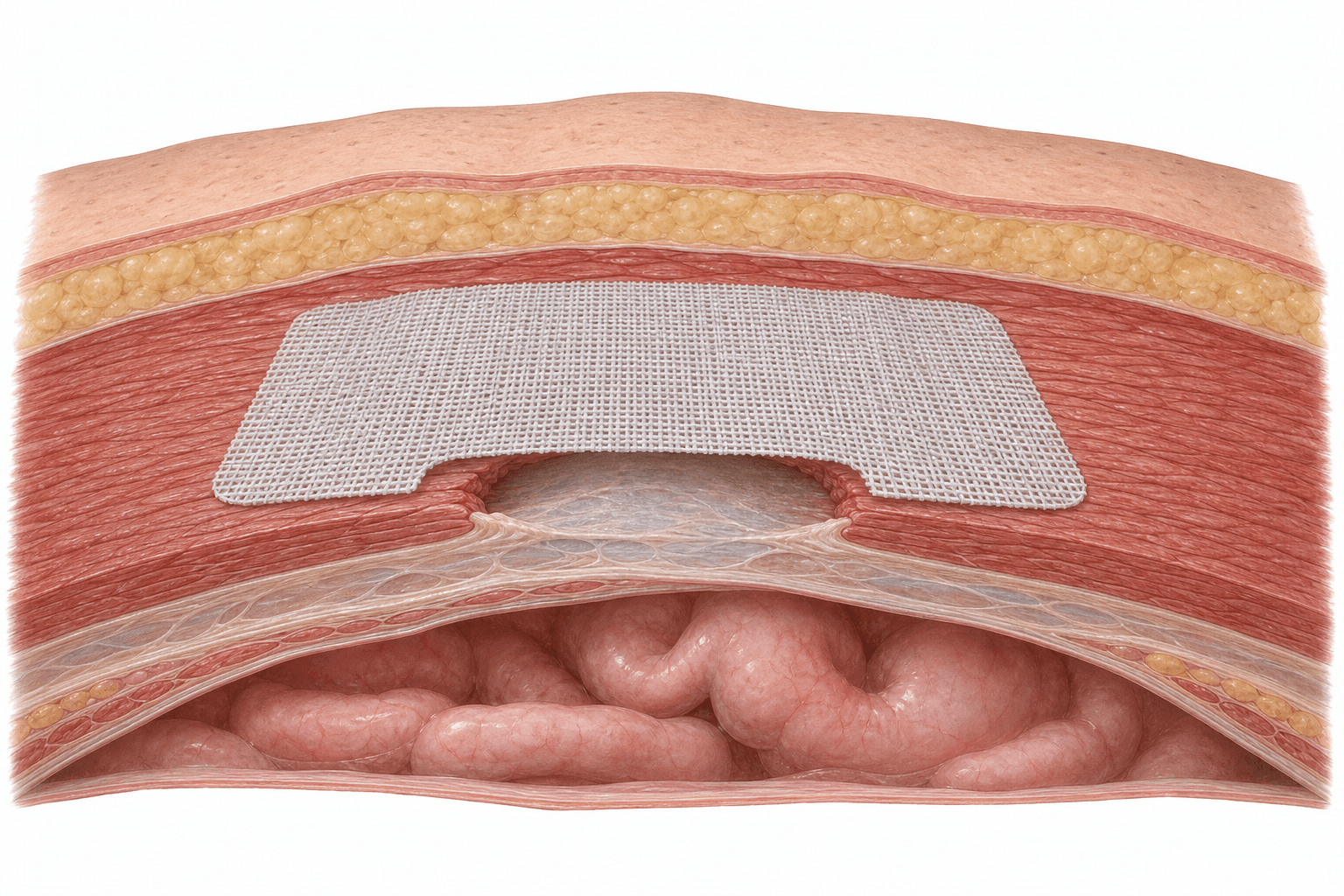
Also called herniorrhaphy. An incision is made in the groin to reach the hernia. The protruding tissue is pushed back into the abdomen and the weakened area repaired with sutures, often reinforced with synthetic mesh, which is called hernioplasty. Suitable for both small and large hernias, and can be performed under local, regional or general anaesthesia.
Keyhole repair
A minimally invasive procedure through several small incisions in the abdomen. A laparoscope, a thin tube with a camera, and other instruments repair the hernia from within using synthetic mesh. Preferred for hernias that recur or occur on both sides, because it typically means less pain and a faster recovery.
What happens on the day, and what recovery looks like week by week, is on the keyhole hernia repair page.
Most people resume light activity within a week and normal activity within a few weeks, but heavy lifting should be avoided for several weeks to allow proper healing.
Lowering the risk
What actually helps.
Keeping your abdominal muscles strong and avoiding activities that put too much pressure on your abdomen are the two things that matter.
Common questions
Five questions people ask first.
Will it heal on its own?
An inguinal hernia does not heal on its own and typically requires surgery to repair the weakened area of the abdominal wall. Where the hernia is small and not causing significant symptoms, a doctor may recommend regular monitoring to detect changes.
How long is recovery?
Recovery varies depending on the procedure. Generally there is some pain and swelling for a few days afterwards. Most people resume light activity within a week and normal activity within a few weeks, but heavy lifting should be avoided for several weeks to allow proper healing.
Do I need a specialist for an inguinal hernia?
In Singapore the specialist for an inguinal hernia is a general surgeon with experience in hernia repair. Dr Sulaiman is a senior consultant general and colorectal surgeon who repairs inguinal hernias by keyhole where the case allows, and self-referrals to a specialist are welcome.
What happens during a hernia examination?
Diagnosis typically starts with a physical examination, where the doctor inspects the groin for a visible bulge. He will palpate the hernia, feeling for any protrusion, and may ask you to strain to make it more noticeable. He will also assess pain or discomfort in the groin during physical activity, to gauge the severity and location of your symptoms.
What can I do to lower the risk of a hernia?
Simple exercises like planks and leg raises help support the muscles, and lifting objects correctly reduces strain on the abdomen. A diet high in fibre prevents constipation, which avoids straining during bowel movements, a common cause of raised abdominal pressure. Maintaining a healthy weight matters too, as extra weight adds pressure to the abdominal area.
Book a consultation
A groin hernia does not close on its own. Have it examined.
If you have a bulge in the groin, or an ache that comes on when you stand, cough or lift, it is worth having it examined by a specialist rather than waiting to see whether it settles. Self-referrals are welcome and appointments are typically available within one working day. If the pain came on suddenly, or the lump is firm, tender and will not push back in, go to A&E instead of waiting for an appointment.