Diverticular disease
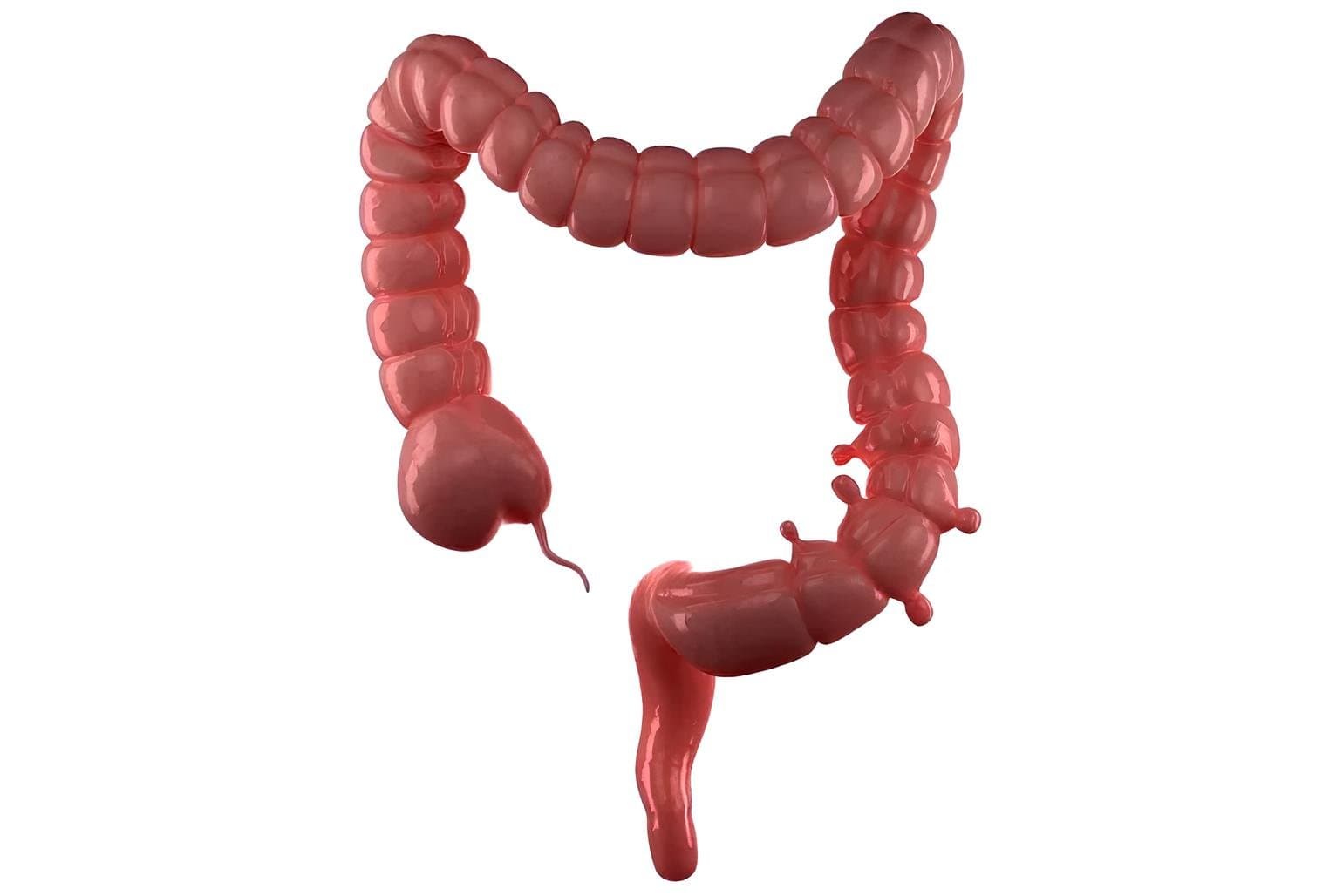
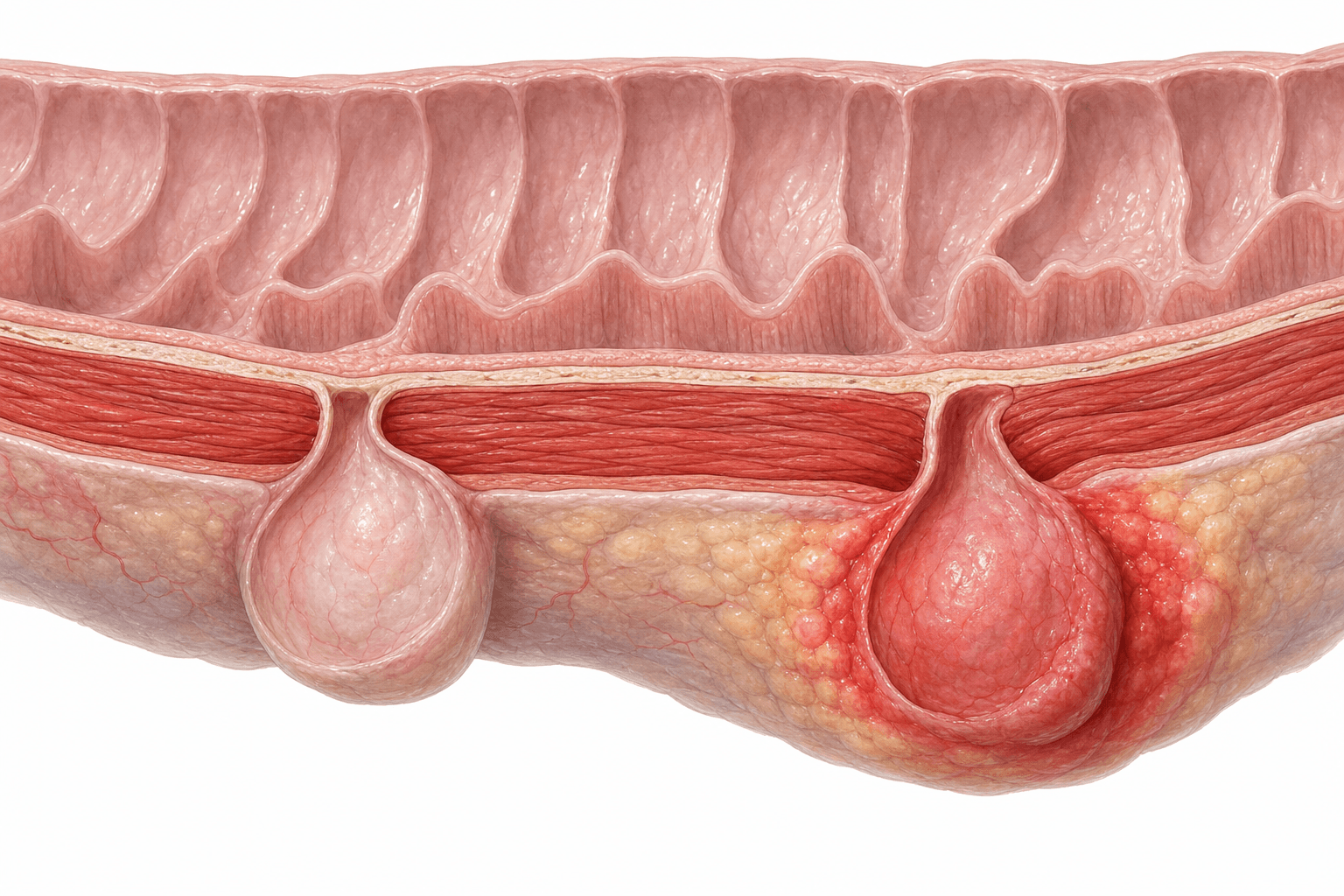
Diverticular disease is small pouches in the wall of the large intestine.
They are known as diverticula. In Western patients they sit most often in the sigmoid colon, but in Singapore the right side of the colon is the more common site. They form where pressure inside the colon pushes against a weak point in its wall. Most people never need treatment; a flare is what changes the plan.
Written by Dr Sulaiman Bin Yusof, Colorectal and General Surgeon. MBChB (Sheffield), M.Med (Surgery), FRCSEd (General Surgery).
FRCSEd (General Surgery)Five clinics in Singapore
What diverticular disease is
In many cases, diverticula cause no symptoms, a condition known as diverticulosis. However, if these pouches become inflamed or infected, the condition progresses to diverticulitis, which can cause abdominal pain, fever, digestive disturbances, and complications requiring medical attention.
This article explores the symptoms, causes, complications, and treatment options for diverticular disease, along with ways to manage and prevent flare-ups.
Pouches form
Diverticula, in the wall of the colon
Usually silent
That stage is diverticulosis
One becomes inflamed
That stage is diverticulitis
What is worth knowing first
What is worth knowing first
Right side
Where the pouches usually sit in Singapore
Source: Soh et al., Journal of Gastroenterology and Hepatology, 2021, 20,395 colonoscopies in Singapore
4 in 100
Develop diverticulitis over 11 years
Source: Shahedi et al., Clinical Gastroenterology and Hepatology, 2013, 2,222 patients followed 11 years
After 40
When diverticula become more common
Source: Dr Sulaiman Bin Yusof, published clinical guidance, consistent with SingHealth
Either side
Where the pain can sit
Source: Dr Sulaiman Bin Yusof, published clinical guidance, with location data from Soh et al., 2021
The symptoms of diverticular disease depend on whether the pouches are inflamed.
Symptoms of diverticular disease vary depending on whether a person has diverticulosis, which is harmless diverticula, or diverticulitis, which is inflamed or infected diverticula.
| Compared on | Diverticulosis | Diverticulitis |
|---|---|---|
| What it means | The pouches are there. | One of them has become inflamed or infected. |
| Typical picture | Most people have no symptoms; some notice a dull ache, bloating and gas, changing bowel habits or mild tenderness. | Continuous, often sharp pain in the same place, worsening over time, with fever, nausea or vomiting, and bowel irregularities. |
| How it is usually found | Incidentally, during a test such as a colonoscopy or CT scan done for another reason. | By its symptoms. Persistent pain with fever, nausea or vomiting should be assessed rather than watched. |
| How many people | Most people with the pouches only ever have this stage. | About 4 in 100 people with diverticulosis develop it over 11 years (Shahedi and colleagues, 2013). |
One note on where it hurts before the lists below. Both of them describe pain in the lower left abdomen, which is what happens when the pouches sit in the sigmoid colon, the pattern most commonly described in Western sources. In Singapore the pouches more often sit on the right: a review of 20,395 colonoscopies here found right-sided disease about twice as common as left-sided, 16.2% against 8.3% (Soh and colleagues, Journal of Gastroenterology and Hepatology, 2021). When they sit on the right, the pain sits on the right rather than the left. Read the descriptions below for their pattern rather than only for their side.
Diverticulosis: few or no symptoms
Diverticulosis is usually discovered incidentally during medical tests such as a colonoscopy or CT scan. Most individuals experience no symptoms, but some may notice mild digestive discomfort, including:
Abdominal discomfort
A dull, persistent ache, usually in the lower left abdomen, that may come and go. The discomfort may be more noticeable after meals or when bloating occurs.
Bloating and gas
A sensation of fullness or increased gas production, which can cause mild cramping or distension.
Changes in bowel habits
Some individuals experience fluctuations between constipation and diarrhoea, sometimes with the need to strain during bowel movements.
Mild tenderness
Gentle pressure on the lower abdomen may reveal slight tenderness, though this is not usually painful.
Diverticulitis: inflammation and infection
When diverticula become inflamed or infected, the symptoms become more pronounced and require medical attention. These may include:
Persistent abdominal pain
A continuous, often sharp pain that typically occurs in the lower left abdomen. The pain may worsen over time and can be aggravated by movement, eating, or pressure on the area.
Fever and chills
A sign of infection, often accompanied by sweating, fatigue, or an overall feeling of being unwell.
Nausea and vomiting
Can occur alongside significant pain and digestive distress, particularly if the infection affects bowel movement.
Bowel irregularities
Constipation is common, though some individuals may experience diarrhoea. Stools may contain mucus or appear looser than usual.
Loss of appetite
A general lack of interest in food, often due to nausea, pain, or bloating.
Abdominal tenderness
The affected area may feel sensitive to touch, with pain intensifying when pressure is applied.
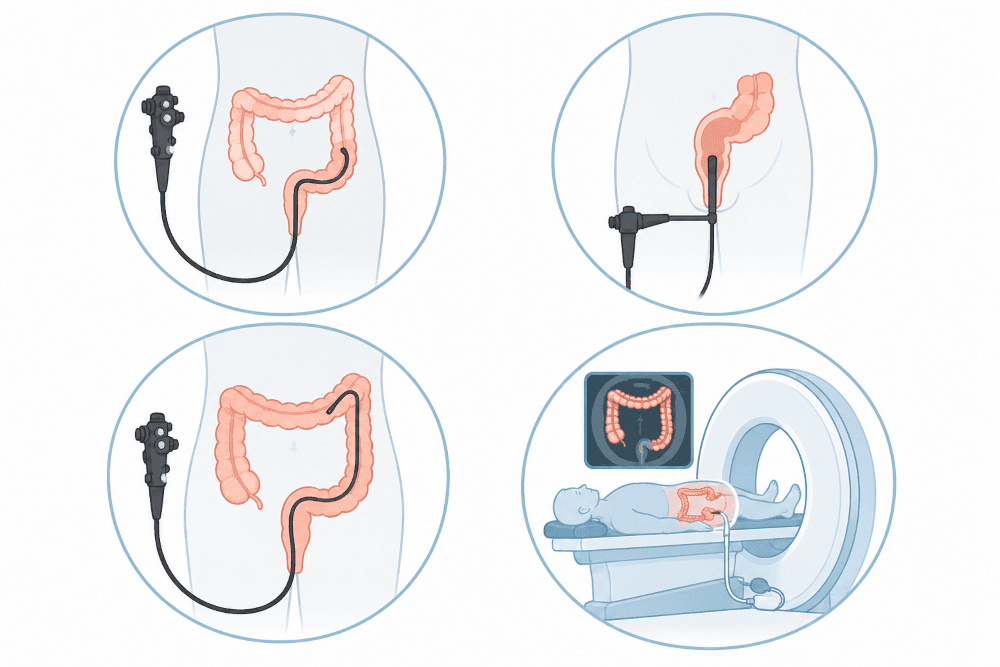
Diverticulosis is often picked up during a test done for another reason entirely. What that test involves, and what the day looks like, is on the colonoscopy page.
What causes diverticular disease: pressure in the colon, and the things that raise it.
The development of diverticular disease is influenced by multiple factors, including age, diet, lifestyle, and genetics.
Two different questions get answered as though they were one. What makes the pouches form is not the same as what makes an existing pouch become inflamed, and the research separates them more cleanly than most explanations of this condition admit. Age and inherited susceptibility do most of the work in forming them: a Danish study of 142,123 cases estimated that about 53% of susceptibility is genetic (Strate and colleagues, Gastroenterology, 2013), and in the Singapore colonoscopy series the odds rose with every year of age. Weight, smoking and activity have more to do with whether one later flares: in 179,564 people followed prospectively, meeting five healthy lifestyle targets was associated with about half the risk of diverticulitis (Ma and colleagues, Gut, 2025). The long-standing story that a low-fibre diet and straining create the pouches has not survived being tested directly, and the two entries below say where that leaves it.
| The long-held story | What the studies found |
|---|---|
| A low-fibre diet creates the pouches | In 2,104 people examined by colonoscopy, those eating the most fibre had slightly more diverticulosis, not less (Peery and colleagues, Gastroenterology, 2012). A second study of 2,108 people found no relationship in either direction (2013). |
| Chronic constipation creates the pouches | People with fewer than seven bowel movements a week had lower odds of diverticulosis, not higher (Peery and colleagues, 2013), and in the Singapore study of 20,395 colonoscopies constipation was negatively associated with having the pouches. |
| Straining creates the pouches | When straining was measured directly it showed no association with diverticulosis (Peery and colleagues, 2013). Avoiding it still earns its place in managing the condition; it is not what put the pouches there. |
Ageing
Over time, the walls of the colon lose elasticity and become more susceptible to pressure changes, increasing the likelihood of diverticula formation. The condition is more common after the age of 40 and becomes increasingly prevalent with age. This is the most consistent finding in the research: in the Singapore colonoscopy series the odds rose with every additional year of age.
Low-fibre diet
This one has changed, and it is worth saying so. Fibre adds bulk to stools and helps them pass with less strain, and for fifty years a low-fibre diet was held to be the cause of the pouches themselves. Studies that looked directly at the colon have not borne that out. In 2,104 people examined by colonoscopy, those eating the most fibre had slightly more diverticulosis, not less (Peery and colleagues, Gastroenterology, 2012), and a second study of 2,108 people found no relationship in either direction (Clinical Gastroenterology and Hepatology, 2013). Fibre still earns its place in managing the condition and in lowering the risk of a flare-up, which are the managing and prevention sections below. It does not appear to be what puts the pouches there.
Chronic constipation and straining
The same correction applies here, and more sharply. Straining was expected to raise pressure on the colon wall and create the pouches, but when it was measured it showed no association with diverticulosis (Peery and colleagues, 2013), and people with fewer than seven bowel movements a week actually had lower odds, not higher. In the Singapore study of 20,395 colonoscopies, constipation was negatively associated with having diverticulosis. Constipation is worth treating on its own account. It is not the reason the pouches formed, and nobody should read a diagnosis as evidence of something they did wrong.
Physical inactivity
A sedentary lifestyle has not been shown to cause the pouches to form. What it does affect is the risk of one becoming inflamed. Regular physical activity is one of the factors consistently associated with a lower risk of diverticulitis, and in 179,564 people followed prospectively it was part of the lifestyle pattern that halved that risk (Ma and colleagues, Gut, 2025).
Obesity
Higher body weight, particularly around the abdomen, has been linked to a greater risk of diverticulitis and its complications. This one holds firmly. Body mass index was independently associated with diverticulosis in the Singapore colonoscopy series, and higher body weight raises the risk of diverticulitis at every level of inherited risk (Ma and colleagues, Gut, 2025).
Genetic factors
Individuals with a family history of diverticular disease may be more likely to develop the condition, suggesting a hereditary component. The size of it is larger than most people expect. A Danish study of 142,123 cases, including twins and siblings, estimated that about 53% of susceptibility to diverticular disease is genetic (Strate and colleagues, Gastroenterology, 2013). That is the single most useful thing to hold on to when the rest of this list starts to read like a list of personal failings.
Smoking
Some studies suggest that smoking may contribute to an increased risk of diverticulitis and more severe complications. It is one of the five factors in the lifestyle pattern associated with roughly half the risk of diverticulitis in the Gut 2025 cohort study, alongside body weight, physical activity, fibre and red meat.
What can happen when diverticulitis is left untreated.
If left untreated, diverticulitis can lead to complications that require medical intervention. These complications can range from mild infections to more severe conditions affecting the digestive system.
Out of every 10 people having a first attack of diverticulitis
- Uncomplicated
- About 8 in 10
- Complicated
- About 2 in 10
Source: McDermott et al., British Journal of Surgery, 2014
About one in five people develops a complication such as an abscess or a perforation at their first acute presentation, which means roughly four in five do not. Of those who have had one attack, around 20% go on to have at least one more, and later attacks are less likely to be the complicated kind rather than more (Strate and Morris, Gastroenterology, 2019). The five complications below are the ones worth recognising, not the ones to expect.
Abscess formation
When an infected diverticulum develops into a pocket of pus, an abscess may form. While smaller abscesses can often be treated with antibiotics, larger ones may require drainage through a minimally invasive procedure.
Perforation and peritonitis
In severe cases, a diverticulum may rupture, allowing bowel contents to leak into the abdominal cavity. This can lead to peritonitis, a widespread infection that requires immediate medical treatment, often including surgery.
Bowel obstruction, or stricture formation
Repeated inflammation can cause scar tissue to form, leading to narrowing of the colon. This can result in difficulty passing stools, persistent bloating, and cramping.
Fistula formation
A fistula is an abnormal connection between the colon and another organ, such as the bladder or vagina. This can cause chronic infections, unusual discharge, or bowel-related symptoms.
Rectal bleeding
In some cases, diverticula may rupture, leading to bleeding in the digestive tract. While mild cases may resolve on their own, significant blood loss may require medical attention.
Bleeding from a diverticulum is one of several causes of blood in the stool, and the colour and pattern of it matter. That is covered in what blood in the stool can mean.
Treatment for diverticular disease steps up only as far as it has to.
What is done about diverticular disease depends on whether the pouches are quiet, inflamed, or causing complications.
Diet and lifestyle
Fibre, fluids and activity for diverticulosis
Rest, and antibiotics if needed
For an attack of diverticulitis
Elective surgery
Discussed when attacks persist or complicate
Emergency surgery
For perforation or an abscess that will not settle
Lifestyle and conservative management
For individuals diagnosed with diverticulosis, lifestyle and dietary modifications are key to managing the condition and reducing the likelihood of complications. A high-fibre diet, including fruits, vegetables, legumes, and whole grains, helps maintain regular bowel movements and reduces strain on the colon. Hydration is also necessary, as adequate fluid intake helps prevent constipation. Engaging in regular physical activity supports digestion and overall gut health. Avoiding excessive straining and adopting healthy bathroom habits may further help reduce the risk of complications.
Medical treatment for diverticulitis
Guidance on this has moved. For mild cases, treatment has traditionally meant antibiotics to control infection and pain relievers to manage discomfort, and antibiotics remain necessary whenever the attack is complicated, whenever there are signs of sepsis, and for patients who are immunosuppressed or otherwise frail. For a straightforward uncomplicated attack in an otherwise well patient, two multicentre randomised trials found that antibiotics did not speed recovery or prevent later complications, and the American College of Physicians now suggests selected patients can be managed initially without them, and most of them as an outpatient rather than in hospital (Qaseem and colleagues, Annals of Internal Medicine, 2022). That suggestion is written specifically about uncomplicated left-sided diverticulitis; in Singapore the pouches more often sit on the right, so it does not by itself settle how a right-sided attack here should be managed. A temporary low-fibre or liquid diet may be recommended to allow the colon to rest. If symptoms do not improve within a few days, additional medical evaluation may be required to check for complications such as abscesses or obstruction. Which of these applies to a given attack is a decision for the doctor assessing it.
Elective surgery
Elective surgery may be discussed with individuals who experience persistent or frequently recurring episodes of diverticulitis, or whose diverticulitis has been complicated. The procedure, known as a colectomy, involves removing the affected portion of the colon to reduce the likelihood of further flare-ups. Surgery is generally considered when complications such as strictures, fistulas, or recurrent infections develop. It is no longer recommended on the number of past attacks alone, or on age alone, and the decision is a personalised one that weighs the likely benefit against the risks and what matters to the patient (Strate and Morris, Gastroenterology, 2019; American College of Physicians, 2022). Since elective surgery is planned, it allows for thorough preparation and recovery.
Emergency surgery
In cases where diverticulitis leads to a perforation, severe infection, or an abscess that cannot be managed with antibiotics, emergency surgery is necessary. The procedure may involve removing the affected section of the colon, and in some cases, a temporary colostomy may be required to allow healing. Emergency surgery carries a longer recovery time than elective procedures.
The temporary low-fibre or liquid diet used during an attack is there to let the colon rest, and it is a short-term measure rather than a permanent way of eating. What eating that way involves is on the low residue diet page.
The habits that manage it are the habits that prevent it.
Maintaining a high-fibre diet, drinking enough water, engaging in regular physical activity, and managing weight can help reduce the risk of diverticular disease and its complications.
A diet rich in fibre supports bowel regularity and lowers pressure in the colon, while hydration ensures that stools remain soft and easy to pass. Exercise contributes to digestive health and may help prevent constipation. Avoiding excessive straining and establishing healthy bowel habits may further support gut function.
Half
The risk, for people meeting all five targets
Source: Ma et al., Gut, 2025, 179,564 participants in three prospective cohorts
What should send you to a doctor rather than wait.
Medical evaluation is recommended if symptoms such as persistent abdominal pain, fever, nausea, vomiting, or changes in bowel habits occur.
Blood in the stool, increasing discomfort, or signs of infection may indicate complications that require urgent treatment. Seeking medical advice early can help manage symptoms effectively and reduce the risk of further issues.
Diverticular disease is common, particularly in older adults. While many people with diverticulosis experience no symptoms, diverticulitis can lead to pain and complications. Dietary and lifestyle changes help manage the condition, while medical or surgical interventions may be required for more severe cases.
Taking proactive steps can help individuals maintain digestive health and reduce the risk of future flare-ups.
Common questions about diverticular disease.
What is the difference between diverticulosis and diverticulitis?
Diverticulosis means the pouches are there; diverticulitis means one of them has become inflamed or infected. In many cases the pouches cause no symptoms at all, and most people only ever have the first stage. It is when a pouch becomes inflamed or infected that abdominal pain, fever, digestive disturbances and complications needing medical attention can appear.
I have been told I have diverticulosis. How likely is it to become diverticulitis?
Not very. Of 2,222 people whose diverticulosis was found by chance at colonoscopy, 4.3% developed diverticulitis over the following 11 years, and 1% by the stricter definition that requires a scan or surgery to confirm it (Shahedi and colleagues, Clinical Gastroenterology and Hepatology, 2013). Most people with diverticulosis simply carry on.
Does a low-fibre diet cause diverticular disease?
That was the long-standing belief, and the studies that looked directly at the colon have not borne it out. In 2,104 people examined by colonoscopy, those eating the most fibre had slightly more diverticulosis, not less (Peery and colleagues, Gastroenterology, 2012), and a second study of 2,108 people found no relationship in either direction (Clinical Gastroenterology and Hepatology, 2013). Fibre still earns its place in managing the condition and in lowering the risk of a flare-up. It does not appear to be what puts the pouches there.
Will I need antibiotics for an attack of diverticulitis?
Not automatically, and the decision belongs to the doctor assessing the attack. Antibiotics remain necessary whenever an attack is complicated, whenever there are signs of sepsis, and for patients who are immunosuppressed or otherwise frail. For a straightforward uncomplicated attack in an otherwise well patient, two multicentre randomised trials found that antibiotics did not speed recovery or prevent later complications, and the American College of Physicians now suggests selected patients can be managed initially without them (Annals of Internal Medicine, 2022). That suggestion was written specifically about left-sided disease, so it does not by itself settle how a right-sided attack, the more common pattern in Singapore, should be managed.
Can diverticular disease be prevented?
Not entirely, because about 53% of susceptibility to the condition is genetic (Strate and colleagues, Gastroenterology, 2013). The risk that can be moved is the risk of a flare-up, and the habits that move it are the same ones that manage the condition: a high-fibre diet, drinking enough water, regular physical activity and managing weight. In 179,564 people followed prospectively, meeting all five healthy lifestyle targets, which adds not smoking and limiting red meat, was associated with about half the risk of diverticulitis (Ma and colleagues, Gut, 2025).
When should I see a doctor about these symptoms?
Medical evaluation is recommended if symptoms such as persistent abdominal pain, fever, nausea, vomiting, or changes in bowel habits occur. Blood in the stool, increasing discomfort, or signs of infection may indicate complications that require urgent treatment. Seeking medical advice early can help manage symptoms effectively and reduce the risk of further issues.
What this page was checked against.
Singapore guidance first, then the studies. Where the research has moved on from what is still widely repeated about this condition, the page follows the research and says so on the page rather than quietly.
SingHealth, Diverticular Disease
Singapore clinical patient information. Diverticular disease affects mainly patients above the age of 40, and only a small percentage of people with diverticulosis ever have symptoms.
Soh YSA et al., Journal of Gastroenterology and Hepatology, 2021
20,395 consecutive colonoscopies in Singapore. Diverticulosis in 19.6%, rising from 14.9% to 23.9% across the decade. Right-sided disease 16.2% against left-sided 8.3%. Constipation was negatively associated.
Shahedi K et al., Clinical Gastroenterology and Hepatology, 2013
2,222 patients with diverticulosis found incidentally at colonoscopy. Over 11 years, 4.3% developed diverticulitis, and 1% by the stricter imaging or surgery definition.
Peery AF et al., Gastroenterology, 2012
2,104 participants. A high-fibre diet did not protect against diverticulosis; the highest fibre quartile had a greater prevalence than the lowest. Constipation was not a risk factor.
Peery AF et al., Clinical Gastroenterology and Hepatology, 2013
2,108 participants. Neither constipation nor a low-fibre diet was associated with diverticulosis. Straining showed no association.
Peery AF et al., Clinical Gastroenterology and Hepatology, 2020
271,181 screening colonoscopies. Asian patients had about three times the odds of proximal-only diverticulosis compared with white patients.
McDermott FD et al., British Journal of Surgery, 2014
Review of diverticulitis management. About one in five patients develops a complication such as an abscess or perforation at the first acute presentation.
Strate LL and Morris AM, Gastroenterology, 2019
Review. About 20% of patients have at least one recurrence. Two multicentre randomised trials found antibiotics did not speed recovery or prevent complications in uncomplicated diverticulitis, and elective surgery is no longer advised on recurrence count alone.
Qaseem A et al., Annals of Internal Medicine, 2022
American College of Physicians clinical guideline. For acute uncomplicated left-sided diverticulitis, it suggests most patients can be managed as outpatients and that selected patients can be managed initially without antibiotics. Its companion guideline says the decision about elective surgery should be personalised.
Strate LL et al., Gastroenterology, 2013
Danish population study of 142,123 cases including twins and siblings. An estimated 53% of susceptibility to diverticular disease is genetic.
179,564 participants across three prospective cohorts. Meeting five healthy lifestyle targets was associated with about half the risk of diverticulitis, at every level of genetic risk.
General information, not a diagnosis. What applies to any one person depends on their own history and examination.
The surgeon
The surgeon.
Dr Sulaiman's practice is built around complex colorectal surgery, with robotic-assisted technique as his primary surgical platform for colectomy and anterior resection. He has contributed eight peer-reviewed publications.
Patients consult Dr Sulaiman for his depth of experience in colorectal cancer and perianal conditions, as well as for consultations that are thorough, unhurried, and focused on giving patients a clear understanding of their options.
Former Director of Endoscopy, Changi General Hospital
He led the endoscopy unit at Changi General Hospital, a high-volume diagnostic service covering colonoscopy and gastroscopy across a broad and diverse patient population, and brings that public-sector depth to his private practice.
Book a consultation
Concerned about your digestive health? Start with a thorough evaluation.
Diverticular disease is common, particularly in older adults. Many people with diverticulosis experience no symptoms at all, but diverticulitis can lead to pain and complications. If you have symptoms, or concerns about your digestive health, book a consultation for a thorough evaluation and personalised care. Appointments are available across five clinic locations in Singapore, and self-referrals are welcome.