Low-residue diet, explained by a colorectal surgeon
A low-residue diet limits fibre so there is less for the bowel to move.
A low-residue diet is often recommended for patients who need to reduce the amount of undigested material passing through their intestines. By limiting high-fibre foods and other components that contribute to stool bulk, this diet helps minimise bowel movements and reduce strain on the digestive tract. This approach is commonly used for patients with certain gastrointestinal conditions, those preparing for colorectal procedures, or those recovering from surgery.
Written by Dr Sulaiman Bin Yusof, Colorectal and General Surgeon. MBChB (Sheffield), M.Med (Surgery), FRCSEd (General Surgery).
A low-residue diet may help alleviate symptoms of conditions such as inflammatory bowel disease (IBD), diverticulitis, and colorectal disorders. This guide explains the requirements of a low-residue diet, including permitted foods, meal planning advice, and methods for ensuring adequate nutrition. Where a figure or a guideline is quoted below, the paper it comes from is named beside it, and section 07 lists each one with a link.
+65 8491 1525
What the diet actually does
What the diet actually does
10 g
Fibre a day, the ceiling proposed for a low-fibre diet
Source: Vanhauwaert E et al, Advances in Nutrition, 2015
Fibre comes down
High-fibre foods are limited
Less bulk forms
Less undigested material reaches the colon
The bowel does less
Fewer bowel movements, less strain
20 g and 26 g
What Singapore recommends every day, for women and for men
Source: HealthHub, Health Promotion Board Singapore
Who might need a low-residue diet?
A low-residue diet may be beneficial for patients experiencing symptoms linked to digestive strain or frequent bowel movements. These symptoms often indicate underlying conditions that may improve by reducing fibre intake.
Frequent or urgent bowel movements
Frequent bowel movements, particularly when sudden or urgent, can indicate an irritated or overactive digestive tract. Conditions such as inflammatory bowel disease (IBD) may benefit from a low-residue diet during a flare, to reduce bowel frequency. Irritable bowel syndrome (IBS) is a different problem with a different answer: the American College of Gastroenterology's 2021 guideline on IBS recommends a limited trial of a low FODMAP diet rather than a low-fibre one, so an IBS diagnosis on its own is not a reason to cut fibre.
Cramping and abdominal pain
Digestive cramps and pain are common with gastrointestinal conditions that cause inflammation or sensitivity. A low-residue diet can help alleviate these symptoms by reducing the bulk in the intestines, which in turn reduces mechanical irritation. This is a comfort measure, so it is worth agreeing a review point with your doctor rather than staying on it indefinitely.
Diarrhoea or loose stools
Chronic or frequent diarrhoea may be a sign of conditions like IBD or diverticulitis, where limiting fibre can help manage symptoms by firming up stool and reducing urgency.
Bloating or gas
Excessive bloating and gas may result from high-fibre foods fermenting in the intestines. Patients with inflammatory conditions of the colon can benefit from reducing fibre intake through a low-residue diet.
Two of the conditions named above, irritable bowel syndrome and inflammatory bowel disease, are frequently confused with each other. How irritable bowel syndrome is diagnosed, by ruling out inflammatory bowel disease and other conditions first, is set out on its own page.
When and why a low-residue diet is recommended.
A low-residue diet is commonly prescribed to manage certain medical conditions, prepare for diagnostic procedures, or aid recovery after gastrointestinal surgeries. Below are the key reasons and benefits of following this diet.
Four
Situations it is prescribed in
Source: Dr Sulaiman Bin Yusof, clinical practice
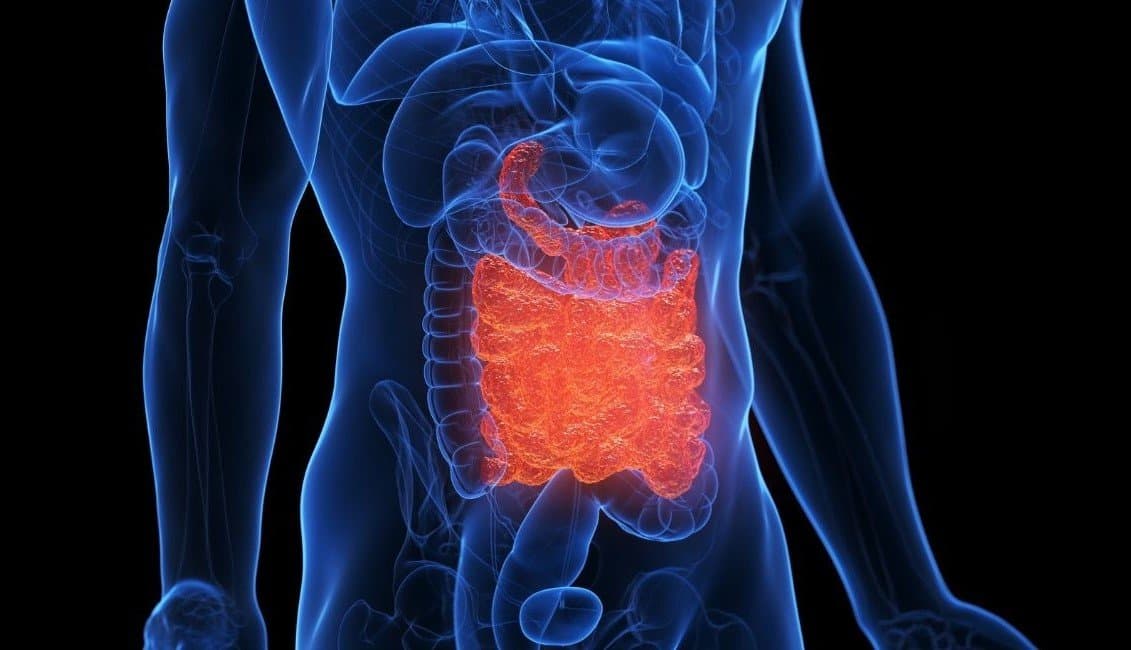
Preparation for diagnostic procedures
A low-residue diet may be recommended before procedures like colonoscopies to clear the digestive tract for better visualisation. The European Society of Gastrointestinal Endoscopy's 2019 bowel preparation guideline recommends a low-fibre diet on the day preceding colonoscopy, one day rather than several. Your own clinic's instructions come first, and if they differ from what you read here, follow theirs.
Post-surgical recovery
After surgeries involving the gastrointestinal tract, such as bowel resection, a low-residue diet is often advised for a short period to keep bowel movements less frequent and more comfortable while things settle. Treat it as a comfort measure on your surgeon's instruction rather than something that speeds healing: the ERAS Society's colorectal surgery guidelines favour returning to normal eating early, so the timeline your surgeon gives you matters more than staying on the diet longer than asked.
Managing inflammatory bowel disease (IBD)
For patients with Crohn's disease or ulcerative colitis, a low-residue diet can ease symptoms during a flare by decreasing stool bulk and digestive strain. It does not treat the inflammation, and it is not a long-term diet. A randomised trial published in Gut in 1985 followed 70 patients with non-stenosing Crohn's disease for a mean of 29 months and found no difference between a low-residue diet and a normal one in symptoms, hospital admissions, surgery, complications or nutritional status. Whether it is right for you, and for how long, is a decision for the specialist looking after you.
Diverticulitis management
During a flare-up of diverticulitis, fibre is usually reduced for a short period to let the colon rest and settle. What happens after the attack matters just as much: fibre goes back up, not down. The American College of Gastroenterology's 2026 guideline on colonic diverticulitis, which puts the lifetime risk of the condition at 3 to 5 per cent, lists a healthy diet among the measures that reduce the chance of another attack, and states plainly that nuts, seeds, corn and popcorn do not need to be avoided.
The condition behind the flare-ups is covered in more depth in diverticular disease, its symptoms, causes and treatment.
Foods to include on a low-residue diet.
A low-residue diet aims to reduce fibre and other indigestible components. Here is a list of commonly permitted foods.
The shape of the list on this page
- Groups to include
- 6
- Groups to leave out
- 5
Source: Dr Sulaiman Bin Yusof, clinical practice
Six groups of food are generally permitted and five are left out. Both lists are set out in full, here and in the section that follows.
Refined grains
White bread, plain pasta, white rice, and low-fibre cereals.
Fruits without skins or seeds
Bananas, melon, canned peaches, and applesauce.
Tender meats and protein sources
Skinless poultry, lean beef, eggs, and smooth peanut butter.
Dairy, if tolerated
Milk, cheese, yoghurt. Choose low-fat options if sensitive to fat content.
Cooked vegetables without seeds or skins
Carrots, potatoes without the skin, squash, and spinach.
Fats and oils
Butter, margarine, and cooking oils in moderation.
These foods are generally low in fibre, helping to minimise stool volume and reduce digestive strain. These choices are particularly beneficial for patients with conditions like IBD or those recovering from colorectal surgeries.
Foods to avoid on a low-residue diet.
To effectively minimise bowel residue, patients should avoid foods high in fibre or those that leave indigestible parts in the digestive tract.
High-fibre grains and breads
Brown rice, whole-wheat bread, oats, and bran cereals.
Raw fruits and vegetables with skins, seeds, or stems
Apples, berries, corn, and raw leafy greens.
Nuts, seeds, and legumes
Lentils, beans, chia seeds, and all types of nuts. This is a fibre calculation for the days you are on the diet, not a rule for life. The old advice that anyone with diverticular disease should avoid nuts, seeds, corn and popcorn permanently has been retired: a study of 47,228 men followed for 18 years, published in JAMA in 2008, found no increased risk of diverticulitis from nuts, corn or popcorn in the men who ate them most often, and a slightly lower one.
Tough meats and high-fat foods
Sausages, fried meats, and highly processed foods.
Spicy and irritating foods
Certain spices can irritate the digestive tract, so spicy sauces and dressings are better left out.
Eliminating high-fibre and hard-to-digest foods helps reduce stool volume, making the digestive process smoother and less demanding for patients on this diet.
Low-residue diet before colonoscopy and surgical preparation.
A low-residue diet may be recommended before procedures like colonoscopies to clear the digestive tract for better visualisation.
One day
How long the low-fibre diet runs before a colonoscopy
Source: ESGE guideline, Hassan C et al, Endoscopy, 2019
How much of a difference the diet makes to the test itself is measurable. A meta-analysis of nine randomised trials covering 1,686 patients, published in Gastrointestinal Endoscopy in 2016, compared a low-residue diet against the clear liquids patients were traditionally given the day before. The two produced equally clean bowels. What the low-residue diet changed was the experience: patients tolerated it better and were more willing to go through the preparation again, which matters for a test most people will need more than once.
What the test itself involves, and what the day looks like, is on the colonoscopy page.

Because GLP-1 drugs keep food in the stomach longer, they pose a unique risk for patients undergoing anaesthesia or sedation, such as for a colonoscopy or endoscopy.
If food remains in the stomach during surgery, there is a serious risk of aspiration, which is the inhaling of stomach contents into the lungs. This is set out in the published review of GLP-1 receptor agonists and delayed gastric emptying.
The size of that risk is worth stating plainly, because the alternative is a patient stopping a prescribed medicine out of worry. In the largest series in the review cited above, 13.6 per cent of people taking a GLP-1 drug had food still in the stomach at endoscopy, against 2.3 per cent of those who were not. Aspiration itself stayed rare. Guidance published in 2024 by five bodies including the American Gastroenterological Association, the American Society of Anesthesiologists and the Society of American Gastrointestinal and Endoscopic Surgeons concluded that these drugs may be continued before a procedure in patients who are not at raised risk, and that where there is concern the answer is a liquid diet for at least 24 hours beforehand rather than stopping the drug.
13.6% vs 2.3%
Food still in the stomach at endoscopy, on a GLP-1 drug and off one
Source: Jalleh RJ et al, J Clin Endocrinol Metab, 2024
0.5 in 1,000
Perforation rate across population studies of colonoscopy
Source: Reumkens A et al, Am J Gastroenterol, 2016
Nutritional considerations and meal planning tips.
While a low-residue diet restricts certain foods, patients can still meet their nutritional needs with thoughtful meal planning. Proper dietary choices help prevent nutrient deficiencies and ensure adequate energy and strength while following this diet. Here are some practical tips.
Supplements
The gap this diet leaves
Source: Dr Sulaiman Bin Yusof, clinical practice
Include protein-rich foods
Include lean meats, eggs, and dairy for protein to support healing and muscle maintenance.
Use supplements when needed
Because this diet limits fruits, vegetables and whole grains, it is short on the vitamins and minerals those foods carry, and a longer spell on it raises the question of whether something needs replacing. Ask the doctor looking after you whether you need a supplement and which one, rather than assembling a list yourself. Low iron or folate in particular often has a cause of its own, such as blood loss or inflammation, and that cause is worth finding rather than covering over.
Stay hydrated
Drinking plenty of water is necessary to prevent constipation, as a low-residue diet can slow digestion.
Maintain calorie balance
Adding small amounts of healthy fats, like olive oil, and choosing nutrient-dense options within the permitted list helps ensure patients get enough calories.
Every number on this page, and the paper it came from.
Guidance on this diet has changed over the years, and some of what is still repeated online was retired by the people who wrote it. Where this page states a figure or corrects an older instruction, the source is listed here so you can read it yourself.
A low-fibre diet is proposed as a maximum of 10 g of fibre a day, and the term low residue has no agreed measurable definition.
Vanhauwaert E, Matthys C, Verdonck L, De Preter V. Low-residue and low-fiber diets in gastrointestinal disease management. Advances in Nutrition, 2015. Read the source
Singapore's recommended daily fibre intake is 20 g for women and 26 g for men.
HealthHub, Health Promotion Board Singapore. Read the source
A low-fibre diet on the day preceding colonoscopy, one day.
Hassan C et al. Bowel preparation for colonoscopy: European Society of Gastrointestinal Endoscopy Guideline, Update 2019. Endoscopy, 2019. Read the source
Nine randomised trials, 1,686 patients: a low-residue diet cleaned the bowel as well as clear liquids and was tolerated better.
Nguyen DL et al. Low-residue versus clear liquid diet before colonoscopy: a meta-analysis of randomized, controlled trials. Gastrointestinal Endoscopy, 2016. Read the source
Food still in the stomach at endoscopy in 13.6 per cent of GLP-1 users against 2.3 per cent of non-users, with aspiration itself rare.
Jalleh RJ, Plummer MP, Marathe CS et al. Clinical consequences of delayed gastric emptying with GLP-1 receptor agonists and tirzepatide. Journal of Clinical Endocrinology and Metabolism, 2024. Read the source
GLP-1 drugs may be continued before a procedure in patients not at raised risk; where there is concern, a liquid diet for at least 24 hours.
Kindel TL et al. Multi-society clinical practice guidance for the safe use of glucagon-like peptide-1 receptor agonists in the perioperative period, 2024. Read the source
Perforation in 0.5 of every 1,000 colonoscopies and bleeding in 2.6 of every 1,000, rising to 9.8 of every 1,000 when a polyp is removed.
Reumkens A et al. Post-colonoscopy complications: a systematic review, time trends, and meta-analysis of population-based studies. American Journal of Gastroenterology, 2016. Read the source
Risk of damage to the wall of the colon, including perforation, of less than 0.5 per cent.
Singapore General Hospital (SingHealth), patient information page on colonoscopy. Read the source
No difference between a low-residue diet and a normal one over a mean of 29 months in non-stenosing Crohn's disease.
Levenstein S et al. Low residue or normal diet in Crohn's disease: a prospective controlled study in Italian patients. Gut, 1985. Read the source
Lifetime risk of colonic diverticulitis of 3 to 5 per cent, and a healthy diet without avoiding nuts, seeds, corn or popcorn.
Peery AF et al. ACG Clinical Guideline: Colonic Diverticulitis. American Journal of Gastroenterology, 2026. Read the source
No increased risk of diverticulitis from nuts, corn or popcorn across 47,228 men followed for 18 years.
Strate LL, Liu YL, Syngal S, Aldoori WH, Giovannucci EL. Nut, corn, and popcorn consumption and the incidence of diverticular disease. JAMA, 2008. Read the source
A limited trial of a low FODMAP diet in irritable bowel syndrome, not a low-fibre one.
Lacy BE et al. ACG Clinical Guideline: Management of Irritable Bowel Syndrome. American Journal of Gastroenterology, 2021. Read the source
Early return to normal eating after colorectal surgery.
Gustafsson UO et al. Guidelines for perioperative care in elective colorectal surgery: Enhanced Recovery After Surgery Society recommendations, 2018. World Journal of Surgery, 2019. Read the source
None of this replaces the instructions your own clinic gives you. Where a sheet from the hospital differs from anything written here, follow the sheet, and ring the number on it if you are unsure.
Frequently asked questions about a low-residue diet.
What is a low-residue diet?
A low-residue diet is often recommended for patients who need to reduce the amount of undigested material passing through their intestines. By limiting high-fibre foods and other components that contribute to stool bulk, this diet helps minimise bowel movements and reduce strain on the digestive tract.
How long should I follow a low-residue diet before a colonoscopy?
The European Society of Gastrointestinal Endoscopy's 2019 bowel preparation guideline recommends a low-fibre diet on the day preceding colonoscopy, one day rather than several. Your own clinic's instructions come first, and if they differ from what you read here, follow theirs.
Are nuts and seeds off the list for good?
This is a fibre calculation for the days you are on the diet, not a rule for life. The old advice that anyone with diverticular disease should avoid nuts, seeds, corn and popcorn permanently has been retired: a study of 47,228 men followed for 18 years, published in JAMA in 2008, found no increased risk of diverticulitis from nuts, corn or popcorn in the men who ate them most often, and a slightly lower one.
Does a low-residue diet treat inflammatory bowel disease?
For patients with Crohn's disease or ulcerative colitis, a low-residue diet can ease symptoms during a flare by decreasing stool bulk and digestive strain. It does not treat the inflammation, and it is not a long-term diet. A randomised trial published in Gut in 1985 followed 70 patients with non-stenosing Crohn's disease for a mean of 29 months and found no difference between a low-residue diet and a normal one in symptoms, hospital admissions, surgery, complications or nutritional status. Whether it is right for you, and for how long, is a decision for the specialist looking after you.
Do I need supplements while I am on the diet?
Because this diet limits fruits, vegetables and whole grains, it is short on the vitamins and minerals those foods carry, and a longer spell on it raises the question of whether something needs replacing. Ask the doctor looking after you whether you need a supplement and which one, rather than assembling a list yourself. Low iron or folate in particular often has a cause of its own, such as blood loss or inflammation, and that cause is worth finding rather than covering over.
Should I stop my GLP-1 medication before a colonoscopy?
Do not stop it on your own; the clinic will tell you whether to continue it and what to eat. Guidance published in 2024 by five bodies including the American Gastroenterological Association, the American Society of Anesthesiologists and the Society of American Gastrointestinal and Endoscopic Surgeons concluded that these drugs may be continued before a procedure in patients who are not at raised risk, and that where there is concern the answer is a liquid diet for at least 24 hours beforehand rather than stopping the drug.
Related reading
Where this leads.
The author
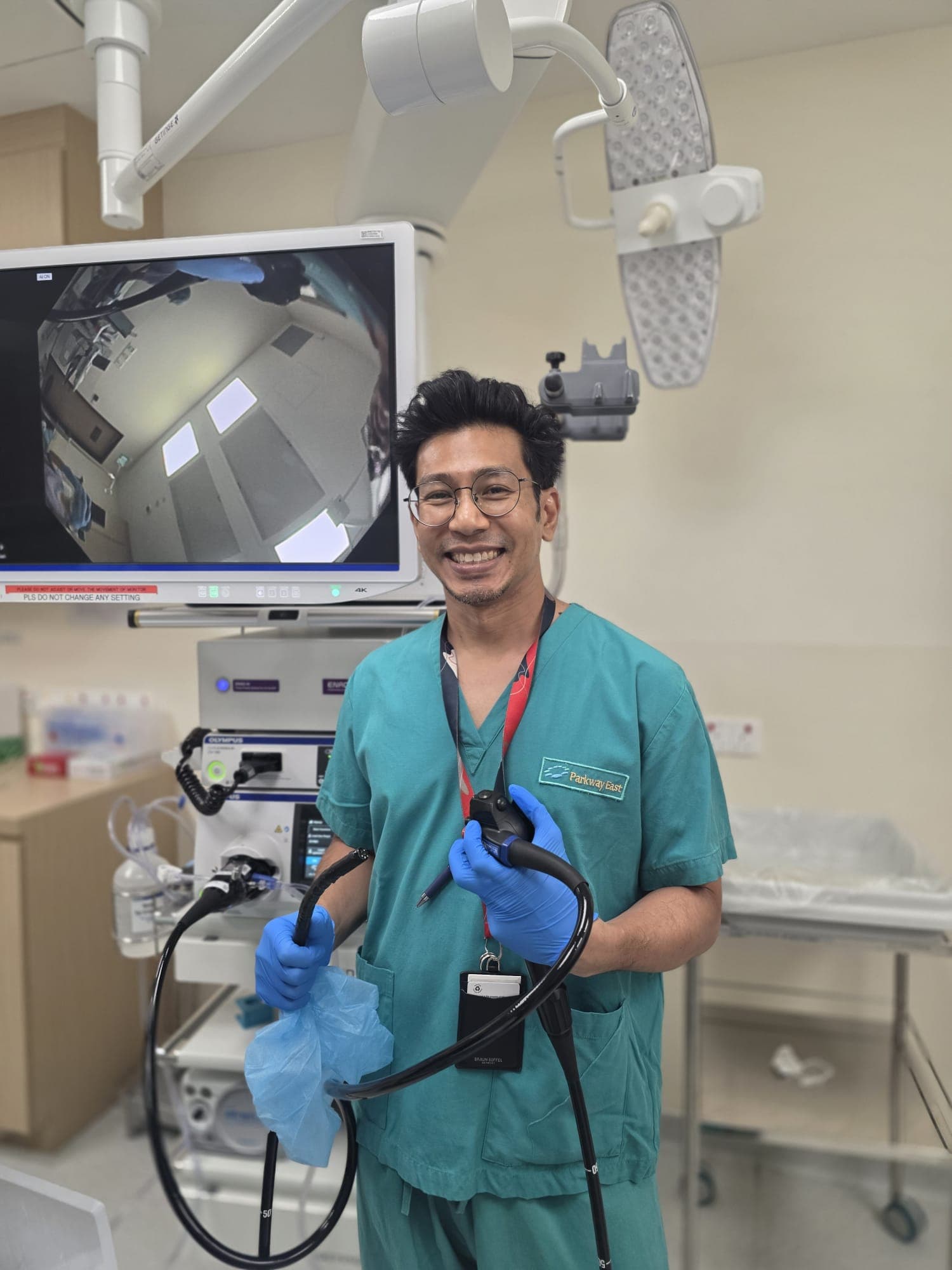
Dr Sulaiman Bin Yusof
He wrote this article and is responsible for its clinical content.
- Qualifications
- MBChB (Sheffield)
- M.Med (Surgery)
- FRCSEd (General Surgery)
- Fellowship
- Peter MacCallum Cancer Centre, Melbourne
- Previously
- Former Director of Endoscopy, Changi General Hospital
- Also
- Visiting Consultant, Changi General Hospital
Getting seen
The diet is the easy part. Knowing why you are on it is the point.
A low-residue diet can be beneficial for managing digestive symptoms, preparing for procedures, and promoting recovery from gastrointestinal surgery. By reducing fibre and other indigestible components, this diet reduces bowel movements and digestive strain, allowing the gastrointestinal system to rest and recover.
Schedule a consultation today for personalised advice based on your medical needs and health goals. You can also message the clinic.
+65 8491 1525