Acute abdomen
Appendicitis does not resolve on its own. It needs treating.
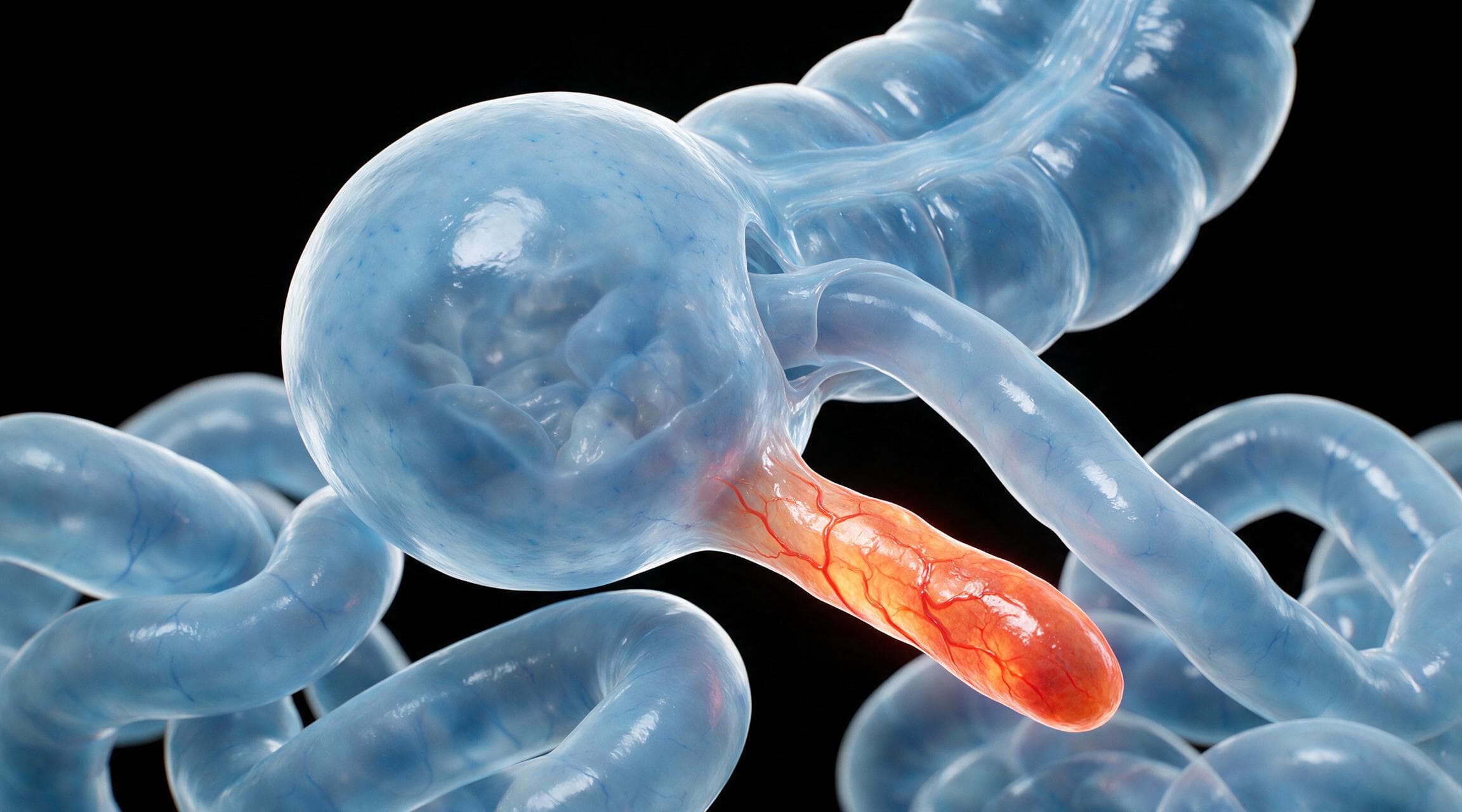
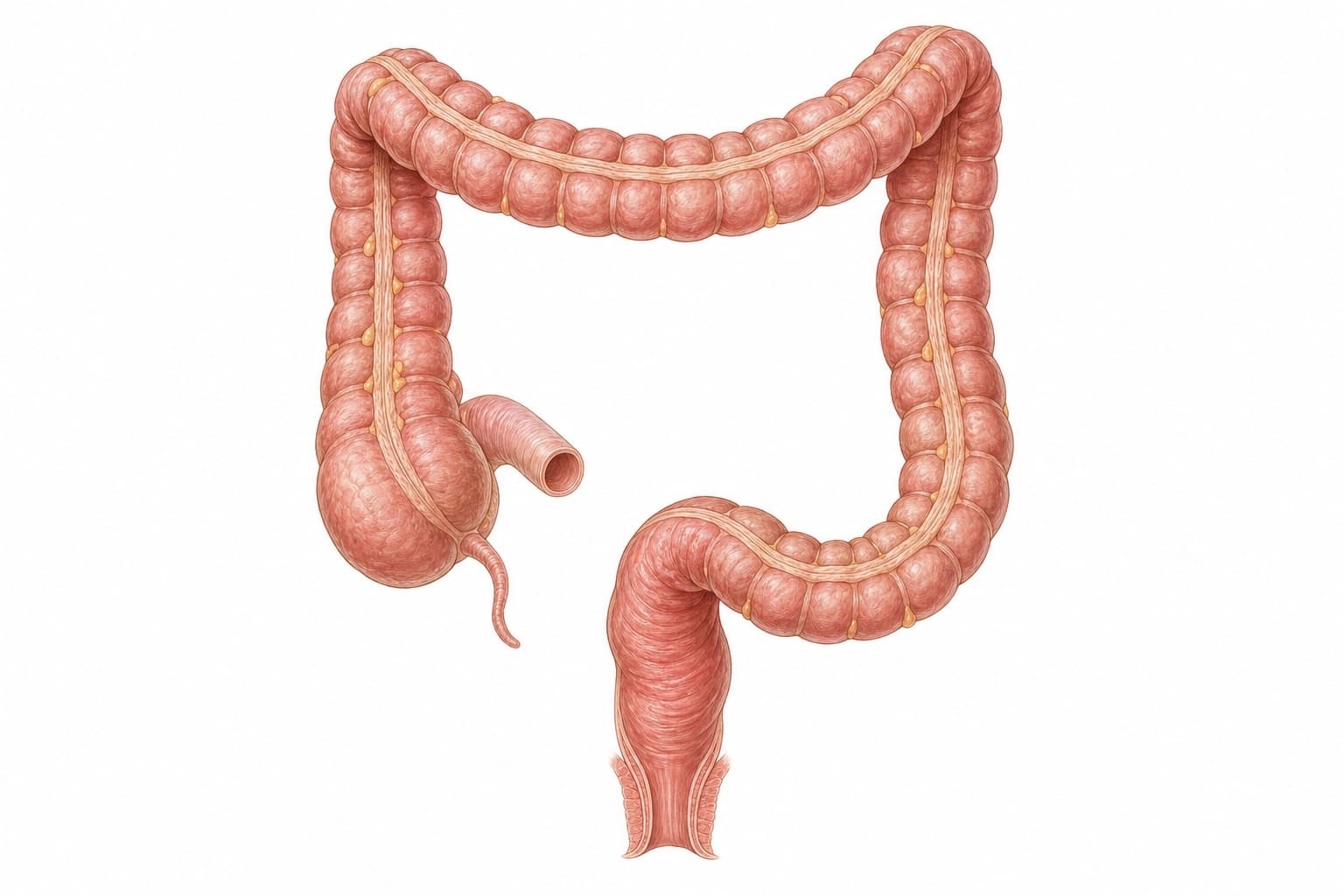
Appendicitis is the inflammation of the appendix, a small pouch connected to the large intestine. Without treatment, the inflamed appendix may rupture, leading to severe complications.
FRCSEd (General Surgery)Five clinics in Singapore
In short
Hours
How fast it comes on
Lower right
Where the pain settles
Surgery
The definitive treatment
1 to 3 weeks
Recovery, keyhole surgery
What every patient should know
Appendicitis, what every patient should know
Hours
How quickly it comes on
Appendicitis symptoms usually appear quickly, often developing within hours.
Source: Dr Sulaiman Bin Yusof, clinical practice
Around the belly button
Vague at first, and hard to point to
Moves to the lower right
It settles, and becomes easier to place
Worse on movement
Sharper on moving, coughing or sneezing
Appendicitis does not resolve on its own, and surgical removal of the appendix is the definitive treatment.
2% to 5%
How the risk of rupture moves with time
Rupture risk stayed at or below 2% while symptoms had been present for under 36 hours. Past 36 hours untreated, it rose to about 5% for every further 12 hours and stayed there. Age counts as well: perforation was found in 35% of patients aged 50 and over, against 13% of younger patients, and the studies put that down largely to older patients reaching hospital later. This is the measured reason not to wait it out. When the appendix does rupture, bacteria are released into the abdominal cavity, causing peritonitis.
Source: Bickell NA and colleagues, Journal of the American College of Surgeons, 2006; age figures from Kraemer M and colleagues, Langenbeck's Archives of Surgery, 2000
1 to 3 weeks
Back to normal activity, keyhole surgery
Recovery varies based on the type of surgery.
Source: Dr Sulaiman Bin Yusof, clinical practice
Time back to normal activity, one dot per week
- Keyhole
- 1 to 3 weeks
- Open surgery
- 4 to 6 weeks
Source: Dr Sulaiman Bin Yusof, clinical practice
Not essential
What the appendix does for digestion
The appendix is not essential, and its removal does not affect digestion. In rare cases, adhesions, or scar tissue, may develop after surgery, but most individuals recover fully without lifestyle restrictions. An operation is not nothing, though. In the five-year follow-up of the APPAC trial, 24.4% of the patients who had their appendix removed reported a complication by five years, counting wound infection, incisional hernia, abdominal pain and obstructive symptoms, against 6.5% of those treated with antibiotics alone.
Source: Dr Sulaiman Bin Yusof, clinical practice; five-year figures from Salminen P and colleagues, APPAC trial, JAMA, 2018
His story
Dr Sulaiman Bin Yusof
Senior Consultant Colorectal and General Surgeon, seeing patients at five clinics in Singapore.
- MBChB (Sheffield), M.Med (Surgery), FRCSEd (General Surgery)
- Consults in English and Malay
- MOH Fellowship, Peter MacCallum Cancer Centre, Melbourne
- Singapore Health Quality Service Star Award 2023
- Dean's Honour Roll for Teaching
Five clinics across Singapore
ORCHARD / NAPIER
Gleneagles Medical Centre
6 Napier Road #06-08, Singapore 258499
NOVENA
Mount Elizabeth Novena
38 Irrawaddy Road, #10-48/49, Singapore 329563
JOO CHIAT / EAST COAST
Parkway East Hospital
#05-08, 319 Joo Chiat Place, Singapore 427989
THOMSON
Mount Alvernia Hospital
#08-62, Medical Centre D, 820 Thomson Road, Singapore 574623
FARRER PARK
Farrer Park Medical Centre
#14-12, 1 Farrer Park Station Road, Singapore 217562
What appendicitis is
Appendicitis starts when a small pouch gets blocked, and then becomes inflamed.
Without treatment, the inflamed appendix may rupture, leading to severe complications. Surgical removal of the appendix, an appendectomy, is the definitive treatment since the condition does not resolve on its own.
Something blocks it
Hardened stool, swollen lymphoid tissue or a foreign body
Bacteria are trapped
Drainage is prevented, and infection follows
It becomes inflamed
Pain, tenderness, and often a low-grade fever
Untreated, it may rupture
Which is where the severe complications come from
This is why appendicitis is treated as something to act on rather than something to watch. The symptoms build over hours rather than days, the condition does not settle by itself, and an appendix left alone may rupture.
Symptoms
Appendicitis usually announces itself within hours, not days.
Pain that starts near the belly button and settles in the lower right needs to be looked at the same day, not waited out. Go straight to an emergency department, rather than booking a clinic appointment, if the pain becomes severe, if it spreads across the whole abdomen, or if it comes with confusion, blotchy or unusually pale skin, or breathlessness. Those are the signs of a burst appendix and of sepsis. Triggers per NHS guidance, United Kingdom, which is not Singapore guidance but is the clearest published advice on when this becomes an emergency. Rupture risk stays at or below 2% under 36 hours of symptoms and climbs about 5% every 12 hours after that, per Bickell NA and colleagues, Journal of the American College of Surgeons, 2006.
Abdominal pain
The pain usually begins around the belly button and moves to the lower right side of the abdomen. It worsens with movement, coughing, or sneezing.
Nausea and vomiting
Many people experience nausea and vomiting, often accompanied by loss of appetite, as the body reacts to the inflammation.
Fever
As the body fights the infection, a low-grade fever may develop, which may be accompanied by chills or sweating.
Digestive symptoms
Constipation, diarrhoea, or difficulty passing gas may indicate possible digestive blockages caused by the inflamed appendix.
Abdominal tenderness and swelling
The lower right side of the abdomen may become tender and swollen, making touching or pressing on it painful.
Causes
The primary cause is a blocked appendix.
Hardened stool
Hardened stool can block the appendix, trapping bacteria and preventing drainage, resulting in infection.
Swollen lymphoid tissue
Lymphoid tissue in the appendix can swell during infections such as gastrointestinal illnesses, blocking the appendix.
Swollen lymph nodes nearby
Infections can cause lymph nodes near the appendix to swell, increasing pressure and blockage, potentially worsening the condition.
Diagnosis
An examination, your story, a blood test, and a scan.
Physical examination
The doctor presses on the abdomen, focusing on the lower right side to identify areas of tenderness. Rebound tenderness or pain that worsens after pressure is released is a key indicator of appendix inflammation.
Your history
The doctor asks about the pain onset, location, and nature of the pain, along with other symptoms such as nausea, vomiting, or loss of appetite. This information helps determine whether the symptoms match the pattern of appendicitis.
Blood tests
A Complete Blood Count (CBC) is often used to help diagnose appendicitis by checking for an elevated white blood cell count, indicating infection or inflammation.
Imaging
Ultrasound, CT scans, or MRIs are performed to confirm inflammation and check for complications like abscesses or rupture. These tests also help rule out other potential causes of abdominal pain, such as ovarian cysts or kidney stones.
Treatment
Which appendicitis operation depends on whether it has already ruptured.
The primary treatment for appendicitis is surgical removal of the appendix to prevent rupture and complications.
Laparoscopic appendectomy
This minimally invasive procedure involves making small incisions in the abdomen and using a camera (laparoscope) to guide the removal of the appendix. It typically results in less post-operative pain, smaller scars, and a quicker recovery compared to open surgery. Laparoscopic appendectomy is often preferred for uncomplicated cases of appendicitis.
Open appendectomy
In cases where the appendix has ruptured, a larger incision is made to access and remove the appendix. This method allows the surgeon to clean the abdominal cavity thoroughly, reducing the risk of further infection. Recovery from open appendectomy takes longer due to the more extensive nature of the surgery.
Abscess drainage
If the appendix has ruptured and an abscess has formed, the abscess is drained using a needle or tube under imaging guidance. Antibiotics are given to control the infection, and surgery to remove the appendix is performed after the infection resolves. This two-step approach reduces the risk of complications from operating during active infection.
Antibiotics, in selected cases
In mild cases of appendicitis, antibiotics may be used to manage infection and reduce inflammation. This approach can sometimes delay or avoid surgery, but there is a risk of recurrence, making it more suitable for patients who are not immediate surgical candidates.

Two points above have moved on since this page was first written, and both are worth knowing before a consultation.
Keyhole surgery is now the standard approach, not only the preferred one for straightforward cases. The 2025 World Society of Emergency Surgery guidelines name laparoscopic appendectomy the standard surgical approach, so a rupture no longer automatically means an open operation, per Podda M and colleagues in JAMA Surgery, 2026. Locally, 87.2% of appendicectomies were done laparoscopically and only 1.7% open at Khoo Teck Puat Hospital over six months in 2017, per Goh SSN and colleagues in Acute Medicine and Surgery, 2020. That is one Singapore hospital over one period rather than a national rate.
Antibiotics alone is a recognised option for selected uncomplicated appendicitis rather than only a fallback for people who cannot have surgery, per the same 2025 guidelines, and the trade-off is now measured rather than estimated. In the APPAC trial, 39.1% of patients treated with antibiotics alone had appendicitis again within five years, per Salminen P and colleagues in JAMA, 2018. In the CODA trial, 29% had their appendix removed within 90 days, per the CODA Collaborative in the New England Journal of Medicine, 2020. In children the picture is worse for antibiotics: treatment failed in 34% within a year and the trial concluded antibiotics were inferior to surgery, per St Peter SD and colleagues in The Lancet, 2025. This is the detail behind the line at the top of this page that appendicitis does not resolve on its own, and it is a conversation to have with your surgeon rather than a choice to make from a web page.
Adhesions, the scar tissue that can form inside the abdomen after an operation, are covered on the intra-abdominal adhesions page.
Whether you are Singaporean, a Permanent Resident or a foreigner, the clinic team can advise on using an Integrated Shield Plan or corporate insurance.
Prevention
You can lower the risk. You cannot rule it out.
Eating fibre-rich foods, staying hydrated, and exercising regularly can promote digestive health and prevent constipation, which may reduce the chance of blockage in the appendix.
However, although a healthy lifestyle lowers the risk, appendicitis can still occur unexpectedly.
Common questions
Questions about appendicitis.
When should I go to an emergency department instead of booking a consultation?
Go straight to an emergency department if the pain becomes severe, if it spreads from the lower right across the whole abdomen, or if it comes with confusion, blotchy or unusually pale skin, or breathlessness. Those are the signs of a burst appendix and of sepsis, and they are emergencies rather than appointments. These triggers follow NHS guidance in the United Kingdom, which is not Singapore guidance but is the clearest published advice on when appendicitis becomes an emergency. Timing is the reason for the urgency: rupture risk stayed at or below 2% while symptoms had been present for under 36 hours, then rose about 5% for every further 12 hours untreated, per Bickell NA and colleagues in the Journal of the American College of Surgeons, 2006. If the pain is new, is getting worse, and has settled in the lower right, it needs to be seen the same day.
Can appendicitis come back after it has been treated?
Yes, appendicitis can recur if the appendix is not surgically removed, especially in cases managed only with antibiotics.
How long does recovery take after an appendectomy?
Laparoscopic appendectomy patients typically resume normal activities within 1 to 3 weeks, while open surgery patients may need 4 to 6 weeks due to the larger incision and longer healing process.
Can I live normally without an appendix?
The appendix is not essential, and its removal does not affect digestion. In rare cases, adhesions, or scar tissue, may develop post-surgery, but most individuals recover fully without lifestyle restrictions. An operation does leave a tail of its own: in the five-year follow-up of the APPAC trial, 24.4% of patients who had an appendectomy reported a complication by five years, counting wound infection, incisional hernia, abdominal pain and obstructive symptoms, against 6.5% of those treated with antibiotics alone, per Salminen P and colleagues in JAMA, 2018.
Can antibiotics alone treat appendicitis, without surgery?
Current guidance treats antibiotics alone as a reasonable option for selected uncomplicated cases rather than only a fallback, per the 2025 World Society of Emergency Surgery guidelines in JAMA Surgery, 2026. Because the appendix stays in place, appendicitis can recur, which is why surgery is generally recommended to prevent future episodes.
What happens if the appendix has already ruptured?
Where the appendix has ruptured and surgery goes ahead directly, a larger incision is made to access and remove it, which allows the surgeon to clean the abdominal cavity thoroughly and reduces the risk of further infection.
How common is appendicitis?
The most cited estimate puts the lifetime risk of appendicitis at 8.6% for men and 6.7% for women, from Addiss DG and colleagues in the American Journal of Epidemiology, 1990, using United States data for 1979 to 1984. Read it as the order of magnitude rather than as a current Singapore rate.
How reliable is the physical examination?
The examination carries real weight on its own. In a prospective series of 100 patients presenting with lower right abdominal pain, rebound tenderness picked up 82% of confirmed appendicitis and was correctly negative in 89% of those without it, per Golledge J and colleagues in the Annals of the Royal College of Surgeons of England, 1996. It is one study of 100 people, so it sets the examination alongside the scan rather than above it.
Get it looked at
Pain in the lower right that is getting worse? Do not wait it out.
Consult Dr Sulaiman for an assessment and a personalised treatment plan today. Appointments are available across five clinic locations in Singapore, and self-referrals are welcome.