
Senior Consultant Colorectal & General Surgeon, Singapore
Care for the conditions few like to talk about.
Dr Sulaiman Bin Yusof is a colorectal specialist with over 20 years of surgical experience, treating colorectal and general surgical conditions across Singapore and combining meticulous surgical technique with the kind of care that puts people at ease.
MBChB (Sheffield)M.Med (Surgery)FRCSEd
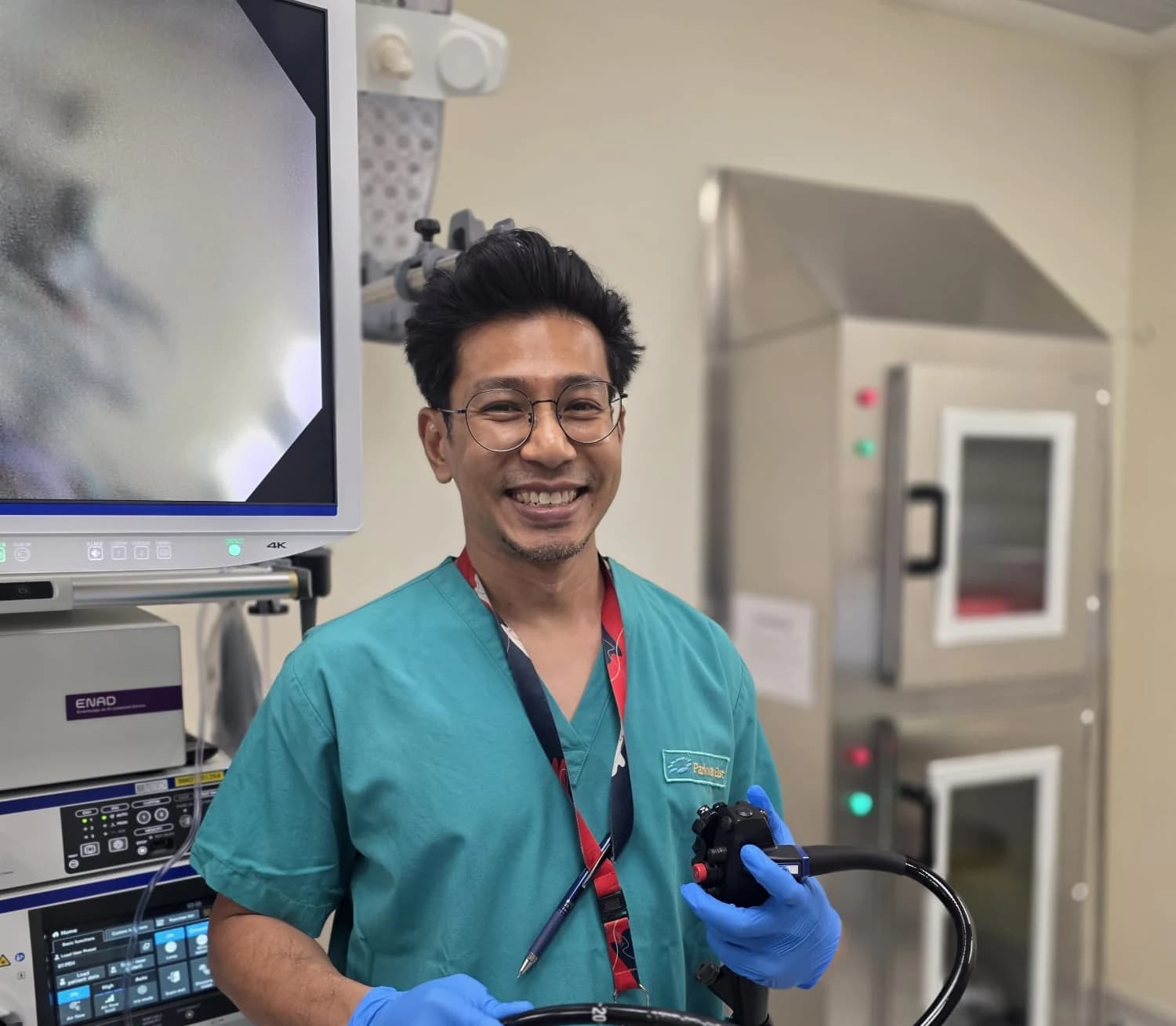
Robotic-assisted surgery
Colectomy and anterior resection
In his own words
Why he becamea colorectalsurgeon.
“Whenever someone asks me, why do you become a colorectal surgeon? The imagery isn’t very nice.”
His full account, in one take: why he chose this specialty, and how what he saw in training shaped the way he practises now.
What every patient should know
Colorectal cancer is common.A colonoscopy can identify and manage changes in one visit.
12,950
colorectal cancer cases were diagnosed in Singapore over the 2019 to 2023 registry window. It is the second most commonly diagnosed cancer here.
Source: Singapore Cancer Registry, via NCCS
90%
of polyps can be taken out during the colonoscopy itself, without needing surgery. Changes are identified and managed in the same session.
Source: HealthHub, Singapore
84 to 86%
five-year survival when colorectal cancer is found at Stage 1, 84% for men and 86% for women. At Stage 4 that number falls to around 10%. Early detection changes everything.
Source: HealthHub, Singapore
20
Years of surgical experience
10,000+
Endoscopic procedures performed
100+
Robotic cancer operations
5
Clinic locations across Singapore
01
When to seek help
Persistent symptoms deserve a specialist’s eye.
Many colorectal conditions share early symptoms. Most are treatable, especially when assessed early. These signs warrant a specialist's opinion.
See a colorectal specialist if bowel changes last beyond 2 to 4 weeks, if you notice blood in your stool (rectal bleeding), or if you have persistent lower abdominal pain with unexplained weight loss or anaemia. Most causes are benign, but only a proper assessment can confirm that.
Bleeding
Pain, lump, or weight loss
Seek urgent care if you have
Severe abdominal pain with fever, a swollen abdomen with inability to pass stool or wind, or a painful new anal lump. These can indicate obstruction or infection and need same-day attention.
02
Areas of care
Three fields. One standard of care.
01
Anorectal Conditions
Problems around the back passage, such as piles (haemorrhoids), tears, and infections.
Explore anorectal care02
Colon & Bowel
Conditions of the large bowel, from polyps to colorectal cancer and inflammatory disease.
Explore colon and bowel care03
General Surgery
Common operations such as hernia, appendix, and gallbladder surgery.
- Hernia
- Appendicitis
- Gallbladder disease
- Lumps & swellings
03
Your specialist
A surgeon who measures twice,and listens first.
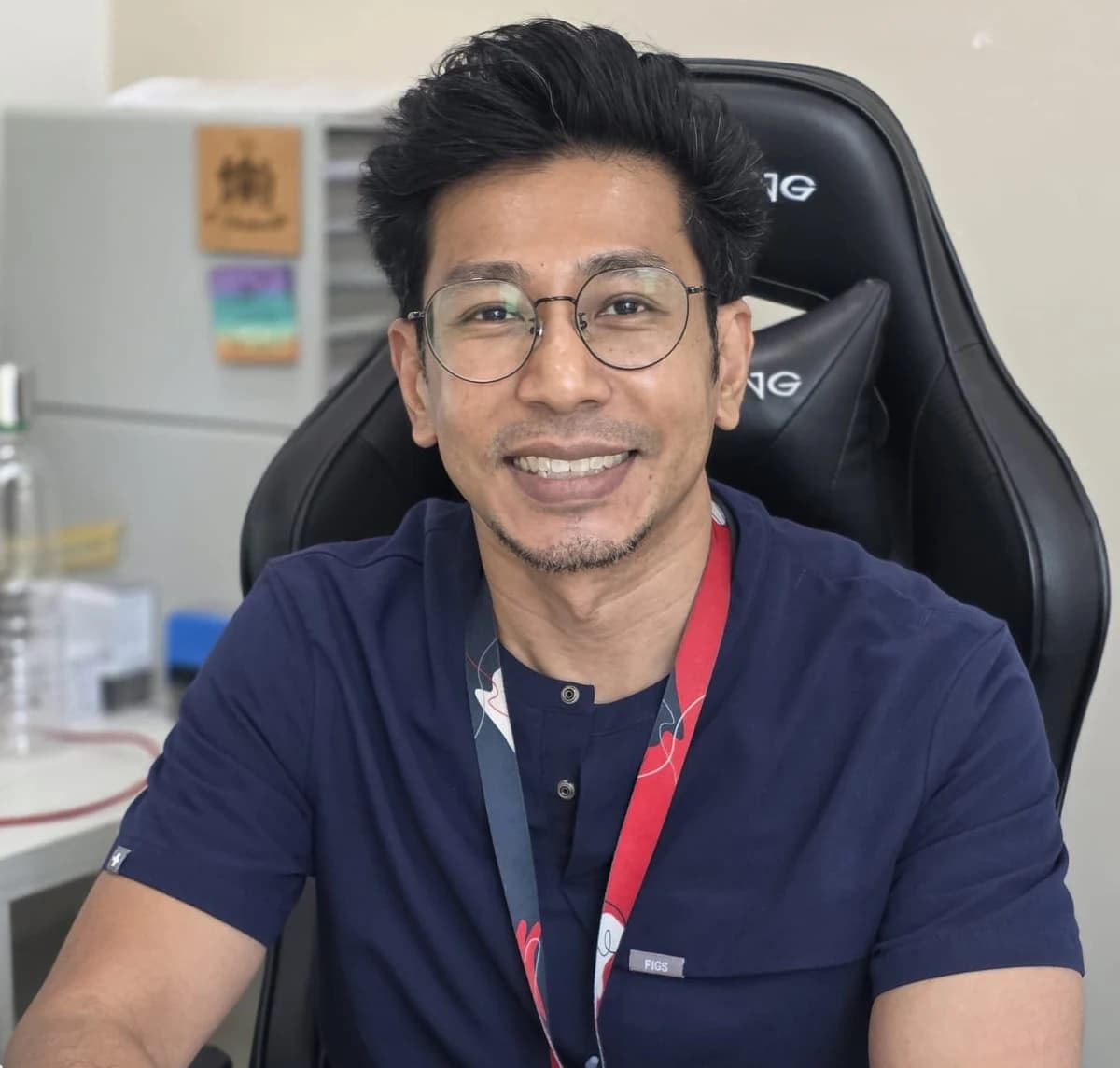
Dr Sulaiman Bin Yusof is a Senior Consultant Colorectal and General Surgeon. He completed an MOH fellowship at the Peter MacCallum Cancer Centre in Melbourne, and uses robotic-assisted technique as his primary surgical platform for colectomy and anterior resection.
MBChB (Sheffield), M.Med (Surgery), FRCSEd (General Surgery)
Consults in English and Malay
MOH Fellowship, Peter MacCallum Cancer Centre, Melbourne
Singapore Health Quality Service Star Award 2023
Dean's Honour Roll for Teaching
More about Dr SulaimanExpertise you can trust. Care you can feel. Results that matter.
Robotic & minimally invasive surgery
Smaller incisions.Greater precision.
How Dr Sulaiman operates, and where robotic assistance fits in his practice, is set out on the about Dr Sulaiman page.
100+
Robotic cancer operations
Primary
Robotic-assisted surgical platform
Keyhole
Standard approach where suitable
04
What to expect
Your first visit, step by step.
A first consultation covers five steps: your history, your symptoms, a gentle physical examination, any tests needed such as a scope test called a colonoscopy, and a clear explanation of the diagnosis and your options. Consultations are unhurried, and most patients leave with a clear plan.
01
History review
Your records, referrals, and previous results are reviewed before or at the start of your visit.
02
Symptom discussion
A detailed, unhurried conversation about what you have been experiencing and for how long.
03
Physical examination
A focused, gentle examination, always with your comfort and privacy protected.
04
Investigations
If needed, tests such as colonoscopy or imaging are advised and arranged promptly.
05
Diagnosis & options
You leave with a clear explanation of the diagnosis and the treatment options, surgical or otherwise.
Insurance & Medisave
Widely covered, clearly explained.
Medisave, Integrated Shield Plans, and private or corporate insurance may apply, subject to policy eligibility. The clinic team will check your coverage before any treatment is planned.



















Medisave may applyIntegrated Shield PlansCorporate insurance
05
Common questions
Asked often,answered plainly.
A colorectal surgeon is the colon specialist doctor for conditions of the colon, rectum, and anus, from haemorrhoids and fissures to colorectal cancer, and also treats common general surgical conditions such as hernias and gallbladder disease.
06
Five locations
Care, close to home.
Gleneagles Medical Centre
ORCHARD / NAPIER
Address
6 Napier Road #06-16, Singapore 258499Get directionsContact
+65 8491 1525
Book a consultation
Talk to a specialist whotakes the time.
One short form, and the clinic replies on WhatsApp with what is actually open that week. His clinic's own wording is same day appointments, same week scopes.